
For support and service of your machinery, Stiles has experts available 24/7 to help reduce downtime and get you back in action.
Technical Support: 616-698-6615
Service & Repairs: 616-698-7500
24/7 Parts: 1-800-727-8780
sale@inlandmachineokc.com
Parts are available from Stiles 24 hours a day, seven days a week, and are shipped from our Grand Rapids, Michigan fulfillment center.
24/7 Parts: 800-727-8780

With a customized Stiles University course, we can provide expert training for your team, on-location. Whether it's programming, operation or maintenance, we want to help you train your personnel to meet your production goals efficiently and effectively.

Experience the trusted workforce development training and machinery knowledge you rely on from Stiles University, now at your convenience. With technology changing every day and new methods being developed constantly, Stiles University Online has the latest information and training content available at your fingertips.
616-698-7500

Do you want to produce more efficiently? Processes and flows are key. We optimize these together with you, re-organize them and make sure that you reduce your lead time and save costs. This enables you to implement customized manufacturing and achieve your business goals.

Industrialized construction is evolving. Automation, robotics and advanced technology are raising the level of productivity, efficiency and precision for builders in North America.

Stiles Machinery is at the forefront of providing technology and machining for producing high quality mass timber. Automated solutions for your mass timber production can increase your manufacturing quality and productivity.

Project management services from Stiles make it easy to streamline your entire project— from concept and consultation to integration and implementation.
For support and service of your machinery, Stiles has experts available 24/7 to help reduce downtime and get you back in action.
Technical Support: 616-698-6615
Service & Repairs: 616-698-7500
24/7 Parts: 1-800-727-8780
sale@inlandmachineokc.com
Parts are available from Stiles 24 hours a day, seven days a week, and are shipped from our Grand Rapids, Michigan fulfillment center.
24/7 Parts: 800-727-8780

With a customized Stiles University course, we can provide expert training for your team, on-location. Whether it's programming, operation or maintenance, we want to help you train your personnel to meet your production goals efficiently and effectively.

Experience the trusted workforce development training and machinery knowledge you rely on from Stiles University, now at your convenience. With technology changing every day and new methods being developed constantly, Stiles University Online has the latest information and training content available at your fingertips.
616-698-7500

Do you want to produce more efficiently? Processes and flows are key. We optimize these together with you, re-organize them and make sure that you reduce your lead time and save costs. This enables you to implement customized manufacturing and achieve your business goals.

Industrialized construction is evolving. Automation, robotics and advanced technology are raising the level of productivity, efficiency and precision for builders in North America.

Stiles Machinery is at the forefront of providing technology and machining for producing high quality mass timber. Automated solutions for your mass timber production can increase your manufacturing quality and productivity.

Project management services from Stiles make it easy to streamline your entire project— from concept and consultation to integration and implementation.
For support and service of your machinery, Stiles has experts available 24/7 to help reduce downtime and get you back in action.
Technical Support: 616-698-6615 Service & Repairs: 616-698-7500 24/7 Parts: 1-800-727-8780
Parts are available from Stiles 24 hours a day, seven days a week, and are shipped from our Grand Rapids, Michigan fulfillment center.
24/7 Parts: 800-727-8780For support and service of your machinery, Stiles has experts available 24/7 to help reduce downtime and get you back in action.
Technical Support: 616-698-6615 Service & Repairs: 616-698-7500 24/7 Parts: 1-800-727-8780
Parts are available from Stiles 24 hours a day, seven days a week, and are shipped from our Grand Rapids, Michigan fulfillment center.
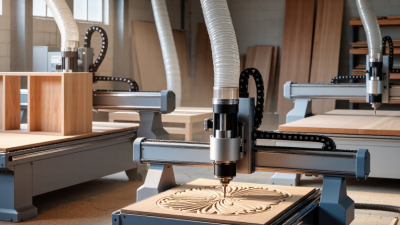
24/7 Parts: 800-727-8780A cnc wood router brings computer-guided accuracy to a material that still moves, dents, and splinters. It uses a rotating cutting bit and programmed toolpaths to shape wood, plywood, and some composites. Picture a sheet of birch plywood held flat on a worktable. The router follows a digital design, cutting cabinet parts, sign lettering, or a shallow decorative groove. The result depends on more than the machine. Bit choice, feed rate, workholding, and dust collection all matter.
CNC woodworking educator Patrick Hood-Daniel offers a useful reminder: “A clean cut starts with a sound setup and a well-planned toolpath.” That practical idea captures both the promise and the limits of a cnc wood router. It can repeat a pattern with impressive consistency, but it cannot rescue a poorly secured board or an unsuitable cutting bit. Small setup errors show up quickly.
This guide explains what the machine is, how its main components work, and where it fits in a workshop. It also distinguishes hobby-size routers from production machines, without treating price as a measure of skill. Expect practical details: router bits, spoilboards, CAD/CAM software, and common cut types. Some results still need sanding. That part is easy to underestimate. Understanding the process helps buyers choose a machine realistically and helps operators work more carefully from the first test cut.
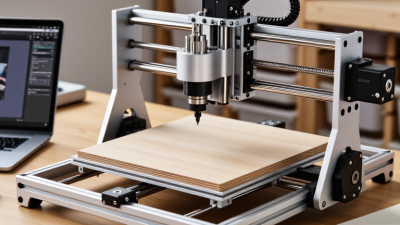
A CNC wood router is a computer-controlled machine that cuts wood with a fast-spinning bit. Its frame moves the cutting tool across a secured workpiece, following coordinates from a digital design. CNC means computer numerical control. The machine does not understand a drawing by itself; software converts the design into cutting instructions.
Its basic purpose is to produce planned shapes and features with repeatable movement. A router can trim an edge, cut a sign outline, make a pocket, or drill a pattern of holes. For example, it might carve a shallow channel into a cabinet panel, then follow the same path on matching panels. The result depends on the bit, material, workholding, and machine setup.
That matters. A precise path does not guarantee a perfect surface. Grain direction, a dull bit, or a panel that shifts can leave rough edges or uneven cuts. The operator still needs to choose sensible settings and inspect the work. A CNC router can reduce repetitive handwork, but it does not remove judgment. Even a clean digital drawing may need adjustment after a test cut.
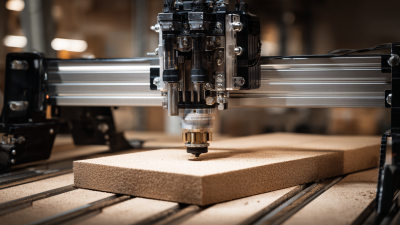
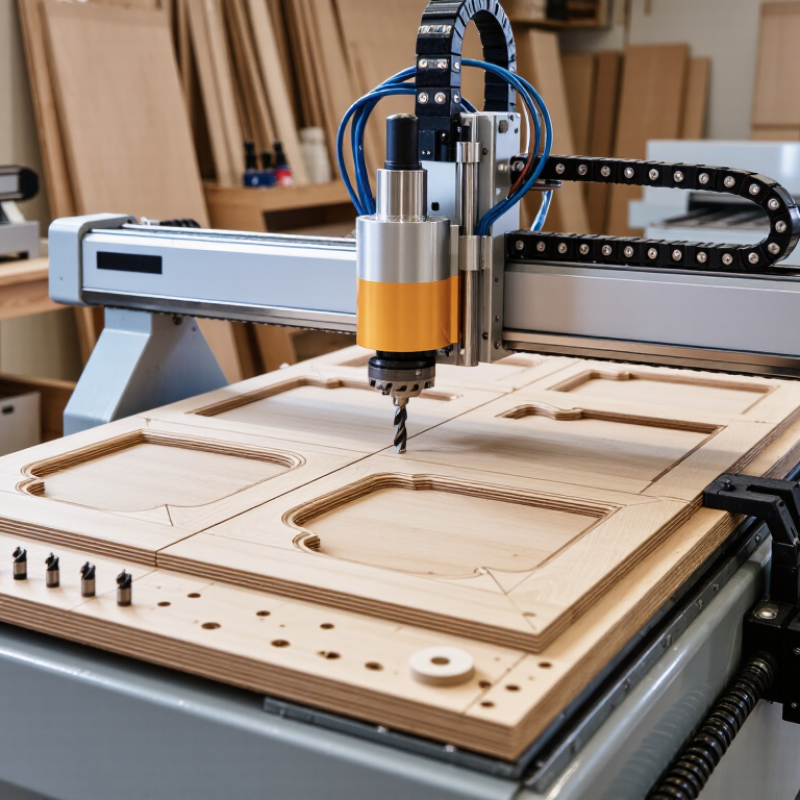
A CNC wood router turns digital toolpaths into controlled movement across a sheet or solid blank. Its bed supports the workpiece; the frame and gantry keep the cutting assembly aligned. Linear guides and drive systems move the gantry or spindle along the X, Y, and Z axes. Small parts matter. Even slight looseness can leave ridges on a cabinet panel. The spindle rotates the cutter, while a collet holds it in place. A controller reads the programmed path and coordinates motion, speed, and position.
The hold-down system prevents stock from shifting during a cut. Vacuum tables suit broad, flat panels; clamps can secure smaller pieces, but must stay clear of the cutter path. Dust extraction removes chips that obscure the cut and can collect around moving parts. It is easy to overlook. The USDA Forest Products Laboratory’s Wood Handbook: Wood as an Engineering Material (FPL-GTR-282, 2021) places wood’s fiber saturation point near 30% moisture content. Below that point, drying causes shrinkage, which can affect fit and dimensions. A router cannot compensate for unstable stock.
Tips: Check the collet, cutter, and hold-down before each job. Use a test cut on scrap from the same board. Measure the finished edge, then adjust the toolpath or workholding if needed. It’s a small step, but it catches mistakes early.
A CNC wood router follows a programmed path to cut, shape, or engrave wood. The process starts with a digital drawing, which software turns into tool movements. Those movements guide the cutting bit across the material. The machine repeats them with steady positioning, even around tight curves. Not magic. The setup still matters.
Before cutting, an operator secures the board and sets a reference point, often called the work origin. The controller uses that point to coordinate the router’s movement along several axes. Spindle speed, cutting depth, and feed rate affect the result. A small bit may need shallow passes, while a larger cutter can remove more material at once. Changes in wood grain can still affect the cut.
During a job, the bit spins as the machine moves through its toolpath. Clamps or a vacuum hold-down keep the board from shifting. Dust extraction helps keep the cutting area clear, though fine dust can linger. A test cut on scrap wood can reveal a wrong depth or loose setup before the final piece is damaged. It is easy to blame the software. Sometimes the material was not flat.
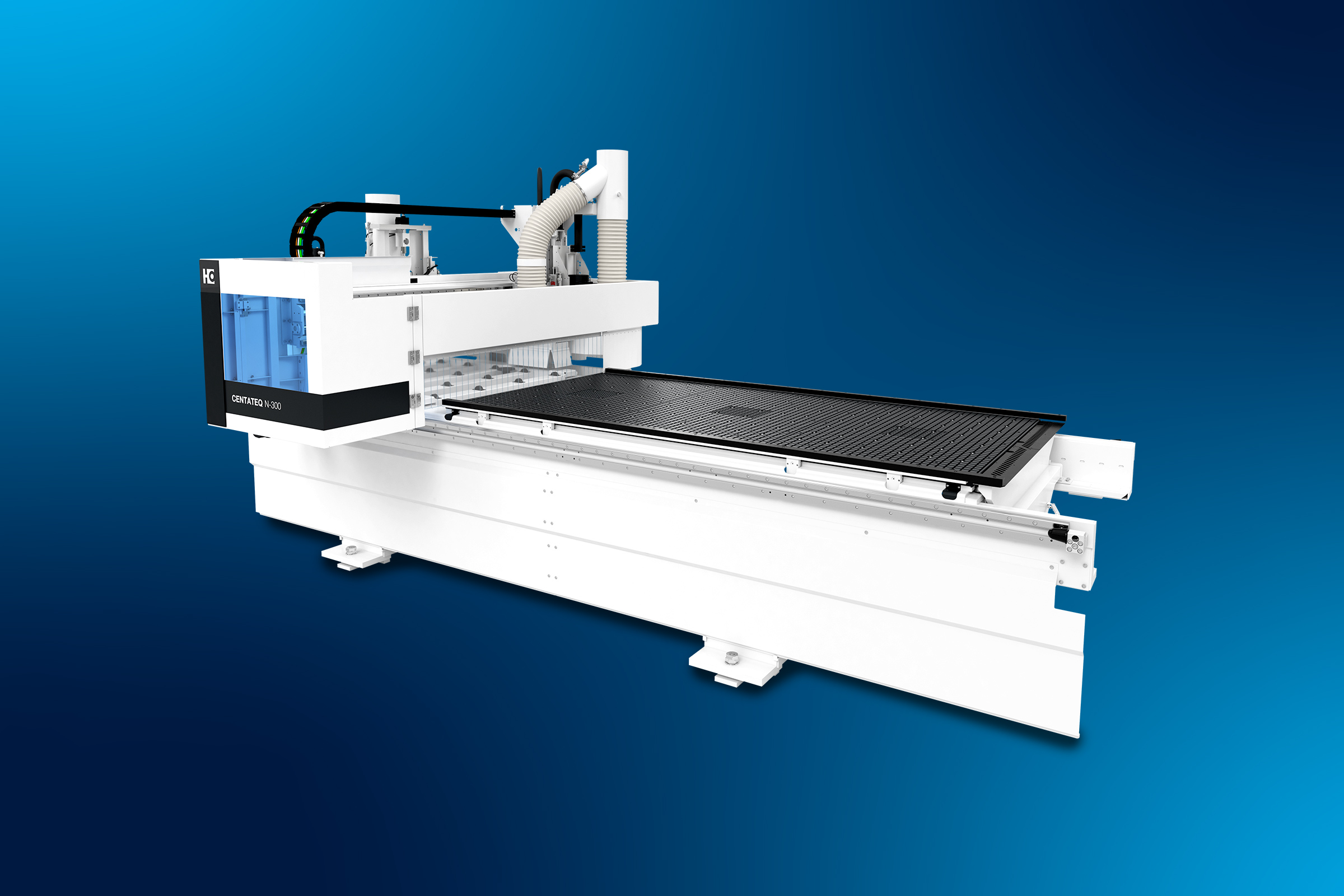
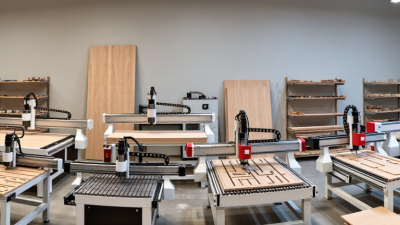
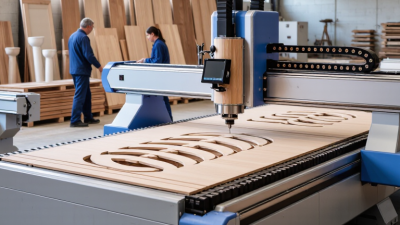
A CNC wood router uses computer-controlled motion to cut, drill, and shape wood panels or solid stock. Its frame and table configuration affect usable work area, part handling, and cutting accuracy. A moving-gantry machine carries the spindle across a fixed bed, leaving the workpiece stationary. A moving-table design shifts the material beneath a more fixed cutting head. Both are common; the better fit depends on part size, floor space, and loading needs.
For sheet goods, a nested-based router holds a full panel on a vacuum table while software arranges multiple parts for cutting. Operators often add a tool changer and dust-extraction hood to reduce manual tool swaps and airborne debris. Smaller shops may prefer a compact table with clamps. Less setup, but more repositioning. Grand View Research’s CNC Router Market report estimated the global market at US$748.6 million in 2023, reflecting broad industrial use; it does not indicate which configuration suits a particular shop.
Axis count is another key choice. A three-axis router cuts along X, Y, and Z, fitting cabinet parts, signs, and flat reliefs. A fourth rotary axis can carve cylindrical pieces, while five-axis machines angle the tool for complex surfaces. More axes add flexibility, but also programming and maintenance demands. A useful detail: a powerful spindle cannot compensate for a poorly secured panel. Real shops sometimes discover that after a costly, avoidable test cut.
| Router type or configuration | How it works | Common uses | Key considerations |
|---|---|---|---|
| Fixed-base handheld router | The motor is held at a set cutting depth in a base; depth is adjusted before routing. | Edge profiling, rabbets, dados, and guided straight cuts. | Useful for repeatable depth settings. The bit generally needs to enter the work from an edge or a pre-existing opening. |
| Plunge-base handheld router | Spring-loaded posts let the motor and bit move vertically into the work while the base stays in place. | Mortises, stopped grooves, inlays, and cuts that begin within a panel. | Allows controlled entry into the material. Depth stops help make repeated or stepped cuts. |
| Compact or trim router | A smaller, lighter router designed for one-handed or close-control tasks, usually with a fixed base. | Trimming laminate or veneer, rounding edges, and light-duty template work. | Easy to maneuver, but its smaller size and available accessories may limit larger or heavier cuts. |
| Fixed-and-plunge combination router | A motor can be used with interchangeable fixed and plunge bases. | A range of edge, template, and internal plunge cuts using one motor. | Offers flexibility, though changing bases and accessories takes setup time. |
| CNC gantry wood router | A computer-controlled cutting head moves over a work surface on a gantry, following programmed tool paths. | Repeatable 2D and 3D profiles, lettering, joinery, pockets, and sheet-part cutting. | Requires digital design or toolpath instructions, workholding, and machine setup. Work area and axis configuration vary by machine. |
| CNC axis configuration | Three-axis machines move along X, Y, and Z; some machines add rotary or other axes. | Three axes suit many flat-panel and relief jobs; additional axes can support work around curved or rotated surfaces. | More axes can enable more complex tool paths but also increase programming and setup requirements. |
Materials, Applications, and Key Capabilities
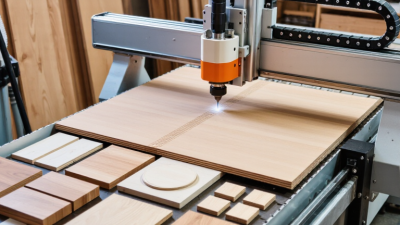
A CNC wood router uses computer-guided motion to move a spinning cutter across a workpiece. It can cut sheet goods, carve reliefs, shape edges, and drill repeatable holes. Common materials include plywood, MDF, hardwood, and softwood. Each behaves differently. Plywood may splinter at exposed veneers, while dense hardwood can require slower feeds and sharp tooling. A router’s usable capacity depends on its bed size, spindle power, cutter, and workholding—not just its advertised travel.
In a small workshop, the machine might cut cabinet panels, sign lettering, or matching chair parts. In production, a programmed path can reproduce components with consistent dimensions. It can also create curved details that are awkward to guide by hand. Yet accuracy is not automatic: loose clamps, dull bits, dust buildup, or incorrect settings can spoil a sound design. Even a careful setup sometimes needs a test cut.
Tips: Secure the stock flat, check the cutter’s recommended speed, and run a shallow test pass on scrap. Keep dust extraction clear. Measure the first part before repeating the job. A tiny offset matters. Use suitable eye and hearing protection, and follow the machine’s safety instructions.