
For support and service of your machinery, Stiles has experts available 24/7 to help reduce downtime and get you back in action.
Technical Support: 616-698-6615
Service & Repairs: 616-698-7500
24/7 Parts: 1-800-727-8780
sale@inlandmachineokc.com
Parts are available from Stiles 24 hours a day, seven days a week, and are shipped from our Grand Rapids, Michigan fulfillment center.
24/7 Parts: 800-727-8780

With a customized Stiles University course, we can provide expert training for your team, on-location. Whether it's programming, operation or maintenance, we want to help you train your personnel to meet your production goals efficiently and effectively.

Experience the trusted workforce development training and machinery knowledge you rely on from Stiles University, now at your convenience. With technology changing every day and new methods being developed constantly, Stiles University Online has the latest information and training content available at your fingertips.
616-698-7500

Do you want to produce more efficiently? Processes and flows are key. We optimize these together with you, re-organize them and make sure that you reduce your lead time and save costs. This enables you to implement customized manufacturing and achieve your business goals.

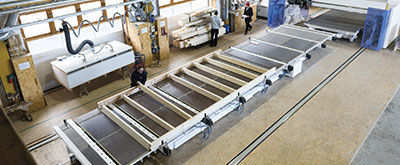
Industrialized construction is evolving. Automation, robotics and advanced technology are raising the level of productivity, efficiency and precision for builders in North America.

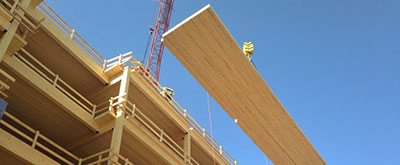
Stiles Machinery is at the forefront of providing technology and machining for producing high quality mass timber. Automated solutions for your mass timber production can increase your manufacturing quality and productivity.

Project management services from Stiles make it easy to streamline your entire project— from concept and consultation to integration and implementation.
For support and service of your machinery, Stiles has experts available 24/7 to help reduce downtime and get you back in action.
Technical Support: 616-698-6615
Service & Repairs: 616-698-7500
24/7 Parts: 1-800-727-8780
sale@inlandmachineokc.com
Parts are available from Stiles 24 hours a day, seven days a week, and are shipped from our Grand Rapids, Michigan fulfillment center.
24/7 Parts: 800-727-8780

With a customized Stiles University course, we can provide expert training for your team, on-location. Whether it's programming, operation or maintenance, we want to help you train your personnel to meet your production goals efficiently and effectively.

Experience the trusted workforce development training and machinery knowledge you rely on from Stiles University, now at your convenience. With technology changing every day and new methods being developed constantly, Stiles University Online has the latest information and training content available at your fingertips.
616-698-7500

Do you want to produce more efficiently? Processes and flows are key. We optimize these together with you, re-organize them and make sure that you reduce your lead time and save costs. This enables you to implement customized manufacturing and achieve your business goals.

Industrialized construction is evolving. Automation, robotics and advanced technology are raising the level of productivity, efficiency and precision for builders in North America.

Stiles Machinery is at the forefront of providing technology and machining for producing high quality mass timber. Automated solutions for your mass timber production can increase your manufacturing quality and productivity.

Project management services from Stiles make it easy to streamline your entire project— from concept and consultation to integration and implementation.
For support and service of your machinery, Stiles has experts available 24/7 to help reduce downtime and get you back in action.
Technical Support: 616-698-6615 Service & Repairs: 616-698-7500 24/7 Parts: 1-800-727-8780
Parts are available from Stiles 24 hours a day, seven days a week, and are shipped from our Grand Rapids, Michigan fulfillment center.
24/7 Parts: 800-727-8780For support and service of your machinery, Stiles has experts available 24/7 to help reduce downtime and get you back in action.
Technical Support: 616-698-6615 Service & Repairs: 616-698-7500 24/7 Parts: 1-800-727-8780
Parts are available from Stiles 24 hours a day, seven days a week, and are shipped from our Grand Rapids, Michigan fulfillment center.
24/7 Parts: 800-727-8780Choosing a panel saw manufacturer is a practical decision, not a simple search for the lowest quotation. Global buyers must examine cutting accuracy, machine stability, service coverage, and long-term operating costs. A reliable supplier should explain these points clearly, with evidence from factory tests, customer installations, and documented specifications.
This guide introduces leading panel saw manufacturers for different production needs and purchasing conditions. It considers build quality, control systems, blade performance, safety features, customization, and spare-parts availability. It also reviews how manufacturers support overseas buyers through installation training, remote diagnostics, and responsive technical service. These details matter when a machine is cutting large boards every working day.
Real experience often reveals more than a polished brochure. Ask how the machine performs after months of use. Check sample cuts, edge quality, dust handling, and maintenance access before making a commitment. A factory visit or live video demonstration can expose small design weaknesses that product photos hide. Still, no shortlist is perfect. A manufacturer praised by one furniture plant may not suit a high-volume panel producer. Local voltage, shipping conditions, operator skill, and available service partners can change the final decision.
The manufacturers discussed here are assessed through practical purchasing criteria rather than promotional claims alone. Buyers should verify certifications, warranty terms, production capacity, and references independently. Careful comparison reduces avoidable risk and supports a more confident investment. Quality matters. Service matters more than expected.
Global panel saw demand is rising with furniture production, kitchen renovation, and modular housing. Published 2024 market estimates often place expected CAGR between 5% and 7% through the early 2030s. Forecasts differ because analysts define panel saws differently. Some include automated cutting cells, while others track standalone machines only.
Trade data shows active movement across major manufacturing and construction regions. Customs records under woodworking machinery classifications can reveal import volume, but they require careful interpretation. One shipment may contain a complete machine, spare parts, or a production line component. Data can mislead. Buyers should compare shipment values, unit counts, machine specifications, and destination markets before judging demand.
For global buyers, reliable manufacturers usually demonstrate more than cutting accuracy. Look for documented test procedures, stable feed systems, dust extraction compatibility, and accessible replacement parts.
A factory evaluation should include a live cut on 18-millimeter laminated board, followed by repeated measurements at the fence and scoring blade. Service response matters. A technically strong machine can still create costly downtime when local support is weak.
Certification records, operator training, warranty terms, and export packaging deserve equal attention. Forecast confidence also remains limited, especially when housing cycles, freight costs, and currency changes shift quickly. Procurement teams should treat CAGR as a planning signal, not a promise.
Choosing among top panel saw manufacturers requires more than comparing prices. The machine must match the material, shop layout, and daily workload. In production reviews, I have found that accurate specifications matter more than impressive sales language. Ask about cutting tolerance, service response, spare parts, and operator training. A low purchase price can become expensive when alignment problems persist.
Sliding-table saws suit cabinet shops and custom furniture workshops. Their guided table supports large boards during manual cutting. This improves control around narrow strips and angled cuts. They work well when flexibility matters more than high-volume automation. Beam saws fit industrial plants processing repeated sheet sizes. Programmable movement, automatic feeding, and optimized cutting patterns reduce handling time. Speed matters. However, complex controls may require stronger maintenance skills and reliable electrical support.
Vertical panel saws save floor space in small workshops and retail cutting centers. Operators load sheets upright, which reduces lifting across a wide table. They are practical for occasional cuts, but stability depends on proper wall installation and careful measuring. Dust control matters. I have seen buyers underestimate extraction capacity, especially when cutting laminated boards. No model is perfect. A beam saw may overwhelm a small shop, while a vertical saw may frustrate a factory seeking continuous output. Compare real samples, service records, safety features, and total operating costs before choosing a manufacturer.
Technical comparison of common panel saw configurations for furniture, cabinetry, woodworking, construction, and panel-processing applications
| Panel Saw Type | Typical Applications | Suitable Materials | Typical Cutting Capacity | Typical Accuracy | Productivity Profile | Space Requirement | Typical Power Range | Best Fit for Buyers | Key Considerations |
|---|---|---|---|---|---|---|---|---|---|
| Sliding-Table Panel Saw | Custom furniture, cabinetry, joinery, interior fit-outs, and general-purpose woodworking | Melamine-faced panels, MDF, particleboard, plywood, solid wood, laminates, and some non-ferrous sheet materials with suitable tooling | Commonly handles panels up to approximately 3,200–3,800 mm in length, depending on the sliding table and machine configuration | Typically about ±0.1–0.3 mm under suitable operating conditions, tooling, and material control | Flexible production; well suited to low- and medium-volume work with frequent size changes | Medium to high; requires room for the sliding table, operator movement, and material loading | Approximately 3–15 kW for the main saw motor, depending on blade size and machine design | Workshops needing versatility, accurate manual control, and the ability to process varied panel sizes | Operator skill strongly affects output; manual loading can limit throughput in high-volume production |
| Beam Saw | Large-scale furniture production, cabinet component manufacturing, contract cutting, and centralized panel processing | Particleboard, MDF, plywood, laminated board, melamine panels, and stacked sheet materials | Commonly processes sheets around 3,200–5,600 mm in length; cutting height often ranges from approximately 50–150 mm per stack, depending on the model and material | Typically about ±0.1–0.2 mm with calibrated equipment, stable material, and appropriate maintenance | High throughput; optimized for repetitive cutting, batch processing, and automated cutting programs | High; needs space for infeed, outfeed, stack handling, and safety clearances | Approximately 7.5–30 kW for the main saw motor, with additional power for scoring, feeding, and automation systems | Manufacturers and panel processors requiring repeatability, high output, and reduced manual handling | Higher purchase and installation costs; material flow, software, dust extraction, and operator training are important |
| Vertical Panel Saw | On-site installation, retail workshops, signage, building-material cutting, small cabinet shops, and space-constrained facilities | MDF, plywood, particleboard, laminates, gypsum board, plastics, and other rigid sheet goods when compatible blades are used | Commonly accommodates panels up to approximately 3,000–5,300 mm in length and about 1,200–2,100 mm in height, depending on the frame | Typically about ±0.5–1.0 mm; accuracy depends on the guide system, setup, blade condition, and operator technique | Moderate throughput; efficient for individual sheets and short production runs | Low floor usage; the machine stands vertically and usually needs less depth than a sliding-table or beam saw | Approximately 2–7.5 kW for the saw motor, depending on cutting capacity and design | Buyers prioritizing compact installation, quick sheet sizing, and lower infrastructure requirements | Less suitable for tall stacks and very high-volume automated production; vertical handling requires safe operating practices |
| CNC-Integrated Panel Saw Cell | Mass customization, nesting and cutting lines, multi-shift production, and digitally managed furniture manufacturing | Decorative panels, MDF, particleboard, plywood, compact laminates, and other sheet materials compatible with the cutting system | Often configured for panels around 2,800–5,600 mm in length with programmable cutting and automated material handling | Commonly about ±0.1–0.3 mm, subject to machine calibration, workholding, tooling, and environmental conditions | Very high potential throughput; supports barcode workflows, optimization software, automatic loading, and repeat production | Very high; requires integrated material storage, conveyors, safety zones, and service access | Approximately 15–45 kW or more for the complete cell, depending on saw, handling, dust extraction, and automation equipment | Industrial buyers seeking labor efficiency, traceability, consistent output, and integration with production software | Requires significant capital, suitable factory infrastructure, software integration, and skilled technical support |
Note: Capacity, accuracy, power, and productivity figures are typical industry ranges rather than specifications for a particular machine. Actual performance depends on configuration, material, blade selection, maintenance, operator skill, and factory conditions.
Global buyers often compare five established panel saw manufacturers from Germany and Italy. Their machines serve furniture factories, architectural millwork shops, and high-volume board processors. Each manufacturer typically offers sliding table saws, automated beam saws, or integrated cutting cells.
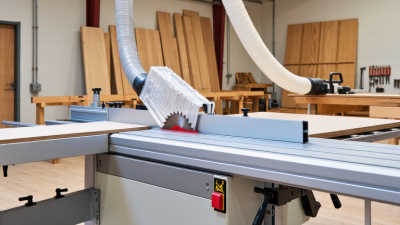
In factory visits, I look beyond cutting speed. A rigid sliding table should move smoothly without side play. The scoring blade must leave a clean melamine edge, especially around cabinet openings. I also check dust extraction ports, emergency controls, software languages, and local service coverage. A reliable machine needs accurate calibration after months of daily use. Ask for cutting tolerances, motor ratings, spare-part lead times, and operator training details. These questions reveal more than a polished brochure.
The leading suppliers differ in automation depth and machine footprint. Some prioritize compact workshops, while others build connected production lines with barcode tracking and robotic loading. Installation conditions matter too. Humidity, floor strength, voltage, and available extraction capacity can affect performance. I would not choose the fastest model automatically. It may need more maintenance than a simpler machine. That matters.
Buyers should request test cuts using their own board materials. Examine chipped edges, repeatability, noise, and setup time. Speak with users operating similar shifts. My own preference is not always correct; production data should challenge it. A cheaper purchase can become expensive when training, downtime, and imported parts are overlooked. Check every assumption.
For global buyers, cutting length is a practical starting point. Machines covering 3,200 to 5,600 mm suit panels, doors, and full-size boards. A 3,200 mm table may fit smaller workshops, while 5,600 mm supports larger cabinet production. Check usable cutting length, not only the advertised figure. I have seen layouts fail because rear clearance was ignored. Floor space matters.
Motor power usually ranges from 3 to 15 kW. Lower ratings can handle routine sheet cutting with moderate feed speeds. Higher ratings support thicker materials, repeated production, and demanding cycle times. However, more power does not guarantee better cuts. Blade quality, shaft stability, alignment, and braking performance also influence results. Ask for test-cut records and measured squareness.
Tips: Match motor power with material thickness and daily workload. Confirm local voltage, phase, frequency, and protection requirements before ordering. Request cutting tolerance data under realistic conditions. Inspect the guide rail for smooth travel and minimal vibration. Dust extraction should match the machine’s airflow needs. It is easy to overlook this. Also verify spare-part availability, manuals, operator training, and remote technical support. A compact machine may appear economical, but limited service access can increase downtime. Some specifications remain unclear until installation, so document every assumption in the purchase contract.
Global buyers should examine compliance before comparing prices, cutting capacity, or delivery times. ISO 19085-1 addresses important safety requirements for woodworking machinery, including guarding, access points, and operating conditions. For a panel saw, inspect the blade enclosure, emergency stop, scoring unit, and sliding table. Ask for the exact standard edition used during assessment. Older documents may not reflect current requirements.
Electrical safety also requires close attention. IEC 60204-1 covers machine electrical equipment, wiring, control circuits, and protective measures. Review the control cabinet, grounding method, voltage range, and fault protection. CE marking indicates conformity with applicable European Union requirements, but it is not simply a quality badge. Request the Declaration of Conformity and supporting technical records. For North American installations, UL compliance or certification may involve specific components, assemblies, and intended markets. Confirm the certificate’s scope.
A label alone proves little. Paperwork can look complete and still hide gaps. I have seen buyers overlook plug types, language requirements, and local electrical conditions. That mistake can delay installation. Ask for current test reports, risk assessments, user manuals, and maintenance instructions. Also verify whether dust extraction connections, noise data, and safety interlocks were tested with the delivered configuration. Supplier experience matters, but documented evidence matters more.