
For support and service of your machinery, Stiles has experts available 24/7 to help reduce downtime and get you back in action.
Technical Support: 616-698-6615
Service & Repairs: 616-698-7500
24/7 Parts: 1-800-727-8780
sale@inlandmachineokc.com
Parts are available from Stiles 24 hours a day, seven days a week, and are shipped from our Grand Rapids, Michigan fulfillment center.
24/7 Parts: 800-727-8780

With a customized Stiles University course, we can provide expert training for your team, on-location. Whether it's programming, operation or maintenance, we want to help you train your personnel to meet your production goals efficiently and effectively.

Experience the trusted workforce development training and machinery knowledge you rely on from Stiles University, now at your convenience. With technology changing every day and new methods being developed constantly, Stiles University Online has the latest information and training content available at your fingertips.
616-698-7500

Do you want to produce more efficiently? Processes and flows are key. We optimize these together with you, re-organize them and make sure that you reduce your lead time and save costs. This enables you to implement customized manufacturing and achieve your business goals.

Industrialized construction is evolving. Automation, robotics and advanced technology are raising the level of productivity, efficiency and precision for builders in North America.

Stiles Machinery is at the forefront of providing technology and machining for producing high quality mass timber. Automated solutions for your mass timber production can increase your manufacturing quality and productivity.

Project management services from Stiles make it easy to streamline your entire project— from concept and consultation to integration and implementation.
For support and service of your machinery, Stiles has experts available 24/7 to help reduce downtime and get you back in action.
Technical Support: 616-698-6615
Service & Repairs: 616-698-7500
24/7 Parts: 1-800-727-8780
sale@inlandmachineokc.com
Parts are available from Stiles 24 hours a day, seven days a week, and are shipped from our Grand Rapids, Michigan fulfillment center.
24/7 Parts: 800-727-8780

With a customized Stiles University course, we can provide expert training for your team, on-location. Whether it's programming, operation or maintenance, we want to help you train your personnel to meet your production goals efficiently and effectively.

Experience the trusted workforce development training and machinery knowledge you rely on from Stiles University, now at your convenience. With technology changing every day and new methods being developed constantly, Stiles University Online has the latest information and training content available at your fingertips.
616-698-7500

Do you want to produce more efficiently? Processes and flows are key. We optimize these together with you, re-organize them and make sure that you reduce your lead time and save costs. This enables you to implement customized manufacturing and achieve your business goals.

Industrialized construction is evolving. Automation, robotics and advanced technology are raising the level of productivity, efficiency and precision for builders in North America.

Stiles Machinery is at the forefront of providing technology and machining for producing high quality mass timber. Automated solutions for your mass timber production can increase your manufacturing quality and productivity.

Project management services from Stiles make it easy to streamline your entire project— from concept and consultation to integration and implementation.
For support and service of your machinery, Stiles has experts available 24/7 to help reduce downtime and get you back in action.
Technical Support: 616-698-6615 Service & Repairs: 616-698-7500 24/7 Parts: 1-800-727-8780
Parts are available from Stiles 24 hours a day, seven days a week, and are shipped from our Grand Rapids, Michigan fulfillment center.
24/7 Parts: 800-727-8780For support and service of your machinery, Stiles has experts available 24/7 to help reduce downtime and get you back in action.
Technical Support: 616-698-6615 Service & Repairs: 616-698-7500 24/7 Parts: 1-800-727-8780
Parts are available from Stiles 24 hours a day, seven days a week, and are shipped from our Grand Rapids, Michigan fulfillment center.
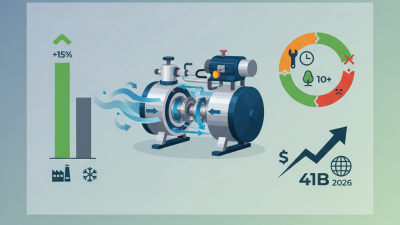
24/7 Parts: 800-727-8780Choosing a rotary air compressor in 2026 starts with the air your plant actually uses—not the largest machine in a catalog. A unit that is too small can struggle during peak demand; one that is oversized may cycle inefficiently and waste energy. Look closely at required pressure, flow, duty cycle, air quality, and expected growth. Record demand during a normal shift, including the brief surges when several tools start together. The gauge tells part of the story. The production floor tells the rest.
Compressed-air efficiency specialist Ron Marshall’s work highlights the value of measuring system demand before making equipment decisions. A practical paraphrase of that guidance is: “Measure actual demand before selecting capacity.” This is not a verified verbatim quotation. It is a useful reminder of a common mistake: choosing by horsepower alone. Compare fixed-speed and variable-speed options against your real load profile, then consider heat, noise, maintenance access, and lifecycle cost. A compressor may look right on paper and still disappoint beside a dusty workshop wall with limited ventilation. Small details matter. This guide explains how to assess those trade-offs, compare specifications, and select a rotary air compressor that fits your operation in 2026. The answer may not be the most obvious one.
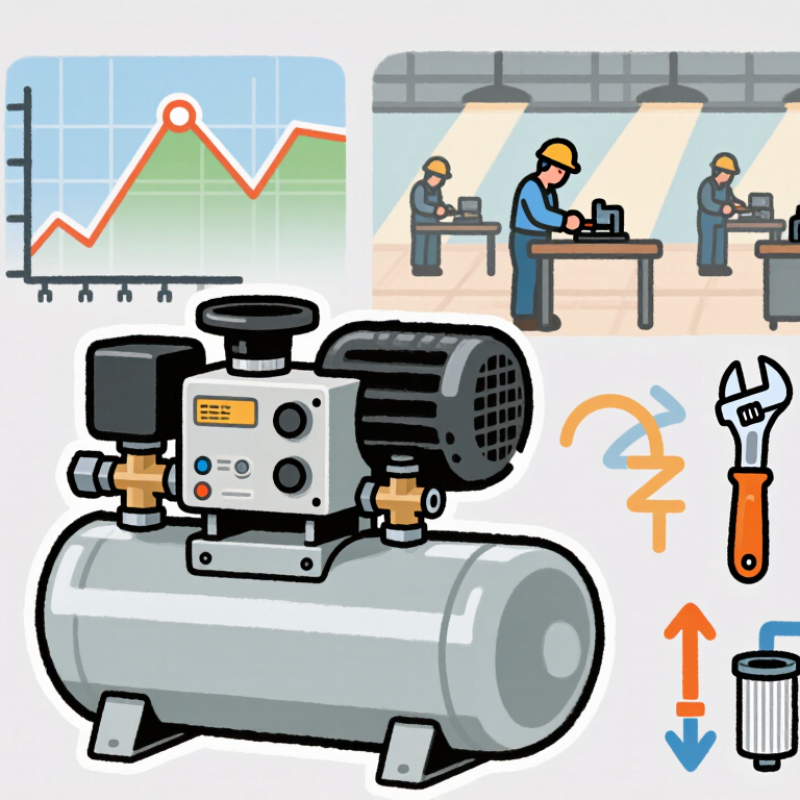
Start with the tools and machines that will run at the same time. Check each manufacturer’s airflow requirement, usually listed in cubic feet per minute, and its required pressure. Add the simultaneous demand, then allow for leaks and future equipment. A spray line and an impact wrench may have different demand patterns. Use measured operating data where possible; estimates from memory are often optimistic. Small details matter.
Tips: Record pressure at the point of use, not only at the compressor outlet. Long, narrow pipes, filters, and dryers can create pressure drops. Ask a qualified technician to assess the system if demand varies sharply. A storage tank can help manage short peaks, but it cannot make an undersized compressor meet sustained demand.
Duty cycle describes how long the compressor must operate under load. A workshop with brief tool use may need a different setup from a production line running continuously. Compare the expected run time with the compressor’s rated operating limits, and consider heat, ventilation, and maintenance access. It is easy to focus on peak airflow and overlook daily operating hours. I would revisit the numbers after observing a normal workweek; real use can be messier than the plan.
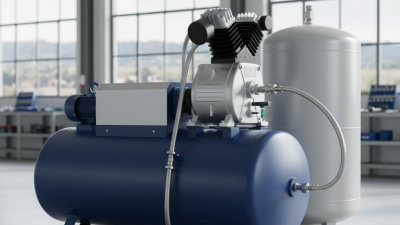
Choosing between rotary screw and rotary vane designs starts with the duty cycle, not the catalogue rating. Rotary screw compressors use meshing helical rotors to deliver steady airflow, making them a common fit for long production shifts. Their controls can also match output to changing demand, although low-load operation may still waste energy.
The U.S. Department of Energy’s Improving Compressed Air System Performance guide estimates that leaks can waste 20–30% of compressor output. That figure applies to compressed-air systems broadly, not to one compressor design. Still, it shows why leaks and operating pressure belong in a purchase assessment. Small details matter.
Rotary vane compressors use sliding vanes inside an eccentric rotor. Their compact layout can suit workshops or applications with modest, stable air demand. Vane contact creates wear, so maintenance intervals and replacement costs deserve close attention. Screw units have their own service needs, including oil separation in oil-injected models. No design wins everywhere. I would compare measured demand across a typical shift, required pressure, maintenance access, and total energy use before choosing. Nameplate capacity alone is an imperfect guide.
A rotary air compressor should be selected around the work it must do, not just its rated horsepower. Start with a week of operating data: note air demand during busy shifts, quiet periods, and machine changeovers. Energy use often rises when a compressor runs unloaded or supplies more pressure than tools require. Small leaks matter, too. A hiss near a hose fitting can become a steady cost over long operating hours.
Controls need to match the demand pattern. Load/unload control may suit fairly steady use, while variable-speed control can help when demand changes often. Ask for performance data across the expected operating range, not only at full output. Compare total system pressure, including losses in filters, dryers, and piping. The numbers are estimates. Real use may differ.
Air treatment depends on what the air touches. A general workshop may need particulate filtration and moisture removal; paint, packaging, or instrument applications can require tighter oil and dew-point limits. Check the required air quality at the point of use, then account for filter pressure drop and maintenance intervals. A dryer that looks adequate on paper may struggle in a hot room during humid weather. That detail is easy to miss. Review the assumptions with an experienced service professional, and revisit them after installation using actual energy and pressure readings.
How to Choose a Rotary Air Compressor in 2026?
Match Compressor Size and Configuration to Your Facility
Start with measured demand, not the capacity of the largest tool on your floor. Record pressure and airflow during representative shifts, including machine start-ups and overlapping production runs. The U.S. Department of Energy’s Improving Compressed Air System Performance sourcebook notes that compressed air can account for about 10% of electricity use in U.S. manufacturing. Small sizing errors can therefore affect operating costs for years. That adds up.
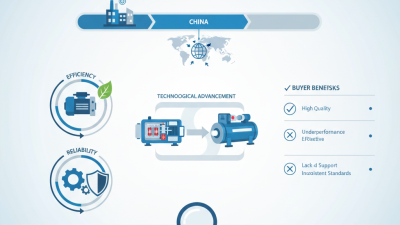
Choose a compressor that covers normal demand without running unloaded for long periods. For steady demand, a fixed-speed unit may suit the duty. Where demand changes sharply, a variable-speed compressor can adjust output, while a second unit may cover peaks or provide backup. Check pressure losses across filters, dryers, and long pipe runs before raising compressor pressure. Higher pressure can increase energy use without fixing a bottleneck. Real facilities are rarely as tidy as a spreadsheet suggests.
Tips: Log flow and pressure at the point of use for at least several production days. Compare peak demand, average demand, and future expansion separately. Ask a qualified compressed-air specialist to verify air quality requirements and measure pressure drop. Don’t oversize “just in case” without checking the cost of low-load operation.
| Facility Demand Pattern | Configuration to Consider | How to Match Compressor Size | Air Quality and Treatment | Key Checks Before Purchase |
|---|---|---|---|---|
| Steady demand throughout most operating hours | A fixed-speed rotary screw compressor may suit a stable load. Consider a variable-speed unit if measured demand changes substantially. | Measure the facility’s actual flow requirement and required pressure at the point of use. Compare demand with the compressor’s delivered flow at the specified pressure, not motor power alone. | Select filtration and drying based on the required air-quality class and application. Check pressure dew point requirements before choosing a dryer. | Confirm operating hours, inlet conditions, rated pressure, delivered flow, and the pressure drop through filters, dryers, and pipework. |
| Demand varies by shift, production cycle, or number of machines running | A variable-speed compressor can adjust output to changing demand. For a wide demand range, a base-load unit paired with a variable-speed trim unit may be considered. | Use a demand profile that captures both normal and peak flow. Avoid sizing from a short peak alone; assess how long peaks last and how often they occur. | Size treatment equipment for the relevant maximum flow and operating conditions. Verify that filtration and drying remain suitable as flow changes. | Review flow data over representative production periods. Check minimum stable output, control settings, and the potential for short cycling or unloaded operation. |
| Short, intermittent bursts of air demand | A compressor selected for the sustained demand, together with appropriately sized receiver storage, may handle brief peaks. Confirm recovery time against the production cycle. | Distinguish peak flow from average flow and identify the duration and frequency of each burst. Receiver volume can support brief demand peaks but does not replace adequate compressor capacity for sustained use. | Include a receiver drain and treatment equipment suited to the air-quality requirement. Check condensate handling and downstream pressure stability. | Measure burst duration, recovery intervals, pressure limits, and the minimum pressure required by connected equipment. |
| Demand continues during planned maintenance or when equipment availability is critical | Consider multiple compressors with a lead/lag control strategy. A standby unit can provide backup if the system is designed with sufficient remaining capacity. | Define the required production capacity with one unit unavailable, if uninterrupted supply is necessary. Check that the remaining units can meet the required flow at operating pressure. | Coordinate treatment capacity and bypass arrangements with the compressor layout. Ensure any bypass maintains the required air quality. | Set the required redundancy level, review isolation and maintenance access, and check controls for load sharing and automatic changeover. |
| General industrial air where oil carryover limits can be met with treatment | An oil-injected rotary screw compressor with suitable downstream separation and filtration may be appropriate, subject to the application’s air-quality specification. | Use the compressor’s delivered-flow data at the target pressure and stated inlet conditions. Include allowance for system pressure losses when setting the compressor discharge pressure. | Specify treatment by the required particle, water, and total oil limits. Verify the complete system performance rather than relying on a single filter description. | Check service intervals, separator and filter pressure drops, condensate disposal requirements, and applicable air-quality standards. |
| Applications with stringent oil-contamination requirements | Evaluate an oil-free compressor when the process specification or risk assessment requires oil-free compression. Confirm the required air-quality class for the installation. | Size using the application’s measured flow and pressure requirements, including simultaneous equipment use and any documented future demand. | Oil-free compression does not remove the need to assess water, particles, or contamination from downstream piping. Select drying and filtration to meet the specified air-quality class. | Verify compliance documentation, operating conditions, maintenance needs, and the air quality at the point of use. |
| Facility planning an expansion or replacing an existing system | Compare a single compressor with a staged or multi-unit arrangement. Match controls and storage to the facility’s current and forecast operating profile. | Use measured demand where available, then document expected additional equipment and its duty cycle. Avoid adding an arbitrary capacity margin without checking the load profile. | Reassess dryer, filter, receiver, and distribution capacity alongside the compressor. Existing equipment may create pressure drops or flow restrictions. | Review energy use, leakage, pressure settings, pipe sizing, ventilation, electrical supply, noise limits, and service access before final selection. |
Selection note: The right capacity and configuration depend on measured flow, required pressure, air-quality limits, duty cycle, and site conditions. Have a qualified compressed-air specialist verify the system design and equipment performance before purchase.
Installation costs start with more than the compressor’s purchase price. Check the available floor space, service clearance, ventilation, and electrical supply before choosing a model. A unit placed in a hot, cramped room may run less efficiently and become harder to maintain. Include the cost of piping, a receiver tank, filters, drainage, and any required electrical work. Measure the real demand across shifts, not just the peak figure on a production sheet. That estimate can be imperfect. Still, it is better than buying excess capacity “just in case.”
Maintenance affects both budget and uptime. Ask what routine service requires: oil, air filters, separators, belts, and technician access can differ by design and operating conditions. Keep a realistic record of service intervals and local labor costs. Small leaks matter, too; a hiss near a fitting can mean the compressor runs longer than expected. Over the equipment’s life, electricity may outweigh the initial price, especially in systems with changing demand. Compare energy use at your actual load, and consider controls that reduce unnecessary unloaded running. Do not assume the lowest quoted figure is the cheapest choice. A careful estimate should include energy, parts, labor, downtime, and the cost of keeping the system properly sized.