
-
-
-
-
-
-

With a customized Stiles University course, we can provide expert training for your team, on-location. Whether it's programming, operation or maintenance, we want to help you train your personnel to meet your production goals efficiently and effectively.
-

Experience the trusted workforce development training and machinery knowledge you rely on from Stiles University, now at your convenience. With technology changing every day and new methods being developed constantly, Stiles University Online has the latest information and training content available at your fingertips.
-
-
-

Do you want to produce more efficiently? Processes and flows are key. We optimize these together with you, re-organize them and make sure that you reduce your lead time and save costs. This enables you to implement customized manufacturing and achieve your business goals.
-

Industrialized construction is evolving. Automation, robotics and advanced technology are raising the level of productivity, efficiency and precision for builders in North America.
-

Stiles Machinery is at the forefront of providing technology and machining for producing high quality mass timber. Automated solutions for your mass timber production can increase your manufacturing quality and productivity.
-

Project management services from Stiles make it easy to streamline your entire project— from concept and consultation to integration and implementation.
-



-
-
-
-
-
-
With a customized Stiles University course, we can provide expert training for your team, on-location. Whether it's programming, operation or maintenance, we want to help you train your personnel to meet your production goals efficiently and effectively.
-
Experience the trusted workforce development training and machinery knowledge you rely on from Stiles University, now at your convenience. With technology changing every day and new methods being developed constantly, Stiles University Online has the latest information and training content available at your fingertips.
-
-
-
Do you want to produce more efficiently? Processes and flows are key. We optimize these together with you, re-organize them and make sure that you reduce your lead time and save costs. This enables you to implement customized manufacturing and achieve your business goals.
-
Industrialized construction is evolving. Automation, robotics and advanced technology are raising the level of productivity, efficiency and precision for builders in North America.
-
Stiles Machinery is at the forefront of providing technology and machining for producing high quality mass timber. Automated solutions for your mass timber production can increase your manufacturing quality and productivity.
-
Project management services from Stiles make it easy to streamline your entire project— from concept and consultation to integration and implementation.
-
Why Choose a Panel Saw for Your Manufacturing Business?
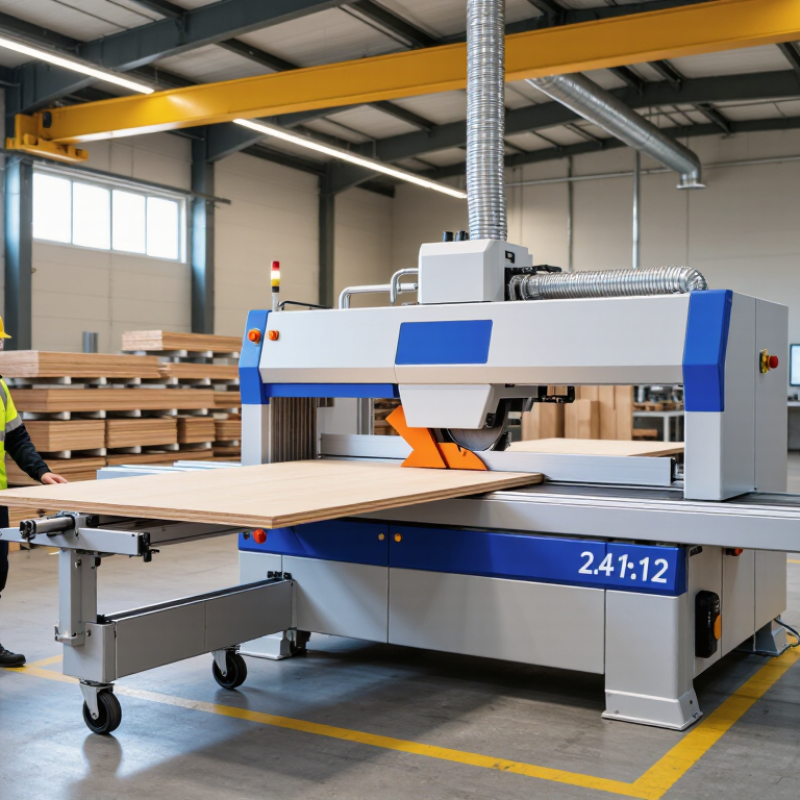
Choosing the right cutting system can shape production speed, accuracy, and material usage. For many furniture, cabinet, and woodworking manufacturers, a panel saw offers a practical balance between automation and control. It can cut large sheets into repeatable dimensions, while reducing the physical effort required for manual handling. That matters when a worker moves a 2.4-by-1.2-meter board across a busy production floor.
Industry data supports this shift toward smarter equipment. Deloitte’s 2023 Smart Manufacturing and Operations Survey found that 86% of industrial leaders expect smart manufacturing to become a major competitiveness driver within five years. Rockwell Automation’s 2024 State of Smart Manufacturing Report also reported that 95% of manufacturers are investing in artificial intelligence or planning to do so. A panel saw with digital positioning, barcode integration, or production tracking can support that direction without requiring a completely automated factory.
The benefits are not automatic. Poor blade selection, weak dust extraction, or inaccurate calibration can still create chipped edges and wasted panels. Operators need training, maintenance records, and suitable machine guarding. The U.S. Occupational Safety and Health Administration highlights guarding and safe operating procedures as essential controls for woodworking machinery. In practice, the best panel saw is not always the most expensive model. It is the machine that matches sheet sizes, daily volume, workforce skills, and future production goals. That choice deserves careful testing.
Understanding Panel Saws and Their Role in Manufacturing
Why Choose a Panel Saw for Your Manufacturing Business?
A panel saw is a cutting system designed for large sheets, including plywood, MDF, and laminated boards. It uses a guided blade carriage or moving table to produce straight, repeatable cuts. In a busy workshop, this reduces manual measuring and keeps panels stable during cutting. That detail matters when sheets are heavy, awkward, or slightly warped.
The U.S. Bureau of Labor Statistics recorded 396,800 nonfatal injury and illness cases in private manufacturing workplaces in 2022. A panel saw cannot remove every hazard, but controlled material movement can reduce unnecessary handling. OSHA woodworking guidance highlights blade contact, kickback, and airborne dust as important risks. Guards, extraction systems, training, and lockout procedures remain essential. They are not optional accessories.
Production data also benefits from consistency. A well-maintained panel saw can support repeatable dimensions, cleaner edges, and fewer rejected components. Digital stops may improve setup speed, especially when dozens of identical panels fill the cutting list. However, the machine does not correct poor planning. I have seen accurate cuts wasted by dull blades or incorrect kerf settings. That is an expensive lesson. Manufacturers should compare cycle time, sheet size, dust control, operator skill, and maintenance records before purchasing. The right machine is not always the fastest one.
Why Choose a Panel Saw for Your Manufacturing Business? - Understanding Panel Saws and Their Role in Manufacturing
| Evaluation Dimension | Panel Saw Capability | Manufacturing Value | Important Consideration |
|---|---|---|---|
| Primary Function | Cuts large sheet materials into accurately sized panels and components. | Creates a repeatable first-stage process for cabinet, furniture, fixture, and interior-product manufacturing. | The machine should match the material types, panel sizes, and production volume. |
| Suitable Materials | Commonly processes particleboard, medium-density fiberboard, plywood, laminated boards, and other wood-based sheet materials. | Supports standardized production of furniture parts, shelving, doors, worktops, and wall panels. | Blade selection, feed settings, and scoring equipment may need adjustment for coated, fragile, or thick materials. |
| Cutting Operations | Performs rip cuts, crosscuts, and programmed cutting patterns, depending on the machine configuration. | Reduces the need to reposition large sheets repeatedly during production. | Highly specialized angled, curved, or three-dimensional work may require other equipment. |
| Dimensional Accuracy | Uses a guided carriage, calibrated fence, or controlled positioning system to maintain consistent dimensions. | Improves the fit of components during edging, drilling, assembly, and installation. | Actual accuracy depends on machine condition, calibration, blade quality, material stability, and operator practice. |
| Edge Quality | A properly selected and maintained blade can produce clean, consistent edges; a scoring blade can help reduce chipping on coated boards. | Lowers rework caused by chipped laminates, uneven cuts, or excessive finishing requirements. | Dull blades, incorrect tooth geometry, and unsuitable feed rates can damage the material surface. |
| Production Throughput | Supports repeated cutting cycles and batch processing; automated models can use optimized cutting programs. | Helps increase output consistency and reduce manual measuring and handling time. | Throughput is affected by loading, unloading, cutting layout, material changes, maintenance, and operator workflow. |
| Material Utilization | Computerized cutting optimization can arrange parts on a sheet to reduce unnecessary offcuts. | May lower material waste and improve the cost efficiency of panel-based production. | Optimization is limited by blade kerf, minimum part spacing, grain direction, defects, and required part orientation. |
| Automation Potential | Depending on configuration, features may include digital measurement, programmable stops, automatic beam movement, barcode support, and cutting optimization software. | Improves repeatability and helps connect panel cutting with production planning or manufacturing software. | Automation increases equipment complexity and may require training, software integration, and technical support. |
| Labor Requirements | Manual models require operators to position and move panels; automated systems can reduce repetitive positioning tasks. | Can reduce manual measurement errors and make production procedures easier to standardize. | Operators still need training in setup, material handling, blade changes, troubleshooting, and safe operation. |
| Operator Safety | Industrial panel saws generally use guarded cutting zones, guided movement, emergency controls, and dust extraction connections. | Can provide a more controlled method for handling large sheets than improvised cutting setups. | Safeguards do not replace training, lockout procedures, personal protective equipment, and compliance with applicable regulations. |
| Dust Management | Can be connected to an industrial dust-extraction system to collect airborne particles and cutting debris. | Supports a cleaner work area, better visibility, and improved equipment maintenance when properly designed. | Extraction performance depends on airflow, duct design, filter maintenance, blade condition, and enclosure design. |
| Space and Workflow | Requires adequate room for the machine, full sheet loading, cut-piece support, operator movement, and material storage. | A well-planned layout can reduce unnecessary material movement between cutting and downstream processes. | Limited floor space may restrict panel size, automation options, and safe access around the equipment. |
| Maintenance Needs | Requires routine cleaning, blade inspection, lubrication where specified, calibration checks, and inspection of safety systems. | Regular maintenance helps preserve cut quality, uptime, and operational safety. | Maintenance schedules should follow the equipment documentation and actual production workload. |
| Best-Fit Business Profile | Businesses that regularly process large sheets and need repeatable rectangular components. | Provides a practical foundation for scalable, organized, and quality-focused panel manufacturing. | A purchase decision should consider annual sheet volume, part dimensions, labor costs, available space, safety requirements, and return on investment. |
Related Posts
-
What Is the Best Panel Saw to Buy in 2026?
-
Top Panel Saw Suppliers in China Where to Find the Best Deals?
-
Top 10 Best Sliding Table Saws for Global Buyers?
-

Top Panel Saw Options for Global Buyers in 2026?
-
China Top Wide Belt Sander Suppliers for Global Buyers?
-
How to Optimize C and C Machine Operations for Maximum Efficiency?