
-
-
-
-
-
-

With a customized Stiles University course, we can provide expert training for your team, on-location. Whether it's programming, operation or maintenance, we want to help you train your personnel to meet your production goals efficiently and effectively.
-

Experience the trusted workforce development training and machinery knowledge you rely on from Stiles University, now at your convenience. With technology changing every day and new methods being developed constantly, Stiles University Online has the latest information and training content available at your fingertips.
-
-
-

Do you want to produce more efficiently? Processes and flows are key. We optimize these together with you, re-organize them and make sure that you reduce your lead time and save costs. This enables you to implement customized manufacturing and achieve your business goals.
-

Industrialized construction is evolving. Automation, robotics and advanced technology are raising the level of productivity, efficiency and precision for builders in North America.
-

Stiles Machinery is at the forefront of providing technology and machining for producing high quality mass timber. Automated solutions for your mass timber production can increase your manufacturing quality and productivity.
-

Project management services from Stiles make it easy to streamline your entire project— from concept and consultation to integration and implementation.
-



-
-
-
-
-
-
With a customized Stiles University course, we can provide expert training for your team, on-location. Whether it's programming, operation or maintenance, we want to help you train your personnel to meet your production goals efficiently and effectively.
-
Experience the trusted workforce development training and machinery knowledge you rely on from Stiles University, now at your convenience. With technology changing every day and new methods being developed constantly, Stiles University Online has the latest information and training content available at your fingertips.
-
-
-
Do you want to produce more efficiently? Processes and flows are key. We optimize these together with you, re-organize them and make sure that you reduce your lead time and save costs. This enables you to implement customized manufacturing and achieve your business goals.
-
Industrialized construction is evolving. Automation, robotics and advanced technology are raising the level of productivity, efficiency and precision for builders in North America.
-
Stiles Machinery is at the forefront of providing technology and machining for producing high quality mass timber. Automated solutions for your mass timber production can increase your manufacturing quality and productivity.
-
Project management services from Stiles make it easy to streamline your entire project— from concept and consultation to integration and implementation.
-
Top 10 Best Sliding Table Saws for Global Buyers?
Choosing the right sliding table saw is no longer a simple matter of comparing blade diameter and motor power. Global buyers now examine accuracy, dust control, operator safety, service access, and long-term parts availability. Reports from Grand View Research and Fortune Business Insights indicate steady growth in the global woodworking machinery market, driven by furniture production, modular interiors, and small-batch manufacturing. Their estimates differ, however. That difference deserves attention.
Industry comparisons often focus on specifications. Real workshops reveal more. A heavy sliding table should move smoothly, without chatter, even when carrying a full plywood sheet. The fence should lock firmly. The scoring blade should leave a clean underside. Small details matter.
Woodworking machinery specialist Klaus Mittermaier offers a practical reminder: “A saw earns trust through repeatable accuracy, not impressive specifications.” Buyers should treat that principle seriously. A powerful motor cannot correct a poorly aligned table. Neither can a low price repair weak after-sales support.
This guide examines ten leading sliding table saw models for international buyers. It considers cutting precision, construction quality, electrical compatibility, safety systems, workflow, and ownership cost. Brand reputation matters, but it is not enough. Import duties, local technicians, voltage requirements, and replacement-part delays can change the best choice.
Some rankings remain subjective. They should.
A compact workshop may value footprint and flexibility. A production factory may prioritize cycle time and automation. The “best” sliding table saw depends on that difference. Readers should verify current specifications with manufacturers before purchasing, because product configurations and regional certifications can change.
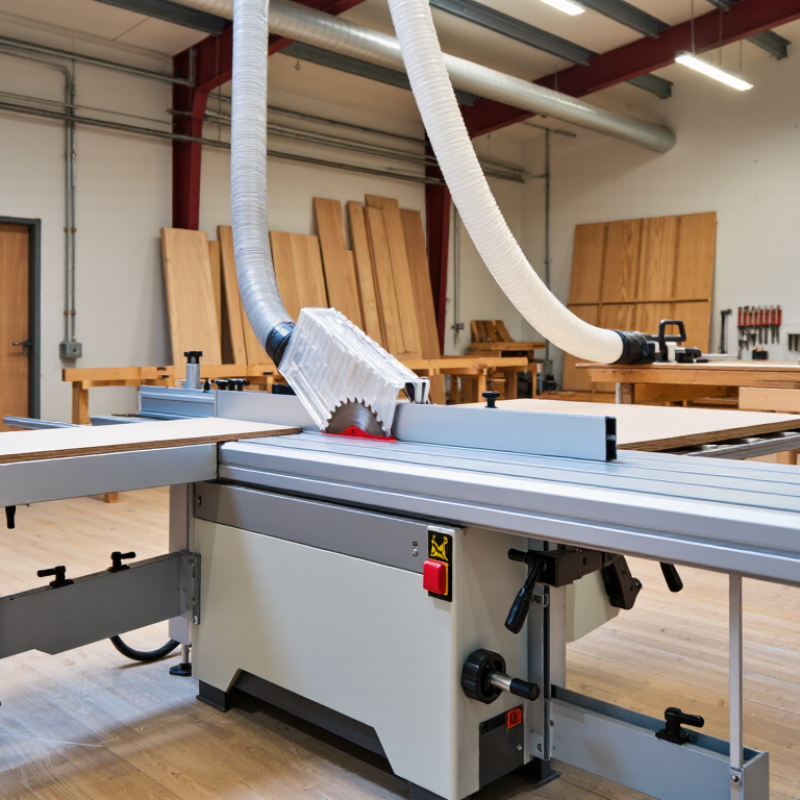
Sliding Table Saw Fundamentals: Formats, Components, and Cutting Functions
A sliding table saw combines a fixed blade unit with a moving carriage.
The carriage supports large panels during crosscutting and angled cutting. Common formats include manual, semi-automatic, and CNC-assisted machines. Manual models suit flexible workshops. CNC-assisted formats improve repeatability in higher-volume production.
Core components deserve careful inspection.
The sliding table should move smoothly, without sideways play. A rip fence controls parallel cuts, while an outrigger supports wide sheets. The scoring blade reduces underside chipping before the main blade completes the cut. Some machines also include digital stops, hydraulic adjustment, and integrated dust extraction. Small details matter.
According to Fortune Business Insights, the global woodworking machinery market reached about USD 4.72 billion in 2023.
Its report projects approximately USD 6.35 billion by 2032. This wider market includes equipment beyond sliding table saws, but it reflects continuing investment in panel processing. The ISO 19085-1 standard addresses safety requirements for woodworking machines, including guarding and control functions. Buyers should verify local electrical and safety requirements before ordering.
A practical test is revealing.
Push a weighted panel across the table. Watch for vibration, uneven travel, or fence movement. I would not judge accuracy from specifications alone. Real workshop dust can expose weaknesses quickly. Cutting functions may include ripping, crosscutting, mitre cutting, and compound cutting. Yet operator training still affects the final result. Better hardware cannot correct careless setup.
Related Posts
-

Top Panel Saw Options for Global Buyers in 2026?
-
Top Panel Saw Suppliers in China Where to Find the Best Deals?
-
Why Choose a Small CNC Machine for Your Business Needs?
-
Top 10 CNC Router Machine Features You Should Know Before Buying
-

2025 Top 5 Rotary Screw Air Compressors for Enhanced Performance
-

Top 10 CNC Router Tables for Every Budget in 2026