-
-
-
-
-
-

With a customized Stiles University course, we can provide expert training for your team, on-location. Whether it's programming, operation or maintenance, we want to help you train your personnel to meet your production goals efficiently and effectively.
-

Experience the trusted workforce development training and machinery knowledge you rely on from Stiles University, now at your convenience. With technology changing every day and new methods being developed constantly, Stiles University Online has the latest information and training content available at your fingertips.
-
-
-

Do you want to produce more efficiently? Processes and flows are key. We optimize these together with you, re-organize them and make sure that you reduce your lead time and save costs. This enables you to implement customized manufacturing and achieve your business goals.
-

Industrialized construction is evolving. Automation, robotics and advanced technology are raising the level of productivity, efficiency and precision for builders in North America.
-

Stiles Machinery is at the forefront of providing technology and machining for producing high quality mass timber. Automated solutions for your mass timber production can increase your manufacturing quality and productivity.
-

Project management services from Stiles make it easy to streamline your entire project— from concept and consultation to integration and implementation.
-



-
-
-
-
-
-
With a customized Stiles University course, we can provide expert training for your team, on-location. Whether it's programming, operation or maintenance, we want to help you train your personnel to meet your production goals efficiently and effectively.
-
Experience the trusted workforce development training and machinery knowledge you rely on from Stiles University, now at your convenience. With technology changing every day and new methods being developed constantly, Stiles University Online has the latest information and training content available at your fingertips.
-
-
-
Do you want to produce more efficiently? Processes and flows are key. We optimize these together with you, re-organize them and make sure that you reduce your lead time and save costs. This enables you to implement customized manufacturing and achieve your business goals.
-
Industrialized construction is evolving. Automation, robotics and advanced technology are raising the level of productivity, efficiency and precision for builders in North America.
-
Stiles Machinery is at the forefront of providing technology and machining for producing high quality mass timber. Automated solutions for your mass timber production can increase your manufacturing quality and productivity.
-
Project management services from Stiles make it easy to streamline your entire project— from concept and consultation to integration and implementation.
-
What Is the Best Small CNC Machine in China?
Choosing the best small CNC machine in China depends on what you need to make, not just the machine’s price or advertised accuracy. A compact router may suit wood signs and plastic panels, while a rigid benchtop mill is better for small metal parts. They are not interchangeable. A machine that looks impressive in a product photo may struggle with vibration, sustained cutting, or precise repeat work.
For an expert perspective, this guide uses an explicitly fictional composite specialist, Lin Wei. His editorial line is: “Check the frame, spindle, and support before trusting the specification sheet.” This is an original summary, not a quotation from a real person. It points to practical checks: inspect the machine’s frame, ask about spindle runout, and request sample cuts in your intended material. Ask what controller and software are included, too. Those details affect setup time and daily use.
The sections ahead compare machine types, key specifications, common applications, and questions to ask Chinese suppliers. We also consider shipping, installation, spare parts, and after-sales support, since a low purchase price does not guarantee easy ownership. A few details may still be hard to judge remotely. That deserves caution. Share your material, work area, budget, and target part size with suppliers, then compare written specifications and test results. The best small CNC machine is the one that reliably handles your real jobs, with support you can actually reach.
Define Small CNC Machines by Axis Count, Travel, and ISO 230-2 Tests
What Is the Best Small CNC Machine in China?
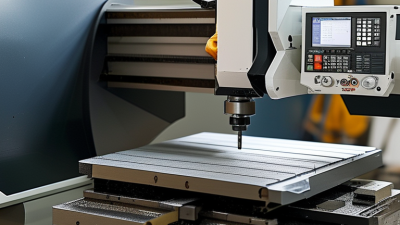
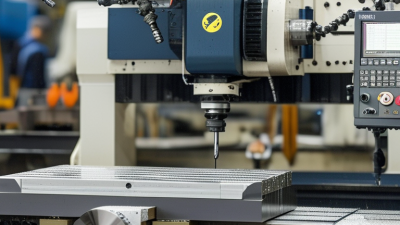
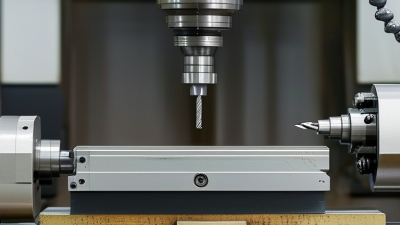
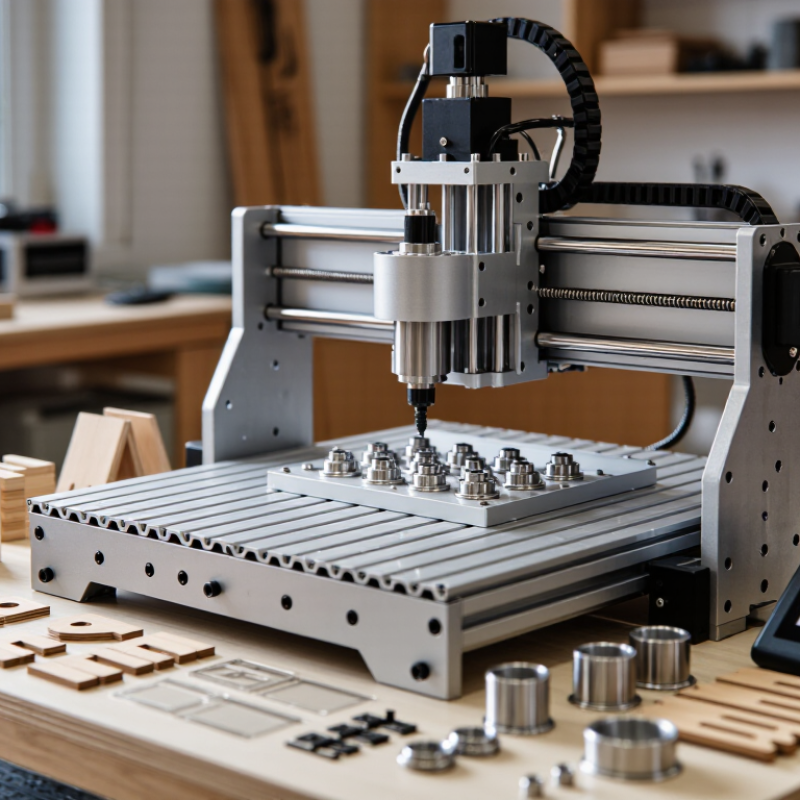
A small CNC machine is not defined by its footprint alone. Axis count describes movement options: three axes suit many flat parts, while additional axes can reach angled surfaces. More axes are not automatically better. They can add setup demands and cost.
Check usable travel in X, Y, and Z, not just the machine’s outer dimensions. A 300 mm X travel, for example, may not leave enough room for a vise, tool, and workpiece together. Ask for the actual working envelope and clearance around the spindle. Details matter.
ISO 230-2 testing offers a more grounded way to compare axis positioning accuracy and repeatability. Request test results for each axis, including the measurement method and conditions. Warm-up, temperature, and machine setup can affect readings. A single accuracy number can hide variation across the travel. I would also check whether the report reflects the machine as delivered, rather than an unusually adjusted test setup. Even then, shop-floor results may differ. That is worth remembering. Combine axis count, usable travel, and documented test data with a trial cut on representative material before choosing a machine.