For support and service of your machinery, Stiles has experts available 24/7 to help reduce downtime and get you back in action.
Technical Support: 616-698-6615
Service & Repairs: 616-698-7500
24/7 Parts: 1-800-727-8780
sale@inlandmachineokc.com
Parts are available from Stiles 24 hours a day, seven days a week, and are shipped from our Grand Rapids, Michigan fulfillment center.
24/7 Parts: 800-727-8780

With a customized Stiles University course, we can provide expert training for your team, on-location. Whether it's programming, operation or maintenance, we want to help you train your personnel to meet your production goals efficiently and effectively.

Experience the trusted workforce development training and machinery knowledge you rely on from Stiles University, now at your convenience. With technology changing every day and new methods being developed constantly, Stiles University Online has the latest information and training content available at your fingertips.
616-698-7500

Do you want to produce more efficiently? Processes and flows are key. We optimize these together with you, re-organize them and make sure that you reduce your lead time and save costs. This enables you to implement customized manufacturing and achieve your business goals.

Industrialized construction is evolving. Automation, robotics and advanced technology are raising the level of productivity, efficiency and precision for builders in North America.

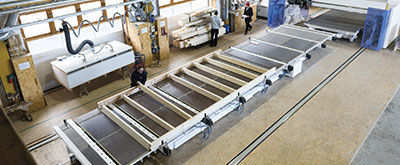
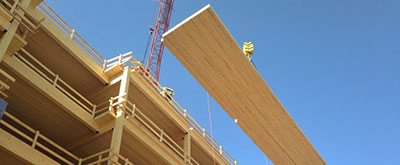
Stiles Machinery is at the forefront of providing technology and machining for producing high quality mass timber. Automated solutions for your mass timber production can increase your manufacturing quality and productivity.

Project management services from Stiles make it easy to streamline your entire project— from concept and consultation to integration and implementation.
For support and service of your machinery, Stiles has experts available 24/7 to help reduce downtime and get you back in action.
Technical Support: 616-698-6615
Service & Repairs: 616-698-7500
24/7 Parts: 1-800-727-8780
sale@inlandmachineokc.com
Parts are available from Stiles 24 hours a day, seven days a week, and are shipped from our Grand Rapids, Michigan fulfillment center.
24/7 Parts: 800-727-8780

With a customized Stiles University course, we can provide expert training for your team, on-location. Whether it's programming, operation or maintenance, we want to help you train your personnel to meet your production goals efficiently and effectively.

Experience the trusted workforce development training and machinery knowledge you rely on from Stiles University, now at your convenience. With technology changing every day and new methods being developed constantly, Stiles University Online has the latest information and training content available at your fingertips.
616-698-7500

Do you want to produce more efficiently? Processes and flows are key. We optimize these together with you, re-organize them and make sure that you reduce your lead time and save costs. This enables you to implement customized manufacturing and achieve your business goals.

Industrialized construction is evolving. Automation, robotics and advanced technology are raising the level of productivity, efficiency and precision for builders in North America.

Stiles Machinery is at the forefront of providing technology and machining for producing high quality mass timber. Automated solutions for your mass timber production can increase your manufacturing quality and productivity.

Project management services from Stiles make it easy to streamline your entire project— from concept and consultation to integration and implementation.
For support and service of your machinery, Stiles has experts available 24/7 to help reduce downtime and get you back in action.
Technical Support: 616-698-6615 Service & Repairs: 616-698-7500 24/7 Parts: 1-800-727-8780
Parts are available from Stiles 24 hours a day, seven days a week, and are shipped from our Grand Rapids, Michigan fulfillment center.
24/7 Parts: 800-727-8780For support and service of your machinery, Stiles has experts available 24/7 to help reduce downtime and get you back in action.
Technical Support: 616-698-6615 Service & Repairs: 616-698-7500 24/7 Parts: 1-800-727-8780
Parts are available from Stiles 24 hours a day, seven days a week, and are shipped from our Grand Rapids, Michigan fulfillment center.
24/7 Parts: 800-727-8780Buying a cnc machine for international production is rarely a simple equipment decision. Buyers must compare accuracy, spindle power, control systems, service support, training, and total ownership costs. A machine may look affordable on a quotation. Freight, installation, tooling, software, and downtime can change the real investment.
John Saunders, founder of Saunders Machine Works and a respected CNC educator, has said, “A CNC machine is only as good as the process around it.” That principle deserves attention. The machine itself cannot correct unclear drawings, poor workholding, weak inspection methods, or untrained operators. In a busy workshop, a powerful spindle is useless if replacement parts take twelve weeks to arrive.
This guide, “10 CNC Machine Buying Tips for Global Buyers,” examines the practical questions behind a reliable purchase. It considers production volume, material types, machine structure, controller familiarity, export logistics, warranty coverage, and local technical support. It also explains how to compare supplier claims with measurable evidence, such as repeatability data, test-cut results, and references from similar users.
Some choices remain uncomfortable. The cheapest offer may not be the lowest-cost option. A premium machine may also be excessive for a small production line. Buyers should challenge their assumptions before signing. Ask difficult questions. Request clear answers. Inspect the details.
A careful decision connects machine capability with actual work. It protects cash flow, delivery schedules, and product quality. More importantly, it creates a realistic foundation for long-term manufacturing rather than an impressive purchase that soon becomes an expensive problem.
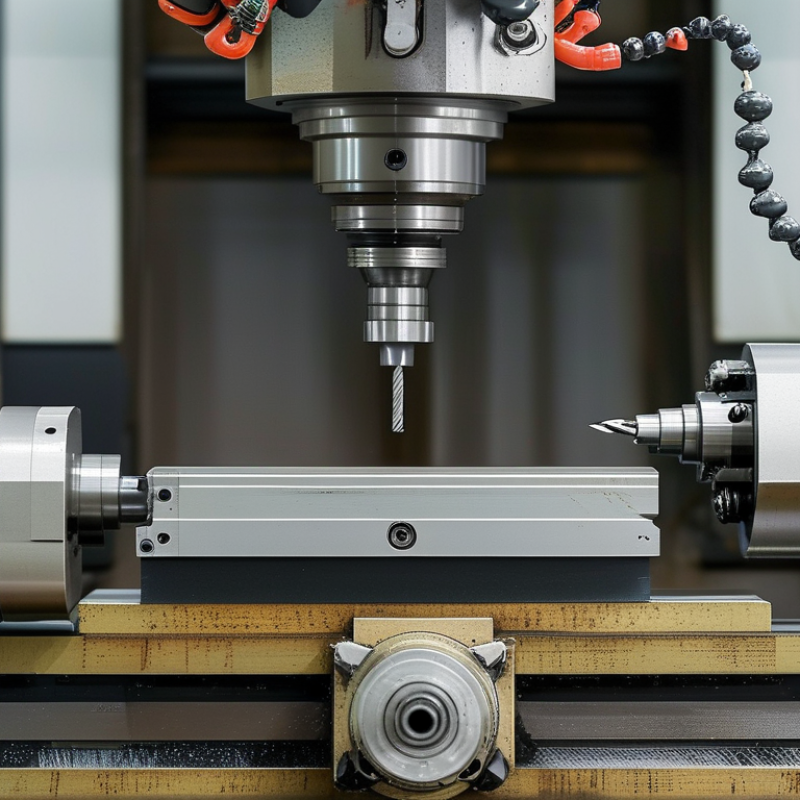
Global buyers should define accuracy before comparing CNC machine prices. “High precision” is not a measurable specification. Request ISO 230-2 positioning data for each linear axis. Check positioning accuracy, repeatability, and bidirectional deviation. These figures show how the machine behaves across its working range.
Micron-level tolerances require practical interpretation. A machine rated within 5 microns may not hold that result during a long production run. Temperature changes, cutting forces, tool wear, and fixture movement can shift the final part. Ask for test conditions, including axis travel, ambient temperature, warm-up time, and measurement equipment. A report without these details is incomplete.
Look closely at the measured graphs, not only the headline number. An axis may perform well near zero but drift near maximum travel. Request testing near the area used for your parts. Confirm whether the tolerance concerns positioning or finished-part accuracy. They are different.
A useful buying step is to send a sample drawing and inspection plan. Let the supplier explain how the machine will achieve each critical dimension. I once treated a repeatability figure as proof of overall part accuracy. That assumption was too simple. Buyers should also budget for calibration and operator training. Even strong ISO 230-2 results cannot remove every production variable. Ask difficult questions before signing.
Use the required feature tolerance to define the machine accuracy target. The chart converts common CNC tolerance levels from microns to millimeters for easier comparison during global sourcing.
ISO 230-2 specifies how positioning accuracy and repeatability are measured, including tests along the machine axes; it does not set one universal pass/fail limit for every machine. Request ISO 230-2 test results at the intended travel position and compare the reported values with the tolerance required by your parts.
Match axis count, work envelope, and setup reduction before comparing prices. A three-axis machine suits many flat or prismatic parts. Complex angled surfaces may justify four or five axes. More axes do not automatically improve productivity. They can increase programming, maintenance, and operator training demands.
Measure your largest part, fixture, tool clearance, and door access. Leave practical space around the work envelope. A machine that barely fits today may restrict future orders.
Tip 1: Map every current setup.
Record loading, clamping, probing, and inspection time.
Tip 2: Compare usable travel, not advertised travel.
Tip 3: Request a cycle-time trial using your material and tolerances.
Tip 4: Check local service response, training, spare-part access, and electrical compatibility.
I have seen buyers overvalue axis count and undervalue fixture design. That mistake is expensive. A smaller machine with fewer setups may outperform a larger machine with frequent repositioning. Ask for measured data, and challenge optimistic assumptions.
Choosing spindle specifications begins with the material, not the advertised maximum speed. Aluminum often benefits from higher RPM and moderate torque, especially with small carbide tools. Steel needs steadier torque at lower speeds, where 8,000 RPM may be more useful than 24,000 RPM. Wood, plastics, and composites can require faster rotation, but heat and chip evacuation still control the result. Material varies.
For mixed production, a spindle range from 8,000 to 24,000 RPM offers practical flexibility. However, maximum RPM alone proves little. Ask for the torque curve, continuous power rating, and rated duty cycle. A 5.5 kW spindle may cut aggressively, yet poor low-speed torque can cause chatter during heavy steel work. Check whether power remains stable under load, not only at idle. That detail is easy to miss.
I recommend running sample cuts before purchase, using your actual stock, cutters, feeds, and coolant method. Measure surface finish, spindle temperature, cycle time, and tool wear after repeated passes. A test piece can expose vibration that a specification sheet hides. I once favored a faster spindle and underestimated torque; the finish looked acceptable, but production time increased. That mistake still influences my buying checklist. Leave room for doubt. Reliable decisions come from documented tests, service records, and clear technical support.
Global CNC buyers should verify the control, not merely the machine’s cutting envelope. Ask for the control model, software revision, G-code dialect, option list, and backup procedure before signing. The World Robotics 2024 report recorded 541,302 industrial robot installations in 2023. That scale makes clean machine data valuable across mixed production cells. Keep this practical.
Request a live demonstration of MTConnect and OPC UA using the exact controller proposed. Check tag names, timestamps, units, alarm states, tool data, read/write permissions, and certificate handling. A protocol logo proves little if the gateway exposes only spindle speed. Test one production-like job, then inspect the raw payload at the receiving system. Some suppliers may resist this. That resistance deserves attention, although it does not automatically prove poor engineering.
Global voltage checks need equal discipline. IEC 60038 defines standard supply voltages, but local facilities still vary. Match the nameplate to phase count, frequency, voltage range, transformer capacity, grounding, and short-circuit requirements. Confirm whether the machine accepts 380–415 V at 50 Hz or 440–480 V at 60 Hz. Do not assume a frequency converter solves every control or motor issue. A field lesson: a missing transformer can delay an otherwise capable machine and erase its purchase-price advantage.
A low purchase price can hide expensive ownership costs. Global buyers should compare total cost of ownership before approving a CNC machine. Include purchase price, shipping, installation, training, tooling, software, energy, maintenance, and downtime.
Energy deserves a practical estimate. Record the machine’s rated power, average cutting load, standby hours, and local electricity rate. A 12 kW machine running 2,400 productive hours may consume far less than its maximum rating suggests. However, idle shifts, warm-up cycles, and compressed air can change the result. Measure real workshop usage when possible. Numbers matter.
Service costs need equal attention. Ask for preventive maintenance schedules, replacement-part pricing, response times, and technician availability in your region. A two-day delay can cost more than a discounted service contract. Calculate five-year ROI using realistic annual output, labor savings, scrap reduction, and resale value. Subtract energy, consumables, repairs, financing, and planned downtime. My first estimate was too optimistic because it ignored operator training and fixture changes. That assumption failed in production. Build a conservative case, then test a best-case case separately.
For example, a machine costing $90,000 may require $18,000 for installation and training. Annual energy and service expenses could reach $9,500, while downtime may add another $4,000. If verified annual benefits total $42,000, the five-year return looks attractive only after including these recurring costs. Request written service terms and inspect comparable installations when possible. A spreadsheet is useful. Real operating evidence is better.
| Buying Dimension | Compact 3-Axis VMC | Standard 3-Axis VMC | Heavy-Duty 3-Axis VMC | 5-Axis Machining Center | CNC Turning Center |
|---|---|---|---|---|---|
| 1. Typical application | Small-batch parts, prototypes, light aluminum and steel work | General production, mold components and industrial parts | Large steel parts, heavy cuts and high material-removal work | Complex aerospace, medical and impeller-type components | Rotational parts, shafts, bushings and fittings |
| 2. Typical work envelope | 600 × 400 × 450 mm | 800 × 500 × 550 mm | 1,200 × 700 × 650 mm | 700 × 600 × 500 mm | Maximum turning diameter: 400 mm; maximum turning length: 600 mm |
| 3. Indicative purchase price | US$58,000 | US$118,000 | US$210,000 | US$285,000 | US$135,000 |
| 4. Freight, installation and commissioning | US$7,000 | US$12,000 | US$18,000 | US$25,000 | US$14,000 |
| 5. Estimated annual electricity cost | US$1,400 | US$2,400 | US$4,800 | US$6,500 | US$2,800 |
| 6. Estimated annual service and consumables | US$3,000 | US$5,000 | US$8,000 | US$11,000 | US$5,500 |
| 7. Annual downtime allowance | US$2,000 | US$3,000 | US$5,000 | US$7,000 | US$3,500 |
| 8. Estimated five-year residual value | US$12,000 | US$25,000 | US$45,000 | US$65,000 | US$27,000 |
| 9. Estimated five-year total cost of ownership | US$85,000 | US$152,000 | US$272,000 | US$367,500 | US$181,000 |
| 10. Estimated annual net production contribution | US$27,000 | US$52,000 | US$86,000 | US$125,000 | US$60,000 |
| Five-year ROI | 58.8% | 71.1% | 58.1% | 70.1% | 65.7% |
| Simple payback period | 2.4 years | 2.5 years | 2.7 years | 2.5 years | 2.5 years |
| Cost and ROI calculation assumptions | |||||
| All figures are representative planning estimates in U.S. dollars for comparison purposes, not supplier quotations. Electricity cost assumes approximately US$0.12 per kWh, around 2,000 productive spindle hours per year, and typical machine utilization. Five-year TCO is calculated as: purchase price + freight, installation and commissioning + five years of electricity, service, consumables and downtime allowance − estimated residual value. Five-year ROI is calculated as: ((annual net production contribution × 5) − five-year TCO) ÷ five-year TCO × 100. Actual results vary according to labor rates, local tariffs, import duties, utilization, tooling, financing, maintenance conditions and part complexity. | |||||