
For support and service of your machinery, Stiles has experts available 24/7 to help reduce downtime and get you back in action.
Technical Support: 616-698-6615
Service & Repairs: 616-698-7500
24/7 Parts: 1-800-727-8780
sale@inlandmachineokc.com
Parts are available from Stiles 24 hours a day, seven days a week, and are shipped from our Grand Rapids, Michigan fulfillment center.
24/7 Parts: 800-727-8780

With a customized Stiles University course, we can provide expert training for your team, on-location. Whether it's programming, operation or maintenance, we want to help you train your personnel to meet your production goals efficiently and effectively.

Experience the trusted workforce development training and machinery knowledge you rely on from Stiles University, now at your convenience. With technology changing every day and new methods being developed constantly, Stiles University Online has the latest information and training content available at your fingertips.
616-698-7500

Do you want to produce more efficiently? Processes and flows are key. We optimize these together with you, re-organize them and make sure that you reduce your lead time and save costs. This enables you to implement customized manufacturing and achieve your business goals.

Industrialized construction is evolving. Automation, robotics and advanced technology are raising the level of productivity, efficiency and precision for builders in North America.

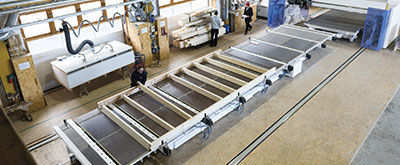
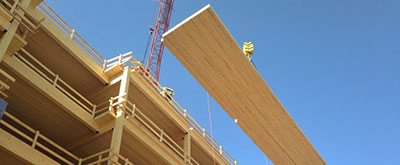
Stiles Machinery is at the forefront of providing technology and machining for producing high quality mass timber. Automated solutions for your mass timber production can increase your manufacturing quality and productivity.

Project management services from Stiles make it easy to streamline your entire project— from concept and consultation to integration and implementation.
For support and service of your machinery, Stiles has experts available 24/7 to help reduce downtime and get you back in action.
Technical Support: 616-698-6615
Service & Repairs: 616-698-7500
24/7 Parts: 1-800-727-8780
sale@inlandmachineokc.com
Parts are available from Stiles 24 hours a day, seven days a week, and are shipped from our Grand Rapids, Michigan fulfillment center.
24/7 Parts: 800-727-8780

With a customized Stiles University course, we can provide expert training for your team, on-location. Whether it's programming, operation or maintenance, we want to help you train your personnel to meet your production goals efficiently and effectively.

Experience the trusted workforce development training and machinery knowledge you rely on from Stiles University, now at your convenience. With technology changing every day and new methods being developed constantly, Stiles University Online has the latest information and training content available at your fingertips.
616-698-7500

Do you want to produce more efficiently? Processes and flows are key. We optimize these together with you, re-organize them and make sure that you reduce your lead time and save costs. This enables you to implement customized manufacturing and achieve your business goals.

Industrialized construction is evolving. Automation, robotics and advanced technology are raising the level of productivity, efficiency and precision for builders in North America.

Stiles Machinery is at the forefront of providing technology and machining for producing high quality mass timber. Automated solutions for your mass timber production can increase your manufacturing quality and productivity.

Project management services from Stiles make it easy to streamline your entire project— from concept and consultation to integration and implementation.
For support and service of your machinery, Stiles has experts available 24/7 to help reduce downtime and get you back in action.
Technical Support: 616-698-6615 Service & Repairs: 616-698-7500 24/7 Parts: 1-800-727-8780
Parts are available from Stiles 24 hours a day, seven days a week, and are shipped from our Grand Rapids, Michigan fulfillment center.
24/7 Parts: 800-727-8780For support and service of your machinery, Stiles has experts available 24/7 to help reduce downtime and get you back in action.
Technical Support: 616-698-6615 Service & Repairs: 616-698-7500 24/7 Parts: 1-800-727-8780
Parts are available from Stiles 24 hours a day, seven days a week, and are shipped from our Grand Rapids, Michigan fulfillment center.
24/7 Parts: 800-727-8780A wood CNC machine is a computer-controlled cutting system that shapes timber, plywood, MDF, and similar materials with remarkable repeatability. CNC means computer numerical control. The operator creates a digital drawing, converts it into toolpaths, and sends those instructions to motors moving the router across three axes. A sharp bit then removes material, layer by layer. The process looks simple. It is not always forgiving.
Industry data shows why this technology matters. Grand View Research estimates that the global computer numerical control machines market will continue expanding through the decade, supported by automation and customized manufacturing. A 2024 report from MarketsandMarkets also identifies woodworking automation as a growing application, especially for furniture, cabinetry, and panel processing. These figures describe a broad CNC market, not only wood CNC equipment. That distinction matters.
CNC woodworking educator James Hamilton explains the practical principle clearly: “A CNC router repeats a toolpath, not a design decision.” The machine can cut the same cabinet panel fifty times, but it cannot correct a poor drawing, loose workholding, or an unsuitable bit. In a real workshop, dust covers the spoilboard, clamps must stay outside the cutting path, and feed speed changes with every material. Operators still need judgment. A wood CNC machine improves consistency; it does not replace craftsmanship. Mistakes become repeatable, too.
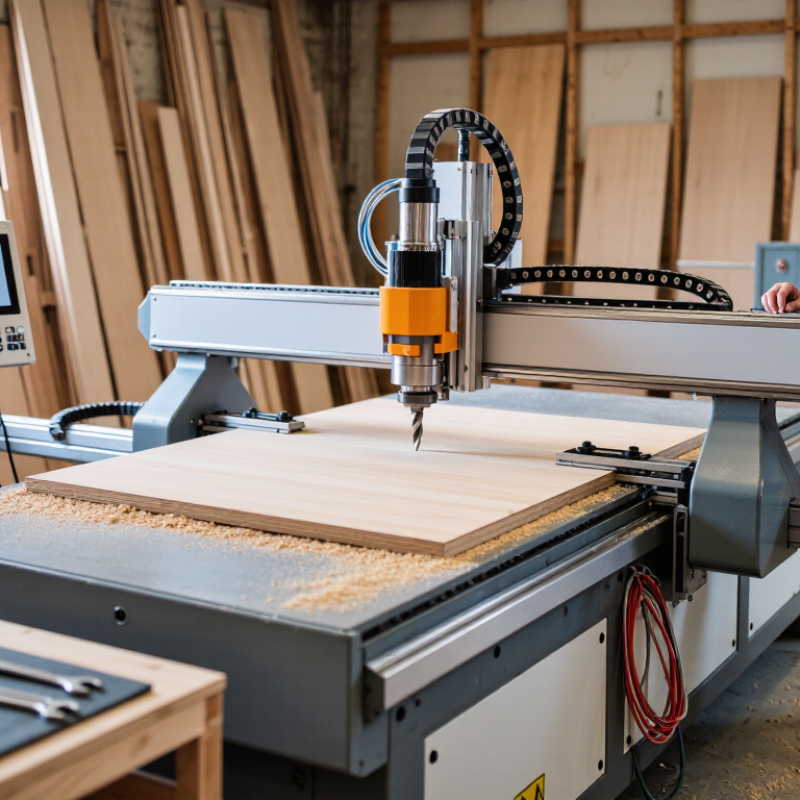
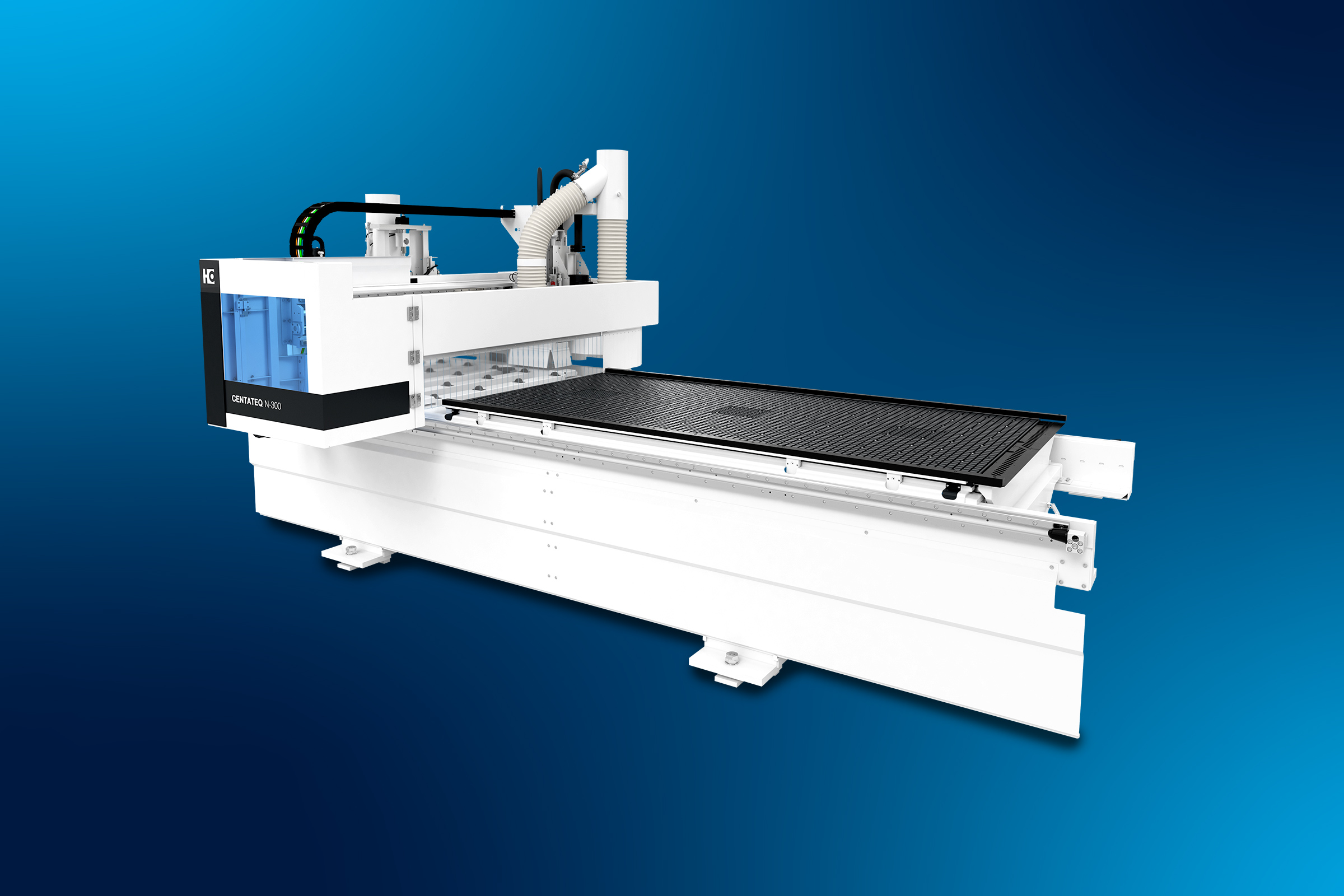
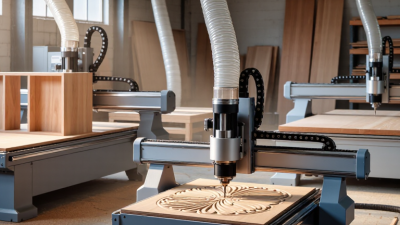
A wood CNC machine is a computer-controlled cutting system for shaping timber, plywood, MDF, and similar materials. CNC means computer numerical control. Instead of guiding a router by hand, the machine follows programmed coordinates. These coordinates control movement along the X, Y, and Z axes. The cutting tool removes material with measured passes.
A typical machine includes a rigid frame, a worktable, drive motors, a spindle, and control software. The operator creates or imports a digital drawing, then converts it into toolpaths. The software defines cutting depth, speed, direction, and tool movement.
Clamps or vacuum fixtures hold the board flat. Poor holding can ruin an accurate job.
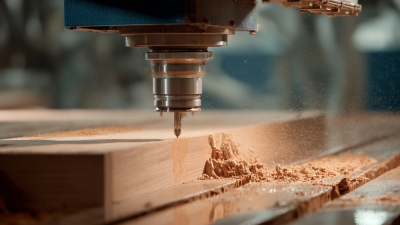
The process looks simple. It is not always simple. Wood changes with moisture, grain direction, and internal tension. A setting that works on pine may fail on dense hardwood. Experienced operators check the tool, secure the material, and run a small test cut. They also watch for dust buildup, excessive heat, and unusual vibration. A dull bit can burn the surface instead of cutting cleanly. That detail is easy to overlook.
The machine can produce cabinet parts, carved panels, signs, joints, templates, and repeated components. It improves consistency, but it does not replace judgment. Design errors still become physical errors.
Safe operation requires guarding, eye protection, dust control, and proper training. Never treat the machine like a large printer. It has real cutting force.
A wood CNC machine converts digital drawings into controlled cutting movements. Its controller reads G-code, then directs motors along the X, Y, and Z axes. The spindle rotates a cutting tool, often between 12,000 and 24,000 revolutions per minute. A 2024 Grand View Research report estimates the global CNC machine market will expand at about 10% annually through 2030. Woodworking automation is clearly moving beyond large factories.
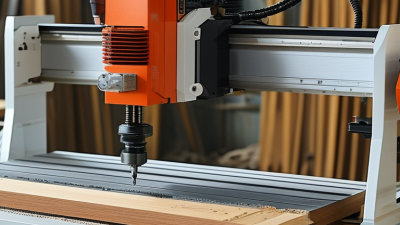
The frame and gantry provide structural stability during cutting. Linear rails guide movement, while stepper or servo motors control positioning accuracy. The spoilboard supports the panel and allows sacrificial cutting without damaging the main bed. Vacuum tables hold sheets flat, but poor sealing can reduce suction quickly. Small gaps matter. The spindle collet also deserves attention; a loose tool can create burn marks, vibration, and inaccurate edges.
Design software creates the toolpath, while the controller translates it into motion. Sensors can detect limits, tool height, or unexpected movement. A dust-collection system removes chips from the cutting zone and protects visibility. According to MarketsandMarkets’ 2024 CNC machine report, automation demand is strongly linked to productivity and repeatability. In practical use, however, software settings still require judgment. I have found that identical panels may cut differently when moisture, grain direction, or clamping pressure changes. Reports often emphasize precision, but workshop conditions remain imperfect. Calibration is not optional.
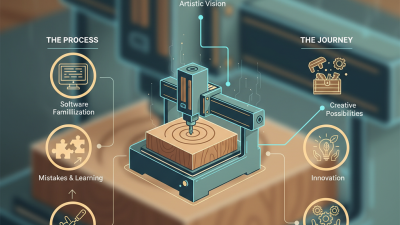
A wood CNC machine turns a digital drawing into controlled cutting movements.
The process begins with CAD software, where a designer creates shapes, holes, or decorative patterns. Those shapes must reflect the material’s thickness and the cutter’s diameter.
Not ready yet.
Small errors matter.
CAM software converts the drawing into toolpaths. A toolpath tells the cutter where to travel, how deep to cut, and how quickly to move. It also sets cutting order, spindle speed, and feed rate.
The software then uses a post-processor to create machine instructions, commonly written as G-code. These instructions contain coordinates, depth changes, and movement commands. A controller reads them and drives the machine’s motors along the X, Y, and Z axes.
Before cutting, an experienced operator checks the virtual simulation for collisions and unwanted cuts.
The workpiece must be firmly secured, because vibration can damage both the wood and the cutter. The operator then sets the origin, confirms the tool length, and tests the first movements above the material.
I still treat this stage cautiously. A correct-looking file can contain a wrong origin or an unsafe plunge.
Different woods also react differently; soft grain may tear, while dense areas can cause burning.
A small test cut often exposes problems that software cannot predict.
What Is a Wood CNC Machine and How Does It Work?
The Step-by-Step Wood CNC Machining Process
A wood CNC machine uses computer-controlled motion to cut, drill, and carve timber. The process begins with a CAD drawing, where dimensions, joints, and surface details are defined. That design moves into CAM software, which converts geometry into toolpaths and cutting instructions. The operator chooses a suitable cutter, cutting depth, feed rate, and spindle speed for the wood species. These settings are not universal. Hard maple, plywood, and soft pine react differently.
The board is inspected for warping, knots, moisture, and loose edges before machining. It is secured firmly on the spoilboard, then the machine’s X, Y, and Z axes are referenced. The operator sets the work origin and checks the cutter length. A dry run above the material can reveal misplaced paths or incorrect dimensions. It feels slow, but it prevents expensive mistakes. Roughing passes remove bulk material quickly, while finishing passes refine curves, pockets, lettering, or joinery. Dust matters.
During cutting, an experienced operator watches chip size, vibration, sound, and heat. A burning smell may indicate a dull cutter or an overly slow feed. After machining, edges are inspected with calipers, and critical joints are test-fitted. Small burrs can be sanded, but large errors usually require revisiting the toolpath. I have found that perfect computer drawings still produce imperfect parts when stock shifts. That assumption can fail. Careful workholding and measured checks make the process repeatable, even when each board behaves slightly differently.
A wood CNC machine uses computer-controlled movements to cut, carve, drill, or engrave wood. A digital drawing becomes toolpaths, while motors guide the cutting bit across three axes. In a workshop, the process feels precise, but setup still matters. A dull bit can burn a clean edge. Applications include cabinet parts, carved signs, furniture joints, doors, templates, and small prototypes. It also handles repeated cuts more consistently than hand tools, especially when dimensions are checked carefully.
Common materials include plywood, MDF, solid hardwood, softwood, bamboo panels, and cork-based sheets. Each reacts differently to heat, vibration, and moisture. Plywood may splinter at the exit side, while MDF creates fine dust along almost every cut. Hard maple often needs slower passes than soft pine. Material thickness, grain direction, cutter geometry, feed rate, and spindle speed must match. I would test on scrap first; attractive settings on paper can fail around a real knot.
Safety begins before the spindle starts. Wear eye protection, hearing protection, and a suitable respirator for fine particles. Secure the workpiece firmly, keep hands away from the cutting zone, and verify the emergency stop. Use dust extraction, but never treat it as complete protection. Inspect cables and bits, remove loose clothing, and stay nearby during operation. Follow the machine manual and applicable workplace rules. Even experienced operators can miss a clamp or misread a toolpath. Slow checks prevent expensive and painful mistakes.
| Category | Key Point | Description and Practical Information |
|---|---|---|
| Basic Definition | Computer Numerical Control wood machine | A wood CNC machine is a computer-controlled cutting, carving, drilling, or engraving system used to shape wood and wood-based panels. It moves a cutting tool along programmed paths on one or more axes. |
| Main Components | Mechanical and control systems |
|
| How It Works | Digital design to finished part | The operator creates or imports a CAD design, selects the material and cutting tool, generates CAM toolpaths, and exports machine instructions commonly known as G-code. The controller interprets these instructions and moves the tool along programmed X, Y, and Z coordinates. |
| Typical Workflow | Five-step production process |
|
| Machine Types | Common configurations |
|
| Typical Applications | What it can produce |
|
| Suitable Materials | Commonly machined materials |
|
| Materials Requiring Care | Potentially difficult or unsuitable materials | Materials containing hidden nails, screws, staples, stones, or other metal objects can damage the cutter and create hazardous projectiles. Some treated, painted, or composite boards may produce harmful dust or fumes; their safety data and machining recommendations should be checked before use. |
| Cutting Tools | Common router-bit choices |
|
| Important Machining Variables | Factors affecting quality and tool life | Cutting results depend on spindle speed, feed rate, depth of cut, cutter diameter, flute count, wood species, grain direction, material thickness, and workholding. Parameters should be tested on scrap material because a setting suitable for MDF may not be suitable for solid hardwood. |
| Advantages | Why CNC is used in woodworking | CNC machining provides repeatable dimensions, accurate patterns, efficient production of multiple parts, rapid design changes, complex contours, and reduced dependence on manual layout. It can also combine several operations in one setup. |
| Limitations | What operators should consider | A CNC machine requires correct digital files, tooling knowledge, setup time, maintenance, and reliable workholding. It does not eliminate the need for finishing, inspection, dust control, or operator supervision. Wood movement caused by moisture and grain variation can also affect final accuracy. |
| Dust and Ventilation | Control of airborne particles | Wood dust should be collected at the cutting point with a suitable extraction system. The work area should be kept clean, and compressed air should not be used in a way that redistributes dust into the breathing zone. Fine dust can create respiratory and fire hazards. |
| Personal Protective Equipment | Basic protective equipment | Wear safety glasses or a face shield, hearing protection, and suitable respiratory protection when dust extraction does not adequately control exposure. Avoid loose clothing, jewelry, and unsecured long hair near moving machinery. |
| Safe Setup | Checks before starting a job | Inspect the cutter for damage, confirm that the tool is tightened correctly, secure the material firmly, verify the origin and travel limits, check the toolpath simulation, and ensure that the emergency stop is accessible. Confirm that clamps and fixtures cannot enter the toolpath. |
| Operating Safety | Rules during machining | Keep the machine enclosure or safety zone closed when applicable, remain nearby during operation, and stop the machine before measuring, cleaning, changing tools, or removing material. Never reach into the cutting area while the spindle or axis mechanisms are moving. |
| Maintenance | Routine care | Remove chips and dust, inspect cables and guards, check belts or drive mechanisms, lubricate components according to the machine manual, maintain a sharp and balanced tool, and verify calibration when dimensional accuracy becomes inconsistent. |
| Quality Inspection | After-machining checks | Check overall dimensions, hole locations, pocket depth, edge quality, surface finish, and signs of burning, tear-out, or delamination. Compare critical features with the CAD drawing or a calibrated measuring tool. |