
Skip to content

Top Wide Belt Sander Manufacturers for Global Buyers

Choosing a wide belt sander for international production requires more than comparing prices and motor ratings. Buyers must examine sanding width, abrasive speed, feed accuracy, dust extraction, and service support. A machine that performs smoothly during a showroom test may behave differently in a hot, dusty factory. Small details matter.

Dr. R. Bruce Hoadley, a respected wood technology specialist, wrote, “Good machining begins with understanding how wood responds to the tool.” That principle applies directly to wide belt sander selection. Dense hardwood, softwood panels, veneer, and engineered boards each demand different sanding pressures and abrasive sequences. A reliable manufacturer should explain these differences clearly, not promise one setting for every material.

This guide reviews leading wide belt sander manufacturers serving global buyers. It considers machine construction, calibration, control systems, energy use, operator safety, replacement parts, and technical training. It also looks beyond polished brochures. Does the supplier answer difficult questions? Are service technicians available in the buyer’s region? Can the machine maintain consistent thickness across a wide panel?

Performance must remain stable.

No manufacturer is perfect. Some offer excellent engineering but limited local support. Others provide accessible pricing while sacrificing advanced automation. Buyers should reflect on their actual production needs before choosing. The cheapest machine may become expensive after repeated calibration problems, delayed parts, or uneven sanding. A well-matched wide belt sander should produce consistent surfaces, reduce rework, and remain practical throughout years of demanding operation.
Top Wide Belt Sander Manufacturers for Global Buyers

What Is a Wide Belt Sander and How Does It Work?

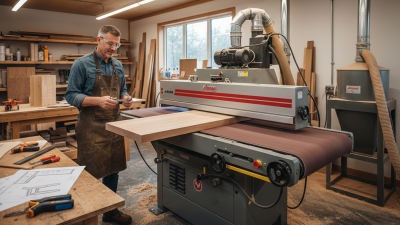
A wide belt sander is an industrial machine that removes material evenly from large panels and solid wood parts. It uses a continuous abrasive belt stretched between powered rollers. The workpiece moves beneath the belt on a feed table. As the belt rotates, abrasive grains level high spots and refine the surface.

Pressure rollers hold the panel steady during feeding. A calibrated sanding head controls the cutting depth. Many machines use multiple heads for coarse removal and final finishing. Dust extraction is essential because sanding creates fine particles quickly. In practical workshop tests, feed speed and abrasive grit often affect results more than expected. A slow feed removes more material, while a finer grit leaves a smoother touch.

Global buyers should examine working width, motor power, table stability, and control accuracy. The machine must match the panel size and material hardness. Steel components matter in dusty production environments. Reliable manufacturers should provide clear installation data, spare-part access, and operator training. These details influence downtime after delivery.

Not every specification tells the whole story. A powerful motor cannot fix poor alignment. An impressive sanding width may waste energy in a small workshop. Buyers should request sample processing and measure thickness variation before ordering. That step can reveal uneven feeding, excessive noise, or inconvenient maintenance points. Small flaws become expensive when production runs every day.

Key Factors for Evaluating Wide Belt Sander Manufacturers

Top Wide Belt Sander Manufacturers for Global Buyers

Key Factors for Evaluating Wide Belt Sander Manufacturers

Choosing a wide belt sander manufacturer requires more than comparing catalog prices. Ask for test results on your actual wood species, panel thickness, and target finish. A reliable supplier should show sanding tolerance, feed-speed stability, and abrasive belt tracking under continuous operation. Small details matter. Check spindle vibration, conveyor alignment, emergency stops, and dust extraction points during a factory visit.

Practical experience often reveals weaknesses hidden in brochures. Request sample panels from both softwood and hardwood. Inspect the surface under angled light for chatter marks, uneven removal, or burn spots. Ask how operators change belts and calibrate the machine. Clear manuals, remote diagnostics, and available replacement parts reduce costly downtime. Verify electrical specifications, safety documentation, and compliance requirements for your destination market.

Supplier history also deserves careful review. Speak with users operating similar machines, not only selected references. Compare warranty terms, response times, installation support, and technician training. Calculate total ownership costs, including abrasives, electricity, maintenance, and shipping. A low purchase price can become expensive after repeated alignment problems. Be cautious with perfect promises. A manufacturer that openly discusses limits may be more dependable than one claiming universal performance. I would also request a long-duration test, because a machine can perform well for twenty minutes and still struggle during an eight-hour shift.

Leading Wide Belt Sander Manufacturers for Global Buyers

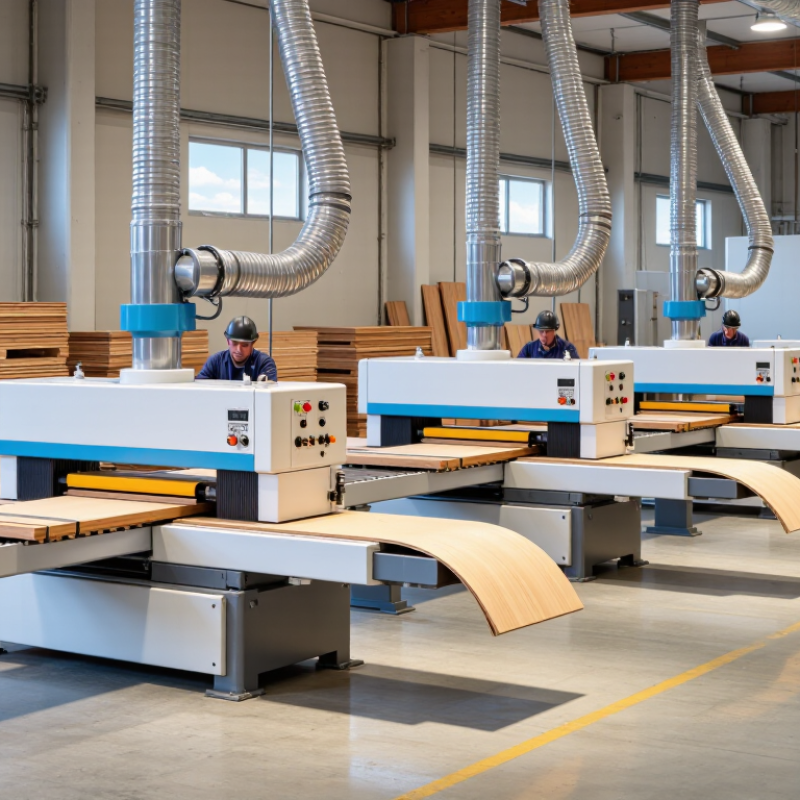
Leading wide belt sander manufacturers for global buyers combine stable engineering with practical support. Their machines serve furniture plants, flooring producers, and custom woodworking facilities. A reliable manufacturer should explain sanding width, abrasive speed, motor power, and thickness tolerance clearly.

In real production, consistency matters more than impressive brochures. Operators notice vibration when a heavy panel passes through the machine. They also notice uneven pressure marks after several hours of operation. Leading manufacturers use rigid frames, balanced rollers, accurate thickness controls, and dust extraction connections. Ask for test results using your actual wood species and panel dimensions. That small step can reveal problems early.

Service capability deserves equal attention. Global buyers need installation guidance, spare parts, electrical documentation, and responsive technical communication. Manufacturers with documented quality systems often provide better traceability during production changes. Still, certification alone cannot guarantee a perfect machine. I have seen specifications look strong while training materials remained unclear. That is worth questioning. Check adjustment access, emergency controls, maintenance intervals, and operator safety instructions before purchase. A supplier should also discuss voltage requirements, shipping protection, and local compliance duties without vague promises. The best partnership feels practical: clear drawings, honest limitations, and support after delivery.

Comparing Machine Types, Features, and Production Capabilities

Wide belt sanders differ mainly by sanding head arrangement and finishing purpose. Single-head machines suit workshops needing flexible thickness control and surface preparation. Two-head models remove material quickly, then refine the panel in one pass. Calibrating sanders use a heavier first head for accurate stock removal. Wide working widths support panels, doors, and laminated boards.

Key features directly affect daily output. Look for adjustable feed speeds, belt oscillation, electronic thickness control, and stable pressure rollers. Segmented pressure shoes help maintain contact across uneven surfaces. Dust extraction ports should match the sanding width and abrasive load. Dust control matters. Poor extraction can shorten belt life and reduce finish quality. I would not trust catalog figures alone; abrasive type and operator settings change actual performance.

Production capability depends on more than motor power. A machine rated for high throughput may struggle with thin panels or frequent thickness changes. Review feed speed ranges, maximum sanding width, minimum workpiece thickness, and setup time. Ask for test results using your material and target finish. Real output includes loading, belt changes, cleaning, and maintenance. That gap deserves attention. A reliable supplier should provide electrical requirements, service guidance, spare-part availability, and documented acceptance standards. These details help global buyers compare machines with evidence rather than attractive specifications.

How to Select, Purchase, and Import the Right Wide Belt Sander

Top Wide Belt Sander Manufacturers for Global Buyers

Selecting a wide belt sander starts with the workpiece, not the catalog. Record panel width, thickness range, abrasive type, feed speed, and daily volume. Ask suppliers for test sanding using your actual material. Measure finish quality, thickness consistency, dust output, and abrasive consumption. A polished demonstration can hide practical problems.

Energy use deserves close attention. The International Energy Agency estimates motor-driven systems consume about 46% of global electricity. Request motor ratings, standby consumption, and measured power per production hour. Confirm ISO 19085-8 safety provisions, emergency stops, guarding, and dust-collection requirements. For importing, check the machine’s voltage, frequency, plug configuration, manuals, spare-part list, and wooden-crate treatment. The 2023 World Bank Logistics Performance Index evaluates customs, infrastructure, tracking, and timeliness. Use these categories when comparing freight agents and delivery quotes. Incoterms, insurance, installation support, and warranty response should be written clearly. Cheap freight is not always cheap.

Tips: Compare total landed cost, not the invoice price. Include duty, inland transport, commissioning, filters, belts, and downtime. Request a serial-numbered inspection report and a video of the final machine running. Leave extra budget for adaptation. My own checklist would still miss something, especially when local electrical rules differ. A pre-shipment inspection can expose loose guards, incorrect wiring, or missing tools before the container leaves. Cite supplier claims against test records, not promises.

Top Wide Belt Sander Manufacturers for Global Buyers - How to Select, Purchase, and Import the Right Wide Belt Sander

Wide Belt Sander Selection, Purchasing, and Import Reference Table
Evaluation Dimension Common Industry Data or Specification Why It Matters to Global Buyers Recommended Verification Method
Primary Application Solid wood, wood panels, MDF, particleboard, plywood, veneer, and coated boards The abrasive head, pressure system, and dust extraction requirements depend on the material being processed. Provide the manufacturer with material samples, target thickness, removal rate, and required surface finish.
Working Width Common machine widths include approximately 630 mm, и900 mm, 1100 mm, 1300 mm, and 1600 mm The working width should match the largest workpiece while allowing practical clearance and production flexibility. Compare the usable sanding width, maximum panel width, and actual conveyor opening in the technical drawing.
Number of Sanding Heads One-head machines are suited to basic calibration or finishing; two- and three-head machines support staged stock removal and finishing. Multiple heads can reduce the number of passes and improve consistency in higher-volume production. Request a process recommendation showing abrasive grit sequence, removal per head, and expected output per hour.
Abrasive Belt Size Belt dimensions vary by machine width and sanding-head design; belt length is commonly specified in the machine quotation. Standardized belt sizes can simplify local sourcing, inventory planning, and maintenance. Confirm belt width, belt length, joint type, grit range, availability, and compatibility with locally sourced abrasives.
Feed Speed Many industrial machines provide adjustable feed speeds, commonly within approximately 4–30 m/min, depending on configuration. Adjustable speed helps balance stock removal, surface quality, abrasive life, and production capacity. Ask for the usable speed range under load rather than the no-load motor or conveyor speed.
Sanding Belt Speed Industrial abrasive belt speeds are commonly around 15–30 m/s, subject to abrasive type and sanding-head design. Higher belt speed may improve productivity but can increase heat, dust, noise, and abrasive consumption. Confirm the rated speed, compatible abrasive specification, belt tracking method, and safety guarding.
Main Drive Motor Power Typical industrial configurations range from approximately 15 kW to more than 75 kW in total sanding-head power. Motor power affects removal capacity, electrical demand, operating cost, and facility requirements. Request a complete electrical load schedule covering sanding motors, feed motor, dust extraction, pumps, and auxiliary equipment.
Thickness Adjustment Industrial machines generally use powered table adjustment with digital or electronic thickness indication. Accurate adjustment improves repeatability and reduces setup time between batches. Check thickness range, adjustment resolution, calibration procedure, and repeatability test results.
Minimum and Maximum Workpiece Thickness The allowable range depends on machine construction; many production models handle thin panels through substantially thicker solid-wood components. The range must cover current products and planned future production. Use the manufacturer’s official specification sheet and confirm tolerances with actual sample parts.
Pressure System Common options include contact rollers, pressure shoes, segmented electronic pads, or combinations of these systems. The pressure system affects edge control, calibration accuracy, veneer processing, and finishing quality. Match the pressure system to part geometry, minimum workpiece size, and required edge-sanding performance.
Dust Extraction Requirement A wide belt sander normally requires a dedicated dust extraction system; airflow and connection details depend on machine size and sanding configuration. Insufficient extraction can reduce finish quality, increase fire risk, and cause premature machine contamination. Obtain the total airflow, static-pressure requirement, duct diameter, connection locations, and filtration requirements.
Electrical Compatibility Common industrial supplies include three-phase 380–415 V at 50 Hz; other voltage and frequency combinations may require customization. Incorrect electrical specifications can delay installation or require costly transformers and control changes. Confirm voltage, frequency, phase, full-load current, control voltage, plug standards, and motor efficiency requirements.
Control System Basic push-button controls, digital displays, programmable controllers, automatic thickness setting, and production data monitoring are common options. Controls influence setup time, operator training, process repeatability, and troubleshooting efficiency. Request the control-system language options, interface screenshots, alarm list, remote-support capability, and backup procedure.
Safety Features Typical features include emergency stops, access-door interlocks, belt-break detection, overload protection, anti-kickback protection, and guarded moving parts. Safety compliance is essential for legal operation, insurance, worker protection, and import approval. Review the risk assessment, safety circuit documentation, conformity declaration, and applicable destination-country requirements.
Quality Documentation A professional supply package should include manuals, electrical diagrams, spare-parts lists, lubrication instructions, inspection records, and test reports. Complete documentation lowers installation risk and supports local maintenance. Make document delivery a contractual milestone before shipment and require English-language versions where needed.
Factory Acceptance Test A practical test should verify dimensions, thickness accuracy, feed operation, sanding performance, safety functions, and electrical operation. Pre-shipment testing reduces the risk of receiving a machine that does not meet the agreed specification. Use an approved test checklist, video record critical tests, and link final payment to documented acceptance.
Packaging and Shipping Data Confirm net weight, gross weight, package dimensions, center of gravity, lifting points, moisture protection, and container-loading plan. Accurate shipping data is required for freight quotations, unloading equipment, and warehouse planning. Request final packing-list data before booking freight and verify whether the machine fits a standard container.
Indicative Customs Classification Woodworking sanding and polishing machinery is commonly associated with HS heading 8465; the precise national tariff subheading must be confirmed locally. Correct classification affects import duty, taxes, permits, and customs documentation. Ask a customs broker or destination-country customs authority to confirm the final tariff code before purchase.
Commercial Terms Common international terms include EXW, FCA, FOB, CIF, and DAP, with responsibilities defined by Incoterms® rules. The selected term determines who manages export clearance, freight, insurance, import clearance, and delivery risk. Compare total landed cost rather than equipment price alone, including freight, duty, taxes, installation, and commissioning.
Warranty and After-Sales Support Verify warranty duration, covered components, response time, remote troubleshooting, technician availability, and spare-parts support. A sanding line can create significant downtime costs if technical support or replacement parts are unavailable. Include service response times, critical spare-parts lists, training obligations, and escalation procedures in the purchase contract.
Total Cost of Ownership Consider purchase price, abrasives, electricity, dust extraction, maintenance, spare parts, labor, downtime, and installation costs. The lowest initial price may not produce the lowest cost per finished panel or component. Calculate cost per square meter or component using the expected production volume and operating schedule.

Note: Technical ranges shown above are indicative industry references. Final specifications, conformity requirements, tariff classification, and shipping conditions must be confirmed in the supplier’s quotation and with the relevant destination-country authorities.