For support and service of your machinery, Stiles has experts available 24/7 to help reduce downtime and get you back in action.
Technical Support: 616-698-6615
Service & Repairs: 616-698-7500
24/7 Parts: 1-800-727-8780
sale@inlandmachineokc.com
Parts are available from Stiles 24 hours a day, seven days a week, and are shipped from our Grand Rapids, Michigan fulfillment center.
24/7 Parts: 800-727-8780

With a customized Stiles University course, we can provide expert training for your team, on-location. Whether it's programming, operation or maintenance, we want to help you train your personnel to meet your production goals efficiently and effectively.

Experience the trusted workforce development training and machinery knowledge you rely on from Stiles University, now at your convenience. With technology changing every day and new methods being developed constantly, Stiles University Online has the latest information and training content available at your fingertips.
616-698-7500

Do you want to produce more efficiently? Processes and flows are key. We optimize these together with you, re-organize them and make sure that you reduce your lead time and save costs. This enables you to implement customized manufacturing and achieve your business goals.

Industrialized construction is evolving. Automation, robotics and advanced technology are raising the level of productivity, efficiency and precision for builders in North America.

Stiles Machinery is at the forefront of providing technology and machining for producing high quality mass timber. Automated solutions for your mass timber production can increase your manufacturing quality and productivity.

Project management services from Stiles make it easy to streamline your entire project— from concept and consultation to integration and implementation.
For support and service of your machinery, Stiles has experts available 24/7 to help reduce downtime and get you back in action.
Technical Support: 616-698-6615
Service & Repairs: 616-698-7500
24/7 Parts: 1-800-727-8780
sale@inlandmachineokc.com
Parts are available from Stiles 24 hours a day, seven days a week, and are shipped from our Grand Rapids, Michigan fulfillment center.
24/7 Parts: 800-727-8780

With a customized Stiles University course, we can provide expert training for your team, on-location. Whether it's programming, operation or maintenance, we want to help you train your personnel to meet your production goals efficiently and effectively.

Experience the trusted workforce development training and machinery knowledge you rely on from Stiles University, now at your convenience. With technology changing every day and new methods being developed constantly, Stiles University Online has the latest information and training content available at your fingertips.
616-698-7500

Do you want to produce more efficiently? Processes and flows are key. We optimize these together with you, re-organize them and make sure that you reduce your lead time and save costs. This enables you to implement customized manufacturing and achieve your business goals.

Industrialized construction is evolving. Automation, robotics and advanced technology are raising the level of productivity, efficiency and precision for builders in North America.

Stiles Machinery is at the forefront of providing technology and machining for producing high quality mass timber. Automated solutions for your mass timber production can increase your manufacturing quality and productivity.

Project management services from Stiles make it easy to streamline your entire project— from concept and consultation to integration and implementation.
For support and service of your machinery, Stiles has experts available 24/7 to help reduce downtime and get you back in action.
Technical Support: 616-698-6615 Service & Repairs: 616-698-7500 24/7 Parts: 1-800-727-8780
Parts are available from Stiles 24 hours a day, seven days a week, and are shipped from our Grand Rapids, Michigan fulfillment center.
24/7 Parts: 800-727-8780For support and service of your machinery, Stiles has experts available 24/7 to help reduce downtime and get you back in action.
Technical Support: 616-698-6615 Service & Repairs: 616-698-7500 24/7 Parts: 1-800-727-8780
Parts are available from Stiles 24 hours a day, seven days a week, and are shipped from our Grand Rapids, Michigan fulfillment center.
24/7 Parts: 800-727-8780In the rapidly evolving landscape of CNC manufacturing, staying updated is crucial. Industry expert John Smith once stated, "The future of CNC manufacturing lies in adaptability and innovation." This sentiment reflects the shift towards advanced technologies and methodologies that enhance efficiency and productivity in CNC machining.
Recent trends indicate a growing emphasis on automation and precision engineering. Many companies are integrating artificial intelligence and machine learning into their CNC processes. This evolution is not just about machines; it’s about rethinking production strategies. Improved software can predict failures, thus reducing downtime, a significant goal in today's manufacturing environment.
However, embracing these changes is not without challenges. Companies often struggle with skill gaps in their workforce. Transitioning to new technologies requires training and a shift in mindset. As industries adapt, it is essential to reflect on the lessons learned and the hurdles faced along the way. Understanding these trends will help organizations navigate the complexities of CNC manufacturing effectively.
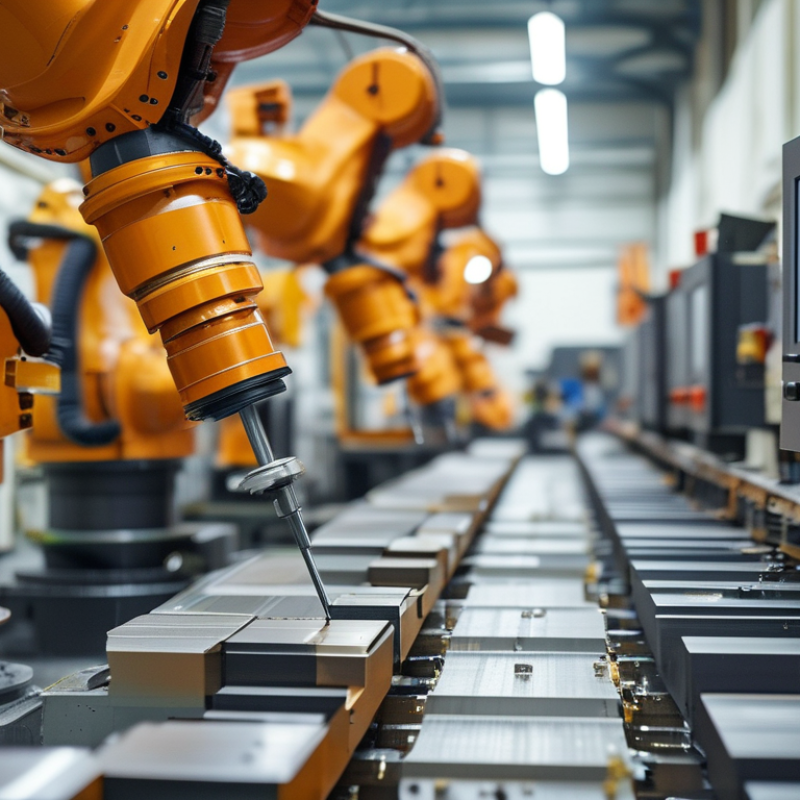
In recent years, CNC manufacturing has made significant strides through advanced technology and automation integration. One major trend is the increased use of artificial intelligence in CNC systems. AI enhances machining processes by analyzing data in real-time, improving accuracy and efficiency. However, some manufacturers struggle with the initial setup and understanding of AI capabilities. They may find it challenging to train staff adequately for this technology.
Another trend is the rise of collaborative robots, or cobots, working alongside human operators. These machines optimize production without risking workplace safety. Yet, the integration of cobots can be complex. Organizations must address compatibility issues with existing machinery and train workers to interact effectively with robots. The potential for human error remains, particularly in communication between machines and operators.
Predictive maintenance is also gaining traction, allowing manufacturers to identify potential failures before they disrupt production. By analyzing equipment data, companies can schedule maintenance proactively. Still, many are hesitant due to upfront costs and a lack of understanding of how to implement such systems. Balancing innovation with practical execution continues to be a challenge in the evolving landscape of CNC manufacturing.
The integration of CNC technology into additive manufacturing has captured significant attention. CNC machines provide precision and efficiency that enhance the additive process. This synergy creates parts with intricate details while ensuring high quality. The future of manufacturing is leaning toward this combination. Companies are increasingly investing in this hybrid approach to remain competitive.
CNC in additive manufacturing allows for unique applications. Industries like aerospace and automotive benefit from the ability to create lightweight structures. These structures have complex geometries that traditional methods struggle to achieve. However, challenges remain. The alignment of CNC processes with additive techniques can lead to inconsistencies. Achieving smooth transitions between different materials requires fine-tuning.
As the market evolves, companies must adapt their strategies. Training on modern CNC technologies is crucial. Understanding the limitations of both processes can highlight improvement areas. Manufacturers should create a culture of continuous learning. This will ensure teams can leverage these advancements effectively. The journey toward seamless integration is ongoing and requires reflection.
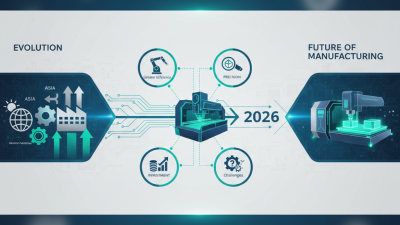
The integration of IoT and smart technology into CNC manufacturing processes is transforming the industry. According to a recent report by MarketsandMarkets, the global IoT in manufacturing market is expected to reach USD 263 billion by 2026, growing at a CAGR of 29.4%. This growth signifies an increased reliance on data-driven decision-making in CNC operations. Real-time data collection facilitates predictive maintenance, reducing downtime and increasing overall productivity.
Smart technology allows CNC machines to communicate with each other, creating a cohesive production environment. For instance, sensors can monitor machine performance and detect anomalies. This leads to quicker response times and minimizes production interruptions. A study by McKinsey highlights that manufacturers using smart technology can achieve a 20-30% reduction in operational costs. However, the transition has challenges. Many companies face difficulties in integrating legacy systems with new technologies.
When adopting IoT solutions, consider starting small. Pilot projects can help assess compatibility without major disruptions. Furthermore, investing in employee training is crucial. Workers must understand new systems to leverage their full potential effectively. Continuous evaluation of these systems is also necessary to ensure they align with evolving production needs. This iterative approach can foster innovation while mitigating risks associated with technology adoption.
This chart highlights the top ten CNC manufacturing trends, showcasing the impact of IoT and smart technology on CNC processes. The data represents the growing adoption rates of these trends over recent years.
Sustainability practices in CNC manufacturing are becoming increasingly important. Many manufacturers are adopting eco-friendly materials and processes. This shift is driven by a growing demand for environmentally responsible products. Reducing waste is a significant focus for these operations. Efficient machining techniques can minimize scrap and excess material.
Investing in energy-efficient machines is another trend. These machines consume less power and have a reduced carbon footprint. Manufacturers are also exploring renewable energy to power their facilities. However, transitioning to sustainable practices can be challenging. It often requires upfront investment and staff training. Some companies struggle to balance cost and environmental impact.
Water conservation is another critical area. CNC operations use substantial amounts of water for cooling and cleaning. Implementing closed-loop systems can help recycle this resource. Companies that prioritize sustainability can enhance their reputation. Yet, it is essential to remain realistic about the challenges involved. Continuous improvement and commitment are vital for successful integration.
| Trend | Description | Impact on Sustainability | Year Introduced |
|---|---|---|---|
| Smart Manufacturing | Integration of IoT and AI to optimize production. | Reduces waste and energy usage through better data analytics. | 2022 |
| Additive Manufacturing | Use of 3D printing technologies in CNC operations. | Minimizes material waste compared to traditional methods. | 2021 |
| Energy-efficient Machinery | Adoption of machinery that consumes less power. | Dramatically reduces energy costs and carbon footprint. | 2020 |
| Recycling Waste Materials | Generating usable materials from production scraps. | Promotes circular economy within manufacturing. | 2023 |
| Supply Chain Transparency | Enhanced tracking of materials and processes. | Supports ethical sourcing and reduces reliance on harmful materials. | 2022 |
| Remote Monitoring | Monitoring CNC operations from distant locations. | Decreases downtime and resource waste. | 2021 |
| Digital Twins | Creating virtual models of physical machines. | Enhances predictive maintenance and reduces unplanned downtime. | 2021 |
| Sustainable Material Usage | Use of biodegradable and recyclable materials in machining. | Lowers environmental impact of products. | 2023 |
| Collaborative Robots (Cobots) | Robots that work alongside humans to enhance productivity. | Improves efficiency while reducing human workload. | 2022 |
The integration of artificial intelligence (AI) and machine learning into CNC manufacturing is revolutionizing production processes. Recent studies show that companies implementing advanced AI technologies have seen productivity gains of up to 20%. These technologies allow for real-time data analysis, optimizing machine operations and reducing waste. For instance, predictive maintenance powered by AI helps identify potential equipment failures before they occur, saving time and costs.
Incorporating machine learning algorithms enhances precision. These algorithms analyze historical data to improve production accuracy. Reports indicate that manufacturers who utilize machine learning can achieve up to 30% better accuracy in their output. This improvement reduces rework and material costs significantly, especially in complex machining tasks.
To fully leverage AI and machine learning, manufacturers must invest in staff training. It's essential that the workforce understands these technologies. Also, regular assessment of AI performance is crucial. This ensures that the manufacturing processes evolve alongside technological advancements. Embracing a culture of continuous improvement will create resilience in the manufacturing landscape.