For support and service of your machinery, Stiles has experts available 24/7 to help reduce downtime and get you back in action.
Technical Support: 616-698-6615
Service & Repairs: 616-698-7500
24/7 Parts: 1-800-727-8780
sale@inlandmachineokc.com
Parts are available from Stiles 24 hours a day, seven days a week, and are shipped from our Grand Rapids, Michigan fulfillment center.
24/7 Parts: 800-727-8780

With a customized Stiles University course, we can provide expert training for your team, on-location. Whether it's programming, operation or maintenance, we want to help you train your personnel to meet your production goals efficiently and effectively.

Experience the trusted workforce development training and machinery knowledge you rely on from Stiles University, now at your convenience. With technology changing every day and new methods being developed constantly, Stiles University Online has the latest information and training content available at your fingertips.
616-698-7500

Do you want to produce more efficiently? Processes and flows are key. We optimize these together with you, re-organize them and make sure that you reduce your lead time and save costs. This enables you to implement customized manufacturing and achieve your business goals.

Industrialized construction is evolving. Automation, robotics and advanced technology are raising the level of productivity, efficiency and precision for builders in North America.

Stiles Machinery is at the forefront of providing technology and machining for producing high quality mass timber. Automated solutions for your mass timber production can increase your manufacturing quality and productivity.

Project management services from Stiles make it easy to streamline your entire project— from concept and consultation to integration and implementation.
For support and service of your machinery, Stiles has experts available 24/7 to help reduce downtime and get you back in action.
Technical Support: 616-698-6615
Service & Repairs: 616-698-7500
24/7 Parts: 1-800-727-8780
sale@inlandmachineokc.com
Parts are available from Stiles 24 hours a day, seven days a week, and are shipped from our Grand Rapids, Michigan fulfillment center.
24/7 Parts: 800-727-8780

With a customized Stiles University course, we can provide expert training for your team, on-location. Whether it's programming, operation or maintenance, we want to help you train your personnel to meet your production goals efficiently and effectively.

Experience the trusted workforce development training and machinery knowledge you rely on from Stiles University, now at your convenience. With technology changing every day and new methods being developed constantly, Stiles University Online has the latest information and training content available at your fingertips.
616-698-7500

Do you want to produce more efficiently? Processes and flows are key. We optimize these together with you, re-organize them and make sure that you reduce your lead time and save costs. This enables you to implement customized manufacturing and achieve your business goals.

Industrialized construction is evolving. Automation, robotics and advanced technology are raising the level of productivity, efficiency and precision for builders in North America.

Stiles Machinery is at the forefront of providing technology and machining for producing high quality mass timber. Automated solutions for your mass timber production can increase your manufacturing quality and productivity.

Project management services from Stiles make it easy to streamline your entire project— from concept and consultation to integration and implementation.
For support and service of your machinery, Stiles has experts available 24/7 to help reduce downtime and get you back in action.
Technical Support: 616-698-6615 Service & Repairs: 616-698-7500 24/7 Parts: 1-800-727-8780
Parts are available from Stiles 24 hours a day, seven days a week, and are shipped from our Grand Rapids, Michigan fulfillment center.
24/7 Parts: 800-727-8780For support and service of your machinery, Stiles has experts available 24/7 to help reduce downtime and get you back in action.
Technical Support: 616-698-6615 Service & Repairs: 616-698-7500 24/7 Parts: 1-800-727-8780
Parts are available from Stiles 24 hours a day, seven days a week, and are shipped from our Grand Rapids, Michigan fulfillment center.
24/7 Parts: 800-727-8780Choosing the right sanding machine affects finish quality, operator safety, production speed, and long-term costs. Industry reports from Grand View Research and MarketsandMarkets identify automation, dust extraction, abrasive efficiency, and flexible processing as major trends in the global sanding equipment market. These trends matter on the workshop floor. A machine may promise high throughput, yet leave swirl marks on oak panels or remove too much material from soft pine.
The best choice begins with the workpiece, not the brochure. Consider belt width, sanding speed, motor power, feed control, dust collection, abrasive replacement, and service support. The U.S. Occupational Safety and Health Administration also stresses effective wood-dust control, making extraction performance a practical buying requirement rather than an optional feature. Small details matter. Check noise levels. Inspect emergency stops. Ask for test samples.
A useful principle from abrasive-industry training is simple: “The best sanding result comes from matching the abrasive to the material and process.” This statement is widely repeated in professional finishing practice, but its original speaker should be verified before formal publication. That uncertainty deserves attention. This guide therefore focuses on measurable evidence, including sample testing, maintenance records, energy use, and supplier support. These ten tips for choosing the best sanding machine are designed for real decisions, where a smooth surface, clean air, and predictable operating costs matter more than impressive specifications.
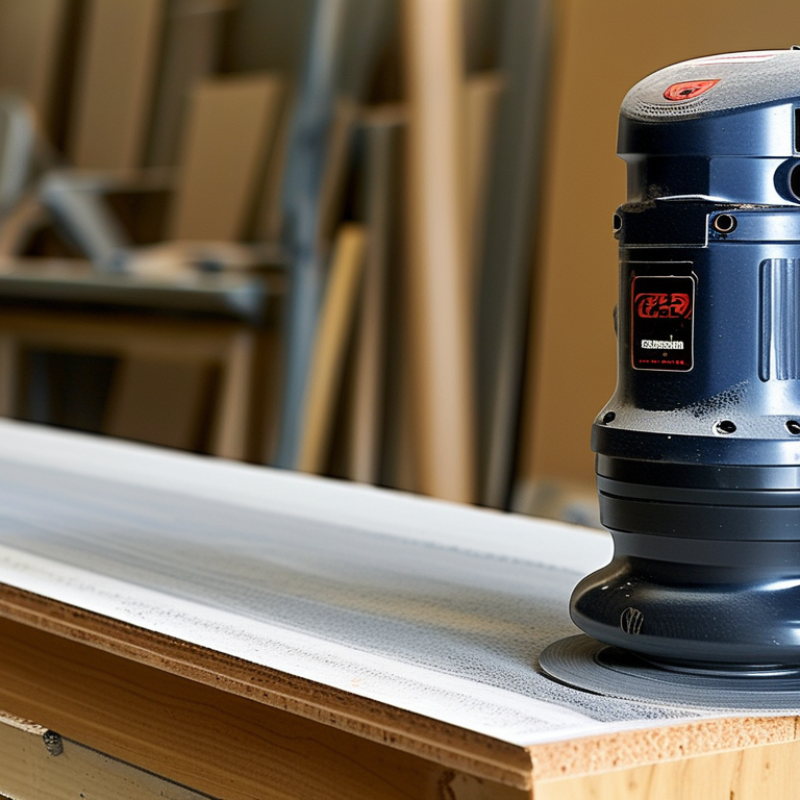
Choosing sanding equipment starts with the surface, material, and production volume. Belt sanders remove stock quickly from broad, flat timber. Random-orbit sanders leave fewer visible swirl marks and suit finishing. Disc sanders handle edges, mitres, and small components. Drum and wide-belt machines deliver consistent thickness in workshops. The choice changes under pressure. A handheld tool may feel efficient, yet repeated passes can reduce consistency and increase fatigue.
Grand View Research valued the global power tools market at USD 42.9 billion in 2022, with a projected 5.2% CAGR through 2030. This broad category includes sanding equipment, not sanding machines alone. That limitation matters. OSHA identifies wood dust as a respiratory and fire hazard, while NIOSH recommends source capture and suitable respiratory protection. Tip: Check dust extraction before comparing motor power. A machine that clogs quickly wastes time and obscures the workpiece.
For cabinets, test random-orbit action on scrap and inspect scratches under angled light. For floors, compare drum speed, abrasive width, and operator control. Industrial buyers should record removal rate, finish quality, noise, and downtime across one shift. Tip: Select abrasives with the machine, not afterward. Grit, backing, and heat change the result. I have seen operators choose the fastest cut and repair torn grain later. That shortcut looked productive. It was not. A careful trial remains more reliable than a dramatic specification sheet.
Select a sanding machine according to the surface area, finish quality, material, dust-control needs, and level of material removal required. The chart compares representative common working widths for major sanding machine types; actual dimensions vary by model.
Quick guidance: Belt and drum sanders are suited to fast material removal on large surfaces. Random orbital and sheet sanders provide more controlled finishing, while detail sanders are useful for corners and narrow areas.
Choosing a sanding machine starts with the material, not the highest motor rating. Soft pine usually needs moderate power and gentle speed. Dense hardwood or old coating may require stronger torque. More power is not always better.
I check the working area, abrasive type, surface hardness, dust control, grip, vibration, duty cycle, and speed adjustment. These details affect real performance. A compact machine suits narrow edges and small repairs. A wider sanding pad covers floors and panels faster, but it can feel awkward on corners. Variable speed matters when heat could damage wood, paint, or thin finishes. Begin slowly, then increase speed only when the abrasive cuts cleanly.
Pressure changes the result too. Let the machine’s weight do most of the work. Heavy pressure can create swirl marks, overload the motor, and wear the abrasive quickly. I once used excessive speed on a delicate veneer and removed more material than planned. That mistake changed my testing routine. Now I use a small hidden area first and inspect it under strong side lighting.
A reliable choice should offer stable speed, manageable vibration, and clear maintenance instructions. Check whether the motor can handle your expected working time without overheating. Short tasks may tolerate modest power, while continuous renovation needs stronger cooling and a suitable duty cycle. Listen for uneven sounds. They may signal a worn pad or poor alignment.
Choosing the right sanding attachment starts with the surface, not the machine. Use a flexible pad for profiles, rounded edges, and delicate veneer. Choose a firmer pad for flat panels. Excessive pressure can create hollow patches. It happens quickly.
A belt removes stock efficiently from wide boards and rough timber. However, it can cut unevenly near edges. Use a disc for controlled work, spot repairs, and curved surfaces. Check the disc’s hole pattern before fitting it.
Grit selection controls both speed and surface quality. P40 to P80 abrasives remove scratches, glue, and old coatings. P120 to P180 usually prepares wood for finishing. Finer grits can polish rather than level the surface.
The UK Health and Safety Executive’s EH40/2005 report lists eight-hour limits of 5 mg/m³ for softwood dust and 3 mg/m³ for hardwood dust. Effective extraction matters. Do not rely on a dust mask alone.
In practical workshop testing, abrasive loading often appears before visible wear. A clogged disc may feel smooth but leave dark streaks. Replace it early. Match the attachment’s backing hardness to the workpiece.
Soft backing follows curves; hard backing keeps panels flat. I still test a small hidden area first. It takes less than a minute. My first grit choice is not always correct, especially on repaired timber or mixed-density boards.
A good sanding machine should control dust before it reaches your breathing zone.
I check the shroud seal, extraction port, and filter condition before judging sanding power. HSE’s Wood Dust Guidance, WIS23, recommends effective local exhaust ventilation because visible dust often signals poor capture. That warning is easy to miss.
A transparent collection box helps reveal clogging, while a filter-cleaning indicator prevents false confidence. For materials that may contain crystalline silica, OSHA sets an eight-hour exposure limit of 50 micrograms per cubic metre. Use suitable extraction and respiratory protection according to the material and workplace assessment.
Comfort also affects real productivity. I prefer a machine that keeps its centre of gravity close to the work surface. A heavy rear motor can twist the wrist during long passes. Check handle diameter, trigger pressure, pad vibration, and cable position.
The EU Directive on vibration exposure uses 2.5 m/s² as the daily action value and 5.0 m/s² as the limit value for hand-arm vibration. These figures are not decorative. They should guide purchasing and work-rest planning.
Run the machine for several minutes before buying, if possible. A short test exposes hot grips, awkward balance, and noisy extraction.
Noise deserves attention too. NIOSH identifies 85 dBA over an eight-hour shift as a recommended exposure limit. Ask whether the dust extractor makes the machine unbearable to use.
I have sometimes chosen stronger extraction, then used it less because the noise was exhausting. That was a poor decision. User comfort is not luxury; it determines whether dust control is actually maintained.
Safety features deserve more attention than maximum speed. A reliable sanding machine should have a fixed guard, emergency stop, anti-restart protection, and thermal overload control. These features reduce risks when a belt jams or power returns unexpectedly. Dust extraction matters too. The UK Health and Safety Executive’s EH40/2005 lists a 3 mg/m³ eight-hour workplace exposure limit for hardwood dust. Choose a machine with sealed extraction ports and inspect airflow regularly. Small leaks become visible as dust settles on the motor housing.
Durability depends on more than a metal frame. Check bearing quality, belt tracking, vibration levels, and the rated duty cycle. Excessive vibration can loosen fasteners and damage workpieces. ISO 10816 vibration guidance supports regular measurement, although many workshops still rely on touch alone. That is not ideal. A cooler-running motor, replaceable wear parts, and accessible adjustment points usually reduce long-term repair costs. I once selected a machine by its low purchase price, then underestimated belt replacement and cleaning time.
Maintenance needs should be clear before purchase. Look for tool-free access to filters, simple belt changes, and documented lubrication intervals. OSHA’s woodworking machinery guidance emphasizes guarding and effective dust control, but operators must still inspect equipment before use. Keep a written log for belt wear, unusual noise, extraction performance, and emergency-stop testing. Two minutes of checking can prevent hours of downtime. Still, no machine is maintenance-free. That assumption deserves challenging.