
Skip to content

Why Is Woodworking Machinery Important for Global Buyers?

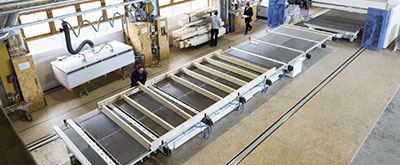
For global buyers, woodworking machinery is more than a production purchase. It is a long-term decision affecting accuracy, safety, labor, maintenance, and business growth. A reliable panel saw can cut repeated cabinet parts within tight tolerances. A properly configured CNC router can reduce waste while handling complex designs. These gains become visible on the workshop floor, where smoother edges and fewer rejected panels save valuable hours.

Frank Klausz, a respected cabinetmaker and woodworking educator, once said, “The tool is only as good as the man using it.” This principle remains relevant. Even advanced woodworking machinery cannot replace trained operators, clear procedures, or careful material selection. Buyers should examine spindle power, cutting accuracy, dust extraction, software compatibility, spare-parts access, and technical support. Small details matter. A missing manual can delay production.

Global purchasing also requires practical judgment. Electrical standards, shipping conditions, installation requirements, and local safety expectations may differ between markets. Responsible suppliers should provide transparent specifications, operating guidance, warranty terms, and realistic delivery information. Buyers should verify these details instead of relying only on attractive photographs or low prices.

No machine is perfect. That is worth admitting. A high-speed system may demand more maintenance. A cheaper model may create hidden costs later. Experienced buyers compare total ownership costs, not only the invoice. When selected carefully, woodworking machinery supports consistent quality, safer work, and stronger international competitiveness. It does not guarantee success, but it gives skilled teams a dependable foundation.
Why Is Woodworking Machinery Important for Global Buyers?

What Is Woodworking Machinery and What Does It Include?

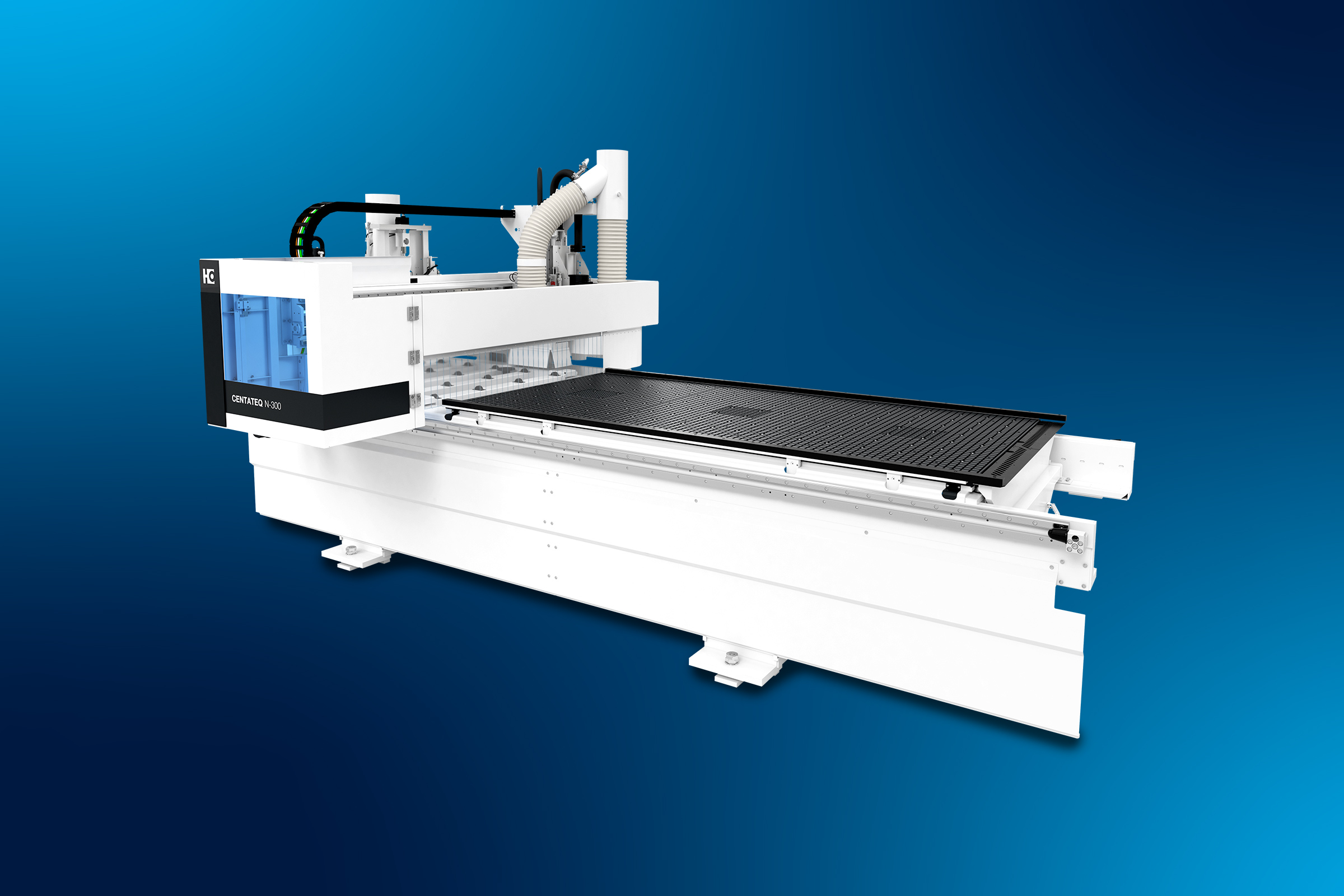
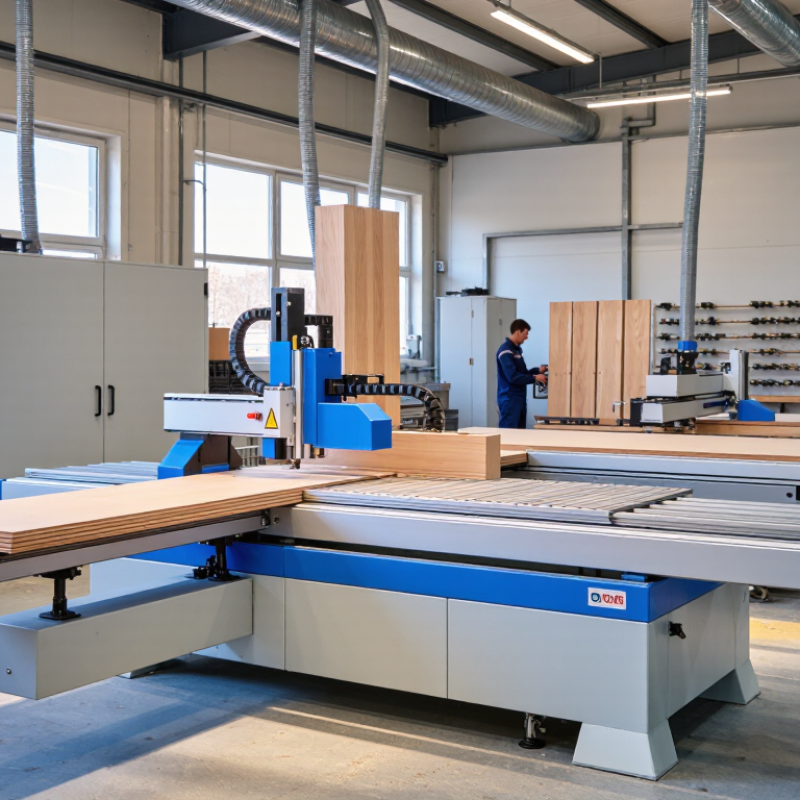
Woodworking machinery refers to equipment that cuts, shapes, joins, sands, drills, or finishes wood products. Its range is wider than a simple saw. A production line may include panel saws, band saws, planers, moulders, routers, CNC machining centres, edge banders, sanding machines, presses, and dust extraction systems. Material handling equipment and control software also matter. They keep boards moving accurately between operations.

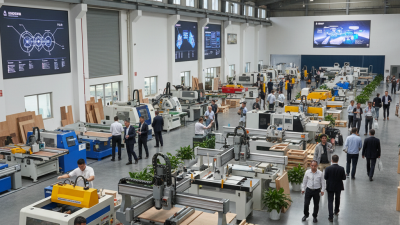
The scale is substantial. FAO’s Global Forest Products Facts and Figures 2023 records approximately 2.05 billion cubic metres of industrial roundwood production worldwide. The same report places global wood-based panel production at more than 380 million cubic metres. These volumes explain why buyers need machines suited to different materials, from solid oak to coated particleboard. A CNC router may produce precise cabinet joints, while a wide-belt sander creates an even surface across large panels. Small workshops may combine several functions in one machine. Large factories usually separate them for speed and maintenance.

The boundary is not always neat. Some suppliers classify extraction units as auxiliary equipment, although poor dust control can reduce machine life and workplace safety. That distinction matters. Buyers should examine cutting accuracy, spindle power, feed speed, electrical standards, spare-part access, and operator training. Industry market analyses, including Grand View Research’s woodworking machinery studies, frequently identify automation and digital control as key growth factors. Still, automation is not automatically better. A complex system can become expensive when local technicians cannot repair it. Real production conditions should guide the specification, not a glossy catalogue.

Why Is Woodworking Machinery Important for Global Buyers?

Woodworking machinery converts raw timber and wood-based panels into accurate, repeatable products. The chart compares established machine categories by the number of primary production functions they commonly support.

Sawing and CNC equipment support multiple stages of production, while planers, sanders, drilling machines, and edge banders focus on specific operations. This functional coverage helps global buyers compare equipment according to production requirements, automation needs, accuracy, and workflow integration.

Why Woodworking Machinery Matters in Global Manufacturing

Woodworking machinery matters in global manufacturing because it turns raw boards into accurate, repeatable components. A panel saw can produce clean, consistent cuts across hundreds of workpieces. An edge bander can reduce exposed edges and improve furniture durability. CNC routers also support detailed designs that would be difficult to reproduce by hand.

For global buyers, the real value extends beyond speed. Machinery affects material waste, worker safety, maintenance time, and production consistency. Buyers should examine cutting accuracy, dust extraction, control systems, spare-part access, and operator training. Practical details matter. A machine may perform well in a showroom but struggle in a hot, dusty workshop. Energy use and local electrical requirements also influence long-term operating costs. In my view, some purchasing decisions focus too heavily on price. That can be a costly mistake. Reliability is harder to measure, yet it often decides whether a production line stays profitable.

Tips: Request sample processing before purchase. Test the machine with your actual wood thicknesses and surface finishes. Ask for maintenance schedules, technical documentation, and response procedures. Inspect adjustment points closely. Small calibration problems can become visible defects across an entire batch. Also, leave space for safe material movement and future production changes. A compact layout may seem efficient today, but it can restrict growth later.

How Machinery Improves Productivity, Quality, and Workplace Safety

Woodworking machinery matters because productivity begins with repeatable motion. A calibrated CNC router can cut identical panels without constant manual marking. The International Federation of Robotics reported 541,302 industrial robot installations worldwide in 2023. That growth reflects a broader shift toward automated, measurable production.

Quality also improves through controlled speed, feed rate, and tool pressure. Operators can reduce uneven edges, tear-out, and material waste. However, machinery does not remove human error. Poor maintenance still creates vibration, inaccurate cuts, and rejected panels. In real workshops, a clean sensor can matter as much as an expensive machine. Safety requires equal attention. OSHA limits airborne wood dust exposure to 15 mg/m³ total dust and 5 mg/m³ respirable dust. Proper extraction, guarding, lockout procedures, and training must work together. One missing control can undermine the entire system.

Tips: Check blade alignment before each shift. Measure dust levels regularly. Keep emergency stops visible and accessible. Train operators with real workpieces, not only manuals. The U.S. National Institute for Occupational Safety and Health warns that wood dust can irritate the respiratory system and contribute to occupational disease. Buyers should therefore compare extraction performance, guarding design, service support, and training records—not only cutting speed. A faster machine is not automatically a better investment.

What Global Buyers Should Evaluate Before Purchasing Equipment

Woodworking machinery matters because global buyers are not purchasing steel alone. They are purchasing repeatable output, safer workflows, and predictable operating costs. The FAO’s Global Forest Products Facts and Figures 2023 reported about 2.0 billion cubic metres of industrial roundwood production worldwide. That scale creates pressure for accurate cutting, stable feeding, and reduced material waste.

Before purchasing equipment, buyers should measure the real production task. Check timber species, moisture variation, board dimensions, daily volume, and required tolerance. A machine designed for dry softwood may struggle with dense hardwood or irregular reclaimed boards. Ask for test cuts using your own material. Small details matter. A 1-millimetre deviation can multiply across hundreds of panels.

Energy and maintenance deserve equal attention. The International Energy Agency reports that industry accounts for roughly 37% of global final energy demand, making motor efficiency and idle consumption practical purchasing concerns. Request power data under working conditions, not only maximum ratings. Review spare-part availability, service response times, training, dust extraction requirements, and electrical compatibility. The UNECE/FAO Forest Products Annual Market Review 2023–2024 recorded weaker global wood-product demand in 2023, so overbuying capacity can damage cash flow. I would still avoid choosing the cheapest machine. Price is visible; downtime is not. Some evaluation sheets miss operator ergonomics, which may later become the most expensive oversight.

How Woodworking Machinery Supports Sustainable Industry Growth

Woodworking machinery matters to global buyers because it connects production speed with resource responsibility. Its deeper value lies in supporting sustainable industry growth. The FAO Global Forest Resources Assessment 2020 reports that forests cover 4.06 billion hectares worldwide. However, 178 million hectares disappeared between 1990 and 2020. Precision saws, CNC routers, and automated nesting systems can reduce offcuts during panel and solid-wood processing. Less waste means lower material costs and fewer replacement trees.

Energy efficiency also shapes long-term sustainability. The U.S. Department of Energy estimates that motor-driven equipment uses about 70% of manufacturing electricity. Efficient motors, variable-speed drives, and scheduled shutdowns can reduce unnecessary consumption. Modern dust extraction improves air quality and can recover usable wood residues. UNEP’s Global Resources Outlook 2024 warns that global resource extraction may rise by 60% by 2060 without stronger efficiency measures. Still, automation is not automatically sustainable. A fast machine can waste panels when operators lack training. Plant assessments often reveal poorly maintained blades, leaking extraction ducts, and idle compressors. These are ordinary failures, but their costs accumulate.

Tips: Ask suppliers for measured energy data, cutting-yield tests, maintenance records, and operator-training plans. Compare electricity use per finished component, not only hourly output. Choose repairable systems with replaceable parts. Recheck the figures after six months. Real factories rarely perform perfectly. That is precisely where honest improvement begins.

Why Is Woodworking Machinery Important for Global Buyers? - How Woodworking Machinery Supports Sustainable Industry Growth
Data Dimension Verified Global Reference Data Relevance to Woodworking Machinery Key Sustainability Consideration for Buyers Reference Source
Global forest resource Global forests covered approximately 4.06 billion hectares in 2020, representing about 31% of the world’s land area. Efficient machinery helps manufacturers obtain more usable output from legally sourced timber and reduce avoidable material losses. Evaluate cutting accuracy, automated optimization, recovery rates, and compatibility with different wood species and panel materials. FAO, Global Forest Resources Assessment 2020
Forest-loss pressure Approximately 420 million hectares of forest were lost through deforestation between 1990 and 2020. Net forest loss during the same period was about 178 million hectares. Higher production efficiency can reduce the amount of raw material required for each finished product, supporting more responsible resource use. Prioritize equipment that improves yield, reduces rework, and supports the use of smaller-dimension timber, recycled panels, or engineered wood. FAO, Global Forest Resources Assessment 2020
Agriculture as a deforestation driver Agricultural expansion was associated with approximately 90% of global deforestation during the period from 1990 to 2020. Responsible processing and traceable production can help buyers align manufacturing growth with sustainable sourcing policies. Combine machinery purchasing with supplier verification, chain-of-custody documentation, and procurement rules for legally sourced timber. FAO, Global Forest Resources Assessment 2020
Manufacturing resource efficiency Resource productivity is commonly assessed through material input, product output, waste generation, and energy use per unit of production. Modern CNC routers, panel saws, edge banders, and automated lines can improve repeatability and reduce offcuts, rejects, and setup waste. Request measurable specifications such as energy consumption per operating hour, material yield, dust-extraction requirements, and expected reject rates. United Nations Environment Programme, resource-efficiency and cleaner-production principles
Energy-management framework ISO 50001 provides an internationally recognized framework for establishing, implementing, maintaining, and improving an energy-management system. Machinery with efficient motors, variable-speed drives, standby modes, and power-monitoring functions can support systematic energy management. Check whether equipment can provide operating data for energy monitoring, preventive maintenance, load management, and continuous improvement. International Organization for Standardization, ISO 50001:2018
Dust and worker protection Wood dust is recognized as an occupational hazard; exposure control relies on engineering measures, local exhaust ventilation, housekeeping, and suitable work practices. Enclosed cutting zones, effective extraction interfaces, automatic cleaning, and sealed material handling can reduce airborne dust at the source. Assess extraction airflow requirements, enclosure design, filter performance, noise levels, maintenance access, and compliance with applicable workplace rules. International Labour Organization; EU-OSHA, workplace exposure guidance for wood dust
Circular material use Wood residues such as chips, sawdust, and offcuts can be reused in particleboard, fiberboard, biomass applications, or other material streams when properly collected and managed. Integrated conveyors, chip collection, sorting, and dust-extraction systems help convert production residues into usable secondary resources. Consider residue separation, collection capacity, contamination control, storage safety, and compatibility with local recycling or biomass systems. FAO, publications on wood residues and forest-product utilization
Product life and maintenance Life-cycle approaches assess environmental impacts across raw materials, manufacturing, use, maintenance, and end-of-life stages rather than only at purchase. Durable machinery with replaceable components, software support, calibration functions, and accessible maintenance can remain productive for longer. Compare expected service life, spare-parts availability, upgradeability, training, warranty terms, and total cost of ownership. ISO 14040 and ISO 14044, life-cycle assessment principles and framework
International machinery compliance Regulation (EU) 2023/1230 establishes updated machinery-safety requirements for products placed on the European Union market, with application beginning on 20 January 2027. Compliance-oriented design improves safety, documentation quality, risk assessment, and market access for international buyers. Verify conformity documentation, risk assessment, guarding, emergency-stop systems, instructions, and region-specific certification requirements. European Union, Regulation (EU) 2023/1230 on machinery
Buyer evaluation metric For meaningful comparison, operational performance should be normalized by a common functional unit, such as energy use per cubic metre, material yield per panel, or defects per 1,000 units. Standardized metrics allow buyers to compare machinery based on productive output instead of purchase price alone. Request test conditions, production assumptions, material specifications, duty cycle, and independently verifiable performance data. ISO 14040 and ISO 14044; ISO 50001 energy-performance principles

Note: Global reference figures are published values from the cited sources. Machinery performance varies according to material, operating conditions, configuration, maintenance, and production workflow.