Skip to content

Why Choose CNC Parts for Precision Manufacturing?

Why choose CNC parts for precision manufacturing? The answer begins with control, repeatability, and measurable quality. CNC machining converts digital designs into coordinated tool movements, producing features within tightly defined tolerances. A milled aluminum housing can leave the machine with clean bores, consistent wall thickness, and traceable inspection records. That consistency matters in aerospace, medical devices, automotive systems, and industrial equipment.

Industry data supports this shift. Deloitte’s Smart Manufacturing and Operations Survey reports that 86% of manufacturing executives expect smart manufacturing to become a primary competitiveness factor within five years. CNC equipment fits this direction through programmable production, sensor feedback, and production data. Grand View Research estimates that the global CNC machine market will continue expanding through 2030, driven by automation and demand for complex components. Market forecasts vary by definition, though. Some include complete machine tools, while others emphasize software or services.

CNC parts also support practical cost control. Once a validated program is available, repeat orders can reduce setup variation and shorten inspection cycles. Engineers can use probing, coordinate measuring machines, and statistical process control to verify critical dimensions. NIST emphasizes reliable measurement, calibration, and traceability as foundations of manufacturing confidence. Still, CNC is not magic. A wrong datum, worn cutter, or unstable fixture can ruin an otherwise accurate design. Material selection and tolerance planning require experience. The better question is not whether CNC is always superior, but where its repeatability creates real value. This article examines that decision through quality, speed, flexibility, cost, and production risk.

Why Choose CNC Parts for Precision Manufacturing?

What Are CNC Parts and How Are They Made?

Why Choose CNC Parts for Precision Manufacturing?

What Are CNC Parts and How Are They Made?

CNC parts are components cut by computer-controlled machines. They can be made from aluminum, steel, brass, plastics, and other suitable materials. A technician begins with a digital CAD model. CAM software then converts the design into tool movements. The machine removes material through milling, turning, drilling, or similar operations. Each cutting path matters. A small programming error can change a hole position or create unwanted marks.

The manufacturing process usually includes material preparation, machine setup, cutting, deburring, and inspection. Operators check dimensions with calipers, micrometers, gauges, or coordinate measuring equipment. They may also use a touch probe to confirm the part’s position. In real workshops, the first setup is rarely perfect. Tool wear, vibration, and heat can affect results. Experienced teams review measurements and adjust offsets carefully. This practical feedback often improves repeatability, although no process deserves blind trust.

Tips: Confirm tolerances before machining. Use clear drawings and accurate material specifications. Inspect critical features during production, not only at the end. Keep cutting tools sharp. Record measurements for future batches. A short review after each run can reveal problems that numbers alone may miss.

Which Precision Benefits Do CNC Parts Provide?

Why Choose CNC Parts for Precision Manufacturing?

CNC parts provide controlled accuracy for components that must fit, move, or seal correctly. In practical workshop use, a calibrated machine can repeat the same toolpath across hundreds of aluminum brackets. Tight tolerances reduce unwanted play between shafts, holes, and mating surfaces. Digital drawings also preserve exact dimensions, hole locations, and surface requirements. This consistency supports reliable assembly and reduces manual rework. Small details matter.

Tips: Define critical tolerances clearly. Use suitable cutting tools and verify tool wear during production. Measure the first part with calibrated calipers, gauges, or a coordinate measuring machine. Check flatness and burrs, not only overall dimensions. Record inspection results for traceability. A clean setup helps too.

CNC machining also provides stable surface quality and predictable edge geometry. These benefits help parts perform under vibration, heat, and repeated loading. However, CNC is not magic. Material movement, incorrect workholding, or a worn tool can still create errors. I have seen a nearly perfect batch fail because one reference surface was misunderstood. Reviewing datums and tolerances before machining prevents that expensive lesson. Prototype checks remain valuable, even when the program appears correct. Experienced machinists compare measured results with the drawing and adjust cautiously. Precision improves through disciplined measurement, not confidence alone.

Why Choose CNC Parts for Precision Manufacturing? - Which Precision Benefits Do CNC Parts Provide?

Precision Dimension Typical CNC Capability Benefit for Manufactured Parts Key Factors Affecting Results
Dimensional Tolerance Approximately ±0.025 to ±0.125 mm for many machined features Supports accurate fits between mating components and reduces manual adjustment. Machine condition, material, cutting tools, feature size, and drawing requirements.
Repeatability The same programmed tool paths can be repeated across production batches. Improves consistency from the first part to subsequent parts. Workholding stability, tool wear, thermal changes, and process control.
Geometric Accuracy Computer-controlled multi-axis machining can produce complex profiles, pockets, holes, and contours. Enables the production of intricate geometries that are difficult to achieve manually. Axis calibration, machine rigidity, programming quality, and part orientation.
Surface Finish Common machined finishes are approximately Ra 1.6–6.3 µm; finer finishes may require additional operations. Provides smoother contact surfaces, improved appearance, and reduced friction in suitable applications. Feed rate, spindle speed, tooling, material hardness, tool condition, and finishing method.
Hole and Thread Accuracy CNC drilling, boring, reaming, and thread milling can create controlled hole locations and thread dimensions. Improves alignment, fastener engagement, and assembly reliability. Tool selection, chip evacuation, material behavior, coolant, and inspection method.
Material Versatility Suitable materials include aluminum, steel, stainless steel, brass, copper, titanium, engineering plastics, and composites. Allows the same digital manufacturing approach to support different strength, weight, and corrosion requirements. Material machinability, hardness, thermal conductivity, tooling, and cutting parameters.
Design Flexibility CAD/CAM-based programming supports revisions without creating new hard tooling for every design change. Makes prototypes, customized parts, and engineering changes more practical. Part geometry, machine envelope, workholding, programming time, and inspection requirements.
Production Consistency Stored programs and documented process settings can be reused for repeat orders. Helps maintain consistent dimensions and quality across small and medium production runs. Process documentation, in-process checks, measurement equipment, and operator control.
Material Efficiency Computer-controlled cutting follows programmed tool paths and can optimize material removal. Reduces avoidable rework and helps control material use when parts are designed for machining. Part nesting, stock size, machining strategy, allowances, and material price.
Inspection Compatibility CNC parts can be checked using calipers, micrometers, gauges, height gauges, and coordinate measuring machines. Provides measurable evidence that critical dimensions meet engineering requirements. Datum selection, measurement uncertainty, calibration, inspection environment, and tolerance definition.

Note: Actual tolerances and surface finishes depend on the machine, material, part geometry, tooling, programming, and inspection requirements.

How Do CNC Parts Improve Manufacturing Efficiency?

CNC parts improve manufacturing efficiency by turning digital drawings into repeatable physical components. A programmed tool can mill, drill, and cut complex shapes with limited manual adjustment. This reduces setup variation between batches. It also helps operators inspect dimensions through coordinate measuring equipment and digital records.

The gains are measurable. Deloitte’s 2023 Smart Manufacturing and Operations Survey found that 86% of manufacturing executives viewed smart factory initiatives as a major competitiveness driver within five years. CNC machining supports this direction by connecting production data, tool offsets, inspection results, and maintenance records. The World Economic Forum’s Global Lighthouse Network has also reported productivity improvements of more than 20% in several digitally enabled factories. CNC equipment alone cannot guarantee that result. Process planning still matters.

Less waste. More consistency.

In practical production, a CNC machine can repeat a 0.02-millimeter feature across hundreds of parts, when the material and process are properly controlled. Standardized programs also shorten training time and make production changes easier to trace. However, efficiency may fall when designs contain unnecessary tight tolerances or frequent tool changes. That is an uncomfortable detail. Better automation can expose poor planning rather than solve it. Engineers should review tolerance requirements, cutting conditions, inspection frequency, and material behavior before releasing a program. Data from each run should guide the next adjustment, not simply decorate a dashboard.

What Materials and Designs Suit CNC Machining?

CNC machining supports precision manufacturing because cutting paths can be repeated with remarkable consistency. The better question is which materials and designs fit the process. In practical workshops, aluminum is often selected for housings, brackets, and lightweight frames. It cuts cleanly and supports efficient production. Steel offers greater strength for shafts, mounts, and load-bearing components. Stainless steel resists corrosion, but it demands sharper tooling and controlled cutting speeds. Brass machines smoothly and suits fittings, electrical contacts, and decorative hardware. Titanium is strong and light, although it generates heat and requires careful setup. Material choice is never automatic.

Designs with flat faces, accessible pockets, and consistent wall thickness usually machine efficiently. Internal corners need special attention. A round cutting tool cannot create a perfectly sharp inside corner. Designers often add a small radius instead. Deep, narrow pockets can increase tool deflection and leave visible marks. Thin walls may warp during clamping. They may look fine.

Experienced machinists also review thread depth, hole access, and part orientation before cutting. A design may be technically possible but still waste time or raise inspection risk. Tight tolerances should appear only where function requires them. Over-specifying every dimension often increases cost without improving performance. I have seen attractive parts fail because the drawing ignored workholding space. That mistake is easy to miss during early design reviews. Inspection with calibrated gauges, probes, and measuring equipment helps verify critical features, but it cannot repair a poor design.

When Is CNC Manufacturing the Right Choice?

Why Choose CNC Parts for Precision Manufacturing?

When Is CNC Manufacturing the Right Choice?

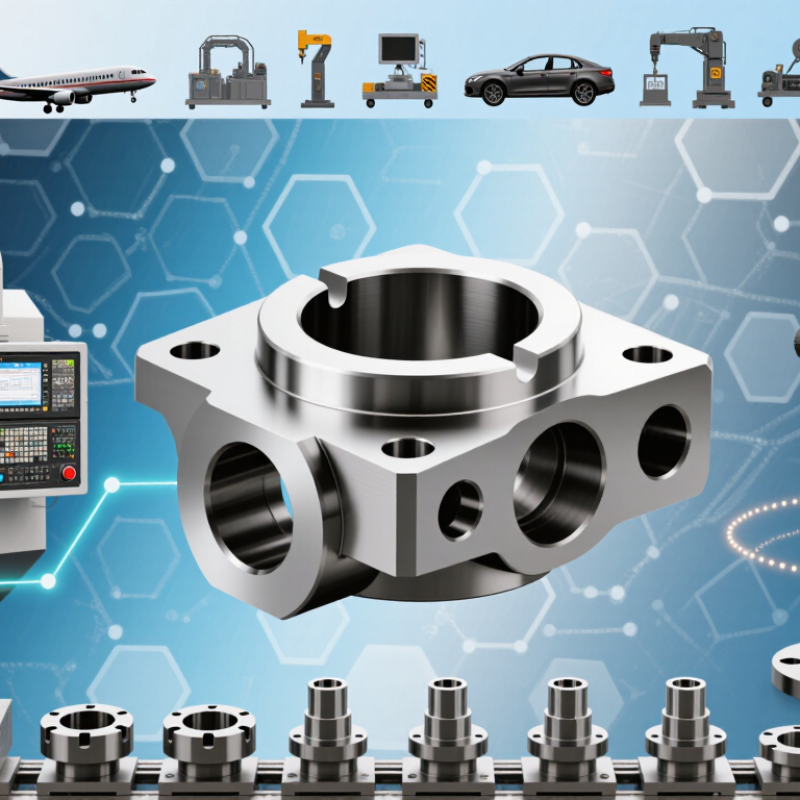
CNC manufacturing is the right choice when a part needs repeatable dimensions, controlled surfaces, or complex features. It works especially well for prototypes, replacement components, and small to medium production runs. A machined aluminum housing, for example, may require accurate bores, flat mounting faces, and clean internal corners. CNC equipment can produce these features directly from a digital design.

It is not always the best option. Very simple, high-volume parts may cost less through dedicated forming or molding methods. Material hardness, tool access, batch size, and tolerance requirements all affect the decision. A tolerance of 0.02 millimeters may be practical, but only with suitable machines, tools, inspection methods, and stable process control. The drawing must support the goal.

Tips: Define critical dimensions clearly. Choose datums that match assembly needs. Request a material certificate and inspection report when quality risk is high. Confirm surface finish requirements before machining begins.

In practice, good results depend on more than cutting metal. I have seen accurate parts fail because a small radius was missing from the design. That mistake blocked tool access and created extra finishing work. Reviewing the model with a machinist can reveal such problems early. Thread depth, chip evacuation, clamping marks, and measurement access deserve attention too. CNC remains powerful, but it is not automatic perfection.