
-
-
-
-
-
-
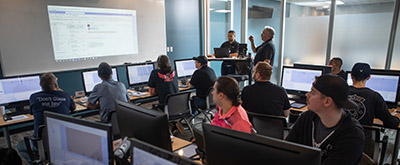
With a customized Stiles University course, we can provide expert training for your team, on-location. Whether it's programming, operation or maintenance, we want to help you train your personnel to meet your production goals efficiently and effectively.
-

Experience the trusted workforce development training and machinery knowledge you rely on from Stiles University, now at your convenience. With technology changing every day and new methods being developed constantly, Stiles University Online has the latest information and training content available at your fingertips.
-
-
-

Do you want to produce more efficiently? Processes and flows are key. We optimize these together with you, re-organize them and make sure that you reduce your lead time and save costs. This enables you to implement customized manufacturing and achieve your business goals.
-
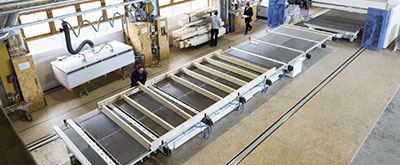
Industrialized construction is evolving. Automation, robotics and advanced technology are raising the level of productivity, efficiency and precision for builders in North America.
-
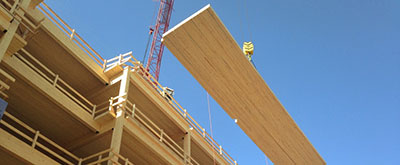
Stiles Machinery is at the forefront of providing technology and machining for producing high quality mass timber. Automated solutions for your mass timber production can increase your manufacturing quality and productivity.
-

Project management services from Stiles make it easy to streamline your entire project— from concept and consultation to integration and implementation.
-


-
-
-
-
-
-
With a customized Stiles University course, we can provide expert training for your team, on-location. Whether it's programming, operation or maintenance, we want to help you train your personnel to meet your production goals efficiently and effectively.
-
Experience the trusted workforce development training and machinery knowledge you rely on from Stiles University, now at your convenience. With technology changing every day and new methods being developed constantly, Stiles University Online has the latest information and training content available at your fingertips.
-
-
-
Do you want to produce more efficiently? Processes and flows are key. We optimize these together with you, re-organize them and make sure that you reduce your lead time and save costs. This enables you to implement customized manufacturing and achieve your business goals.
-
Industrialized construction is evolving. Automation, robotics and advanced technology are raising the level of productivity, efficiency and precision for builders in North America.
-
Stiles Machinery is at the forefront of providing technology and machining for producing high quality mass timber. Automated solutions for your mass timber production can increase your manufacturing quality and productivity.
-
Project management services from Stiles make it easy to streamline your entire project— from concept and consultation to integration and implementation.
-
What Are the Top Types of CNC Machining Parts?
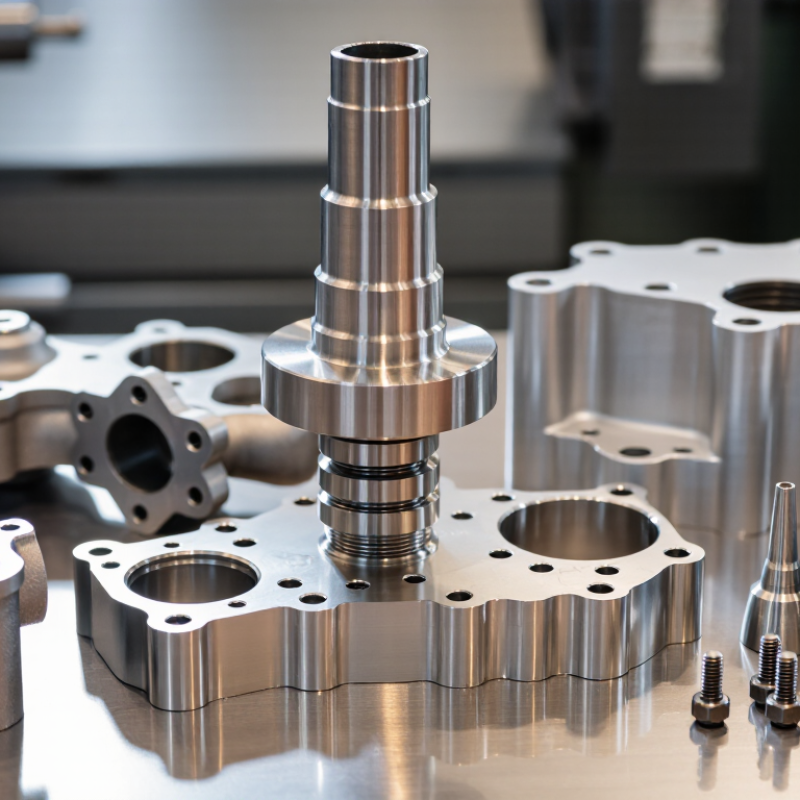
CNC machining parts are everywhere: inside an aircraft hinge, beneath a car’s dashboard, and within the small aluminum housing of a medical instrument. Yet the “top” part types depend on function, material, tolerances, and production volume. Common examples include shafts, brackets, housings, gears, manifolds, and custom fasteners. Each asks different things of the machine shop. A shaft may need a precise turned diameter; a housing may need flat faces, threaded holes, and carefully aligned pockets.
The market context is substantial, though it needs careful interpretation. Grand View Research estimated the global CNC machine market at USD 101.22 billion in 2023. That figure covers machines, not the value of machined parts, so it should not be treated as a parts-market estimate. It does signal the scale of the manufacturing technology behind modern components. CNC machining educator Mike Lynch, founder of CNC Concepts, offers practical training on programming and shop-floor processes. His guidance can be paraphrased this way: “A reliable part depends on the whole process, not just the toolpath.” This is a summary, not a verified verbatim quotation.
Some details are easy to miss. A part can look simple and still demand tight tolerances, awkward setups, or costly inspection. Material choice matters, too. Stainless steel behaves differently from aluminum under cutting forces and heat. The sections ahead compare common CNC part types by geometry, typical uses, and manufacturing considerations. They also note where a familiar design may hide a difficult machining decision. A clean drawing is only the beginning.
How CNC Machining Parts Are Classified
CNC machining parts are commonly classified by geometry, function, material, and manufacturing complexity. Geometry is a practical starting point. Rotational parts, such as shafts and bushings, are often turned around a central axis. Prismatic parts, including brackets and valve blocks, have flat faces, pockets, and drilled holes. Some components combine both forms. A stepped shaft with a milled slot is one example.
Function provides another useful classification. Structural parts support loads, while housings protect internal components and maintain alignment. Connectors and manifolds guide fluids or attach assemblies. Material also matters: aluminum is often selected for low weight, while stainless steel may suit parts exposed to moisture. The right choice depends on the operating environment, not just the drawing.
Manufacturers may also classify parts by feature count or production volume. A simple spacer needs few setups; a thin-walled housing with deep pockets can require careful tool paths and workholding. Small batches often justify flexible machining, while repeated parts may benefit from dedicated fixtures. These categories overlap. A bracket can be structural, prismatic, and made in a short run. Classification helps estimate machining needs, but it can hide the details that matter most, such as tight tolerances, tool access, or distortion after material removal.
What Are the Top Types of CNC Machining Parts? - How CNC Machining Parts Are Classified
CNC machining parts can be classified by their overall geometry and the features that must be produced. The categories below are common types; a single part may belong to more than one category.
| Part Type | Typical Geometry and Features | Common CNC Operations | Typical Materials | Common Applications |
|---|---|---|---|---|
| Prismatic Parts | Block-like shapes with flat faces, pockets, slots, steps, and perpendicular surfaces. | Face milling, end milling, drilling, tapping, and boring; often made on a 3-axis or 4-axis mill. | Aluminum, steel, stainless steel, brass, and engineering plastics. | Machine bases, brackets, housings, fixtures, and mounting plates. |
| Rotational Parts | Round components with cylindrical, conical, or stepped profiles, often with bores or threads. | Turning, facing, grooving, threading, drilling, and boring on a CNC lathe or mill-turn machine. | Steel, stainless steel, aluminum, brass, and titanium. | Shafts, pins, bushings, spacers, rollers, and threaded fittings. |
| Thin-Walled Parts | Parts with relatively thin walls or floors, such as shells, covers, and lightweight structures. | Adaptive milling, pocketing, contouring, and finishing with attention to workholding and cutting forces. | Aluminum alloys, stainless steel, titanium, and engineering plastics. | Equipment enclosures, lightweight structural components, and instrument housings. |
| Parts with Precision Holes and Features | Components defined by accurately located holes, bores, slots, threads, or mating surfaces. | Drilling, reaming, boring, tapping, milling, and coordinate probing where required. | Aluminum, steel, stainless steel, brass, and plastics. | Manifolds, valve bodies, bearing supports, connector plates, and assembly components. |
| Complex 3D and Freeform Parts | Curved surfaces, sculpted contours, compound angles, or features that are difficult to access from one direction. | 3-axis contouring, 4-axis indexing, or 5-axis simultaneous milling, followed by finishing passes. | Aluminum, titanium, stainless steel, tool steel, and machinable plastics. | Impellers, molds, dies, turbine-related components, and ergonomic forms. |
| Thin Plates and Sheet-Like Parts | Flat or gently contoured components with a small thickness relative to their length and width. | Profile milling, pocketing, drilling, and edge finishing; suitable support helps reduce distortion. | Aluminum, steel, stainless steel, brass, and engineering plastics. | Panels, covers, shims, templates, and electrical or mechanical mounting plates. |
| Multi-Feature Assemblable Parts | Components combining several feature types, such as pockets, bosses, holes, threads, and machined datum faces. | Combined milling and turning, multiple setups, or mill-turn machining to complete several features. | Aluminum, steel, stainless steel, brass, and titanium. | Actuator components, pump parts, mechanical interfaces, and custom production components. |
Related Posts
-
2026 Top CNC Manufacturing Suppliers for Global Buyers
-
2026 How to Choose the Right CNC Mill for Your Workshop Needs?
-
The Best CNC Mill Types for Your Machining Needs?
-
How to Choose the Best Small CNC Machine at Canton Fair 2026?
-
Top C and C Machine Innovations to Watch in 2026?
-
Top 5 CNC Router Kits for Ultimate Precision and DIY Projects in 2023