
-
-
-
-
-
-

With a customized Stiles University course, we can provide expert training for your team, on-location. Whether it's programming, operation or maintenance, we want to help you train your personnel to meet your production goals efficiently and effectively.
-

Experience the trusted workforce development training and machinery knowledge you rely on from Stiles University, now at your convenience. With technology changing every day and new methods being developed constantly, Stiles University Online has the latest information and training content available at your fingertips.
-
-
-

Do you want to produce more efficiently? Processes and flows are key. We optimize these together with you, re-organize them and make sure that you reduce your lead time and save costs. This enables you to implement customized manufacturing and achieve your business goals.
-
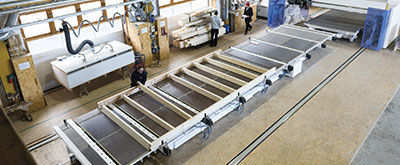
Industrialized construction is evolving. Automation, robotics and advanced technology are raising the level of productivity, efficiency and precision for builders in North America.
-
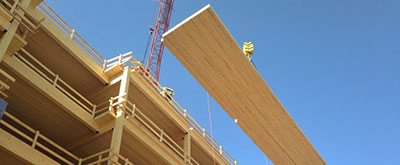
Stiles Machinery is at the forefront of providing technology and machining for producing high quality mass timber. Automated solutions for your mass timber production can increase your manufacturing quality and productivity.
-

Project management services from Stiles make it easy to streamline your entire project— from concept and consultation to integration and implementation.
-


-
-
-
-
-
-
With a customized Stiles University course, we can provide expert training for your team, on-location. Whether it's programming, operation or maintenance, we want to help you train your personnel to meet your production goals efficiently and effectively.
-
Experience the trusted workforce development training and machinery knowledge you rely on from Stiles University, now at your convenience. With technology changing every day and new methods being developed constantly, Stiles University Online has the latest information and training content available at your fingertips.
-
-
-
Do you want to produce more efficiently? Processes and flows are key. We optimize these together with you, re-organize them and make sure that you reduce your lead time and save costs. This enables you to implement customized manufacturing and achieve your business goals.
-
Industrialized construction is evolving. Automation, robotics and advanced technology are raising the level of productivity, efficiency and precision for builders in North America.
-
Stiles Machinery is at the forefront of providing technology and machining for producing high quality mass timber. Automated solutions for your mass timber production can increase your manufacturing quality and productivity.
-
Project management services from Stiles make it easy to streamline your entire project— from concept and consultation to integration and implementation.
-
How to Choose the Best CNC Router Kit in 2026?
Choosing the best CNC router kit in 2026 requires more than comparing spindle power or advertised cutting speed. The global CNC machine market continues to expand, reflecting stronger demand for automated, flexible manufacturing. Grand View Research estimates that the market will grow significantly through 2030, supported by small-batch production, digital fabrication, and advanced material processing. MarketsandMarkets also identifies automation, software integration, and compact equipment as important industry trends. These reports offer useful direction, but they do not choose a machine for your workshop.
A suitable cnc router kit should match your actual materials, workspace, and technical confidence. A 3018-style desktop model may handle engraving, plywood, and plastics on a small bench. A larger 4×8-foot router can process full sheets, but it demands stronger dust collection, safer electrical planning, and more floor space. Check the frame rigidity, linear rails, lead screws, spindle cooling, controller compatibility, and replacement-part availability. Do not trust maximum speed alone. Real cutting performance depends on rigidity, tool quality, workholding, and correct feed rates.
Your budget should include software, cutters, spoilboards, dust extraction, and training time. Industry guidance from NIST emphasizes measurement, process control, and repeatability in digital manufacturing. That matters even in a home workshop. A cheaper kit can become expensive after repeated upgrades. I have seen specifications look impressive while assembly instructions remain vague. That is a warning sign. The best choice is not always the largest or fastest machine; it is the one you can operate safely, maintain consistently, and use often. Manufacturer documentation still deserves careful scrutiny.
Understanding CNC Router Kits and Their Core Components
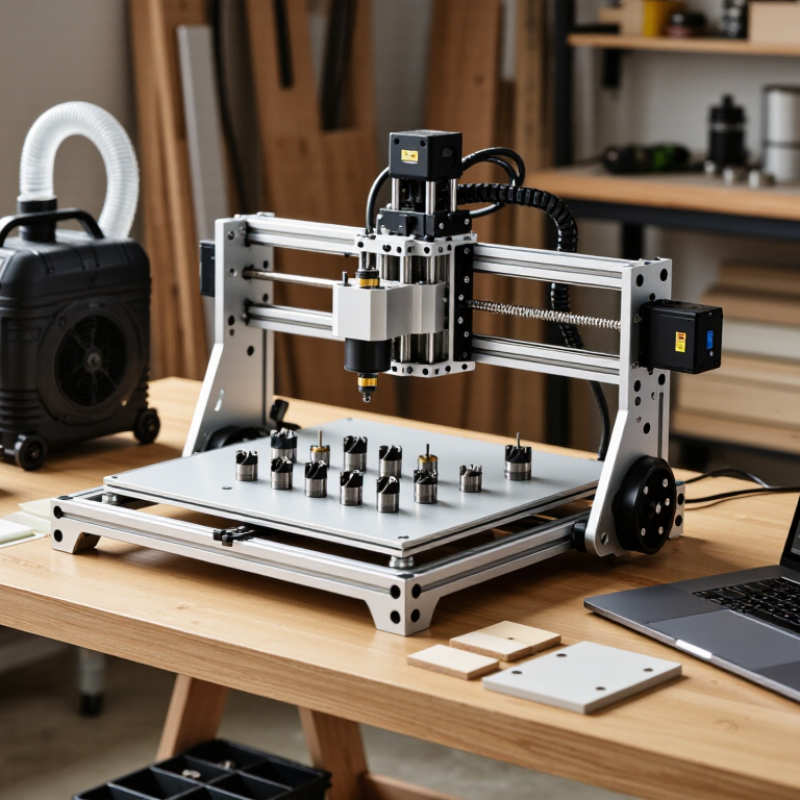
A CNC router kit is more than a motor and cutting bit. It is a coordinated system for turning digital designs into physical parts. The frame provides stability, while linear rails guide movement along each axis. Lead screws or belts transfer motion from stepper motors. A rigid frame reduces vibration and helps produce cleaner edges.
The spindle or router determines cutting ability. Check its power, speed range, collet size, and cooling method. A capable controller translates design commands into accurate movement. It should support reliable limit switches, emergency stopping, and commonly used design software. The work area also matters. Measure your usual materials before choosing a machine. A small bed may feel precise, but it can restrict practical projects.
I usually test a new router with a flat MDF sheet and shallow cuts. This reveals uneven movement, loose fasteners, and poor calibration quickly. Dust collection protects visibility and reduces cleanup, although it rarely captures everything. I once focused too heavily on cutting speed and ignored frame rigidity. The result looked efficient but produced rough corners. That mistake changed my selection process. Compare repeatability, component access, assembly instructions, and replacement availability. A kit with impressive specifications may still frustrate users if adjustment is difficult. Reliable performance often comes from balanced components, not the fastest motor.
How to Choose the Best CNC Router Kit in 2026? - Understanding CNC Router Kits and Their Core Components
| Selection Dimension | Recommended Specification for 2026 | Typical Entry-Level Range | Typical Advanced Range | Why It Matters |
|---|---|---|---|---|
| Working Area | Choose a work envelope that is at least 10% larger than the biggest material to be cut. | 300 × 300 mm to 600 × 400 mm | 900 × 600 mm to 1,200 × 600 mm or larger | A larger working area supports full-sheet projects but requires more frame rigidity and floor space. |
| Frame Material | Prefer a rigid aluminum extrusion or steel-reinforced frame with secure, adjustable joints. | Aluminum extrusion frame | Steel-reinforced or heavy aluminum frame | Frame stiffness reduces vibration, chatter, dimensional errors, and poor surface finish. |
| Drive System | Select lead screws for compact machines or ball screws for higher accuracy and heavier workloads. | Lead screws, commonly 8–12 mm diameter | Ball screws, commonly 12–16 mm diameter | The drive system affects backlash, positioning accuracy, speed, maintenance, and service life. |
| Motion Guidance | Use supported linear rails or properly aligned profile rails on all axes. | V-wheels or compact supported rails | Profile linear rails with recirculating bearings | Good guidance keeps the spindle square and limits deflection during cutting. |
| Spindle or Router Power | Match power to the material, cutter diameter, and intended cutting depth rather than choosing the highest rating. | 300–800 W spindle or compact router | 1.5–2.2 kW water- or air-cooled spindle | More power supports larger cutters and deeper passes, but also increases electrical, cooling, and safety requirements. |
| Spindle Speed | Variable speed is preferred; common high-frequency spindle ranges begin around 8,000 rpm and reach 24,000 rpm. | Approximately 8,000–24,000 rpm | Approximately 6,000–24,000 rpm with inverter control | Correct speed helps control heat, chip evacuation, tool life, and edge quality. |
| Motor and Axis Torque | Use synchronized motors on wider gantries and adequate torque for the machine's mass and acceleration. | NEMA 17 or compact NEMA 23 stepper motors | NEMA 23 or NEMA 24 steppers; closed-loop options for demanding work | Insufficient torque can cause missed steps, while synchronized gantry motion prevents racking. |
| Controller Compatibility | Choose a controller that supports standard G-code, homing, probing, speed control, and emergency stop functions. | USB or offline controller with basic G-code support | Network-capable or motion-control board with macros and probing support | Controller features determine workflow reliability, automation capability, and software flexibility. |
| Positioning Accuracy | Evaluate repeatability separately from claimed resolution and check whether specifications are measured or theoretical. | Typical practical repeatability: about ±0.05–0.15 mm | Typical practical repeatability: about ±0.02–0.05 mm when correctly assembled and calibrated | Real-world accuracy depends on backlash, alignment, tool deflection, calibration, and material stability. |
| Z-Axis Travel | Allow enough clearance for the spoilboard, workholding, and the thickest planned material. | 50–80 mm | 80–150 mm | More travel increases versatility, but a taller Z-axis can reduce rigidity if poorly designed. |
| Compatible Materials | For wood, plastics, and occasional aluminum, prioritize rigidity, chip clearance, and appropriate tooling. | Wood, MDF, plywood, acrylic, and soft plastics | Wood, plastics, composites, aluminum, and selected non-ferrous metals | Material capability is determined by machine stiffness, spindle power, feeds, speeds, and cutter selection. |
| Workholding | A threaded spoilboard, clamps, and a repeatable reference system are essential. | T-slot clamps or threaded inserts | Vacuum table, modular fixtures, or combined vacuum and mechanical clamping | Secure workholding prevents movement, vibration, damaged tools, and inaccurate cuts. |
| Dust Collection | Include a dust shoe and a properly sized extractor when cutting wood or MDF. | Approximately 500–1,000 m³/h airflow at the collector inlet | Approximately 1,000–2,500 m³/h airflow, depending on hose size and system design | Effective extraction improves visibility, protects machine components, and reduces airborne dust exposure. |
| Safety Features | Require an accessible emergency stop, limit or homing switches, cable management, and electrical guarding. | Emergency stop and basic homing switches | Emergency stop, hard limits, enclosure, interlock, spindle braking, and fault monitoring | Safety systems reduce injury risk, machine damage, and uncontrolled motion. |
| Power Requirements | Confirm voltage, current, grounding, and circuit capacity before installation. | Single-phase household supply; commonly under 1.5 kW for the machine and spindle | Dedicated circuit may be required; total load commonly exceeds 2 kW with spindle and dust extraction | Correct electrical planning prevents nuisance trips, overheating, and unreliable operation. |
| Assembly and Calibration | Look for clear instructions, square alignment references, tensioning guidance, and accessible adjustment points. | Several hours of assembly and manual squaring | Longer installation with axis calibration, spindle tramming, and test cuts | A well-designed kit should be serviceable and adjustable rather than permanently sealed. |
| Best Use Case | Choose based on project size, material, production volume, and required tolerance. | Learning, engraving, signs, small parts, and light woodworking | Furniture components, repeated production, detailed carving, and heavier cutting | The best CNC router kit balances capability, reliability, workspace, operating cost, and user skill. |
Related Posts
-
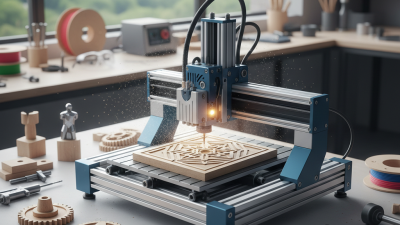
Top 5 CNC Router Kits for Ultimate Precision and DIY Projects in 2023
-

Top 10 CNC Router Tables for Every Budget in 2026
-
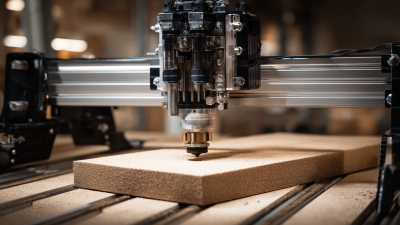
Exploring the Amazing World of CNC Routers for DIY Enthusiasts
-
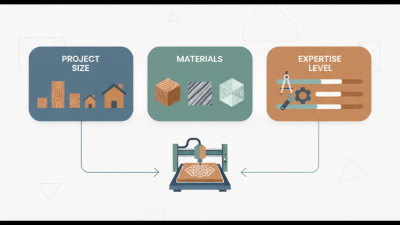
How to Choose the Best CNC Router Kit for Your Woodworking Projects
-
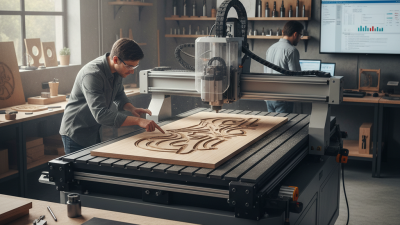
How to Choose the Best CNC Router for Your Projects?
-
Top 10 Small CNC Machines for Precision Engineering in 2023