
-
-
-
-
-
-

With a customized Stiles University course, we can provide expert training for your team, on-location. Whether it's programming, operation or maintenance, we want to help you train your personnel to meet your production goals efficiently and effectively.
-

Experience the trusted workforce development training and machinery knowledge you rely on from Stiles University, now at your convenience. With technology changing every day and new methods being developed constantly, Stiles University Online has the latest information and training content available at your fingertips.
-
-
-

Do you want to produce more efficiently? Processes and flows are key. We optimize these together with you, re-organize them and make sure that you reduce your lead time and save costs. This enables you to implement customized manufacturing and achieve your business goals.
-

Industrialized construction is evolving. Automation, robotics and advanced technology are raising the level of productivity, efficiency and precision for builders in North America.
-

Stiles Machinery is at the forefront of providing technology and machining for producing high quality mass timber. Automated solutions for your mass timber production can increase your manufacturing quality and productivity.
-

Project management services from Stiles make it easy to streamline your entire project— from concept and consultation to integration and implementation.
-



-
-
-
-
-
-
With a customized Stiles University course, we can provide expert training for your team, on-location. Whether it's programming, operation or maintenance, we want to help you train your personnel to meet your production goals efficiently and effectively.
-
Experience the trusted workforce development training and machinery knowledge you rely on from Stiles University, now at your convenience. With technology changing every day and new methods being developed constantly, Stiles University Online has the latest information and training content available at your fingertips.
-
-
-
Do you want to produce more efficiently? Processes and flows are key. We optimize these together with you, re-organize them and make sure that you reduce your lead time and save costs. This enables you to implement customized manufacturing and achieve your business goals.
-
Industrialized construction is evolving. Automation, robotics and advanced technology are raising the level of productivity, efficiency and precision for builders in North America.
-
Stiles Machinery is at the forefront of providing technology and machining for producing high quality mass timber. Automated solutions for your mass timber production can increase your manufacturing quality and productivity.
-
Project management services from Stiles make it easy to streamline your entire project— from concept and consultation to integration and implementation.
-
Why Choose Flour Pouch Packaging for Global Buyers?
For global buyers, flour packaging must protect a fine, sensitive product through storage, handling, and long-distance transport. A well-designed Flour Pouch can help control moisture, reduce contamination risks, and present a clean retail appearance. Its flexible structure may also use less material than rigid containers, depending on the selected film and format.
In practical sourcing, small details matter. A strong heat seal prevents powder leakage around the edges. A stable gusset helps the pouch stand on crowded shelves. Clear batch information, weight markings, and traceability details support reliable quality control. Buyers should also examine film thickness, barrier performance, closure design, printing accuracy, and carton protection before approving samples. These checks should be supported by supplier specifications and suitable test records.
Still, no pouch solves every packaging challenge. Flour can settle into seals. Corners may crease during shipping. A design that works in one climate may perform poorly in another. This is easy to overlook. Global purchasing teams should request real product samples, conduct filling trials, and review transport conditions before placing large orders. They should also confirm that materials and labeling meet the destination market’s applicable requirements. With experienced manufacturers, documented testing, and honest communication, Flour Pouch packaging can offer a practical balance of protection, efficiency, and shelf appeal. The best choice is rarely the cheapest option. It is the one that performs consistently from the packing line to the customer’s kitchen.
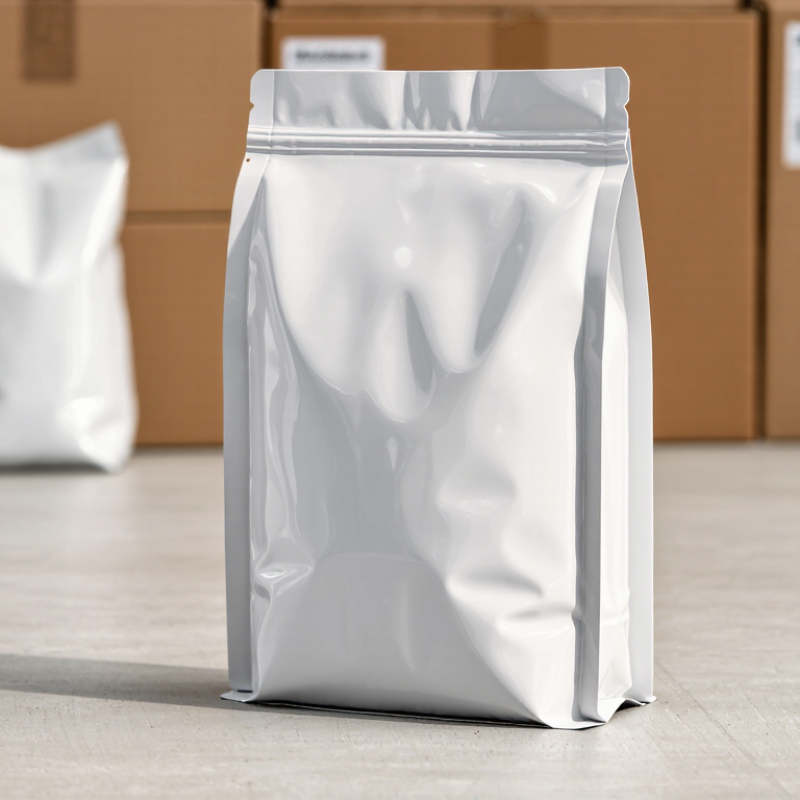
What Is Flour Pouch Packaging and How Does It Work?
Flour pouch packaging is a flexible bag designed to protect flour from moisture, dust, light, and handling damage. It commonly uses several material layers, each serving a specific purpose. The inner layer supports food contact, while outer layers improve strength, printing, and shelf presentation. A practical pouch may include a wide opening, a carrying handle, or a resealable closure. It feels lighter than a rigid container.
The process begins with forming a flat packaging film into a pouch shape. Flour is measured and filled through an automated or semi-automated system. Heat sealing then closes the top and creates a tight barrier. During production trials, technicians usually check seal strength, film performance, filling accuracy, and leakage resistance. Small flour particles can weaken a seal. That detail is easy to overlook. Proper cleaning and controlled filling conditions matter.
For global buyers, pouch specifications should match the flour type, package weight, transport route, and storage climate. A humid destination may require stronger moisture protection. Long-distance shipping may also need reinforced outer cartons or pallet support. Packaging tests can include drop checks, compression tests, and storage simulations. Still, no pouch is perfect. Poor handling, excessive stacking, or an unsuitable film structure can cause damage. Buyers should request technical data, food-contact documentation, and sample testing before placing larger orders. Requirements also vary by destination, so local packaging rules deserve careful review.
Why Choose Flour Pouch Packaging for Global Buyers? - What Is Flour Pouch Packaging and How Does It Work?
| Packaging Format | Typical Material Structure | Common Fill Weight | Key Protection Function | Typical Closure | Common Global-Trade Use | Main Advantages |
|---|---|---|---|---|---|---|
| Flat Pillow Pouch | Multi-layer polyethylene or polypropylene film; optional printed outer layer | 500 g–2 kg | Protects flour from dust, moisture, and handling contamination | Heat-sealed top and bottom edges | Retail flour, baking flour, and household-size packs | Efficient use of film, compact pallet loading, and relatively low packaging weight |
| Stand-Up Pouch | Polyester/polyethylene or polypropylene-based laminate; optional high-barrier layer | 500 g–2 kg | Provides moisture protection while allowing the package to stand on shelves | Heat seal; zipper may be added for resealing | Premium retail presentation and convenience-focused markets | Good shelf visibility, stable display, and convenient consumer handling |
| Quad-Seal Pouch | Multi-layer laminated film with four sealed vertical and horizontal panels | 1–5 kg | Improves pack strength and helps maintain a squared shape during transport | Heat-sealed seams; optional tin tie or zipper | Retail and foodservice flour requiring stronger shelf presence | High structural stability, broad printable surface, and good stacking performance |
| Block-Bottom Pouch | Paper-based outer layer with polyethylene or other sealable inner layer | 1–5 kg | Combines a paper appearance with an inner layer that limits moisture transfer | Heat seal, folded seal, or adhesive-assisted closure | Retail flour and foodservice applications with paper-style presentation | Flat base, strong shelf stability, and a large printable area |
| High-Barrier Pouch | Polyester, metallized film or foil, and polyethylene laminate | 500 g–2 kg | Reduces exposure to moisture, oxygen, and light when the selected structure is properly sealed | Heat seal; zipper can be incorporated | Specialty flour, long-distance distribution, and humid climates | Enhanced barrier performance and improved protection during extended logistics |
| Large Foodservice Pouch | Heavy-duty polyethylene or laminated multi-layer film | 5–25 kg | Supports heavier contents and protects against abrasion, puncture, and moisture | Heavy-duty heat seal or reinforced closure | Bakeries, restaurants, institutional kitchens, and distributors | High load capacity, efficient storage, and lower handling frequency |
| Paper-Laminated Pouch | Kraft paper outer layer with polyethylene or polypropylene inner sealant | 500 g–5 kg | Uses the inner plastic layer to provide sealability and basic moisture resistance | Heat seal or folded-and-sealed top | Markets seeking a paper appearance and printed product information | Natural visual appeal, good printability, and a familiar flour-pack format |
| Reclosable Pouch | Flexible mono-material or laminated film designed with a compatible zipper | 500 g–2 kg | Protects the remaining flour after opening when the zipper is properly closed | Press-to-close zipper plus primary heat seal | Household flour and products intended for repeated use | Convenient resealing, reduced spillage, and improved user experience |
Note: Fill-weight ranges and material structures are typical industry ranges. Actual performance depends on flour characteristics, film thickness, seal quality, storage conditions, distribution distance, and applicable food-contact regulations.