
-
-
-
-
-
-

With a customized Stiles University course, we can provide expert training for your team, on-location. Whether it's programming, operation or maintenance, we want to help you train your personnel to meet your production goals efficiently and effectively.
-

Experience the trusted workforce development training and machinery knowledge you rely on from Stiles University, now at your convenience. With technology changing every day and new methods being developed constantly, Stiles University Online has the latest information and training content available at your fingertips.
-
-
-

Do you want to produce more efficiently? Processes and flows are key. We optimize these together with you, re-organize them and make sure that you reduce your lead time and save costs. This enables you to implement customized manufacturing and achieve your business goals.
-

Industrialized construction is evolving. Automation, robotics and advanced technology are raising the level of productivity, efficiency and precision for builders in North America.
-

Stiles Machinery is at the forefront of providing technology and machining for producing high quality mass timber. Automated solutions for your mass timber production can increase your manufacturing quality and productivity.
-

Project management services from Stiles make it easy to streamline your entire project— from concept and consultation to integration and implementation.
-



-
-
-
-
-
-
With a customized Stiles University course, we can provide expert training for your team, on-location. Whether it's programming, operation or maintenance, we want to help you train your personnel to meet your production goals efficiently and effectively.
-
Experience the trusted workforce development training and machinery knowledge you rely on from Stiles University, now at your convenience. With technology changing every day and new methods being developed constantly, Stiles University Online has the latest information and training content available at your fingertips.
-
-
-
Do you want to produce more efficiently? Processes and flows are key. We optimize these together with you, re-organize them and make sure that you reduce your lead time and save costs. This enables you to implement customized manufacturing and achieve your business goals.
-
Industrialized construction is evolving. Automation, robotics and advanced technology are raising the level of productivity, efficiency and precision for builders in North America.
-
Stiles Machinery is at the forefront of providing technology and machining for producing high quality mass timber. Automated solutions for your mass timber production can increase your manufacturing quality and productivity.
-
Project management services from Stiles make it easy to streamline your entire project— from concept and consultation to integration and implementation.
-
Why Choose a Rotary Screw Air Compressor for Your Industrial Needs?
In the evolving landscape of industrial operations, the choice of air compressor technology can significantly impact efficiency and productivity. Among the available options, the rotary screw air compressor stands out for its reliability and performance. According to industry expert, Dr. Lisa Reynolds, a leading authority in compressed air systems, "The rotary screw air compressor provides a perfect blend of power, efficiency, and continuous operation, making it an indispensable asset for modern manufacturing."
With its capacity to deliver a continuous supply of compressed air, the rotary screw air compressor is ideal for various industrial applications, including pneumatic tools, assembly lines, and specialized machinery. Its design minimizes wear and tear, ensuring longevity and reducing maintenance costs, which are pivotal for businesses aiming to enhance their operational effectiveness.
As industries continue to face the demands of increased production and energy efficiency, the rotary screw air compressor emerges as a robust solution capable of meeting these challenges head-on. This introduction sets the stage for exploring the numerous advantages and applications of rotary screw air compressors, making a compelling case for their integration in industrial settings.
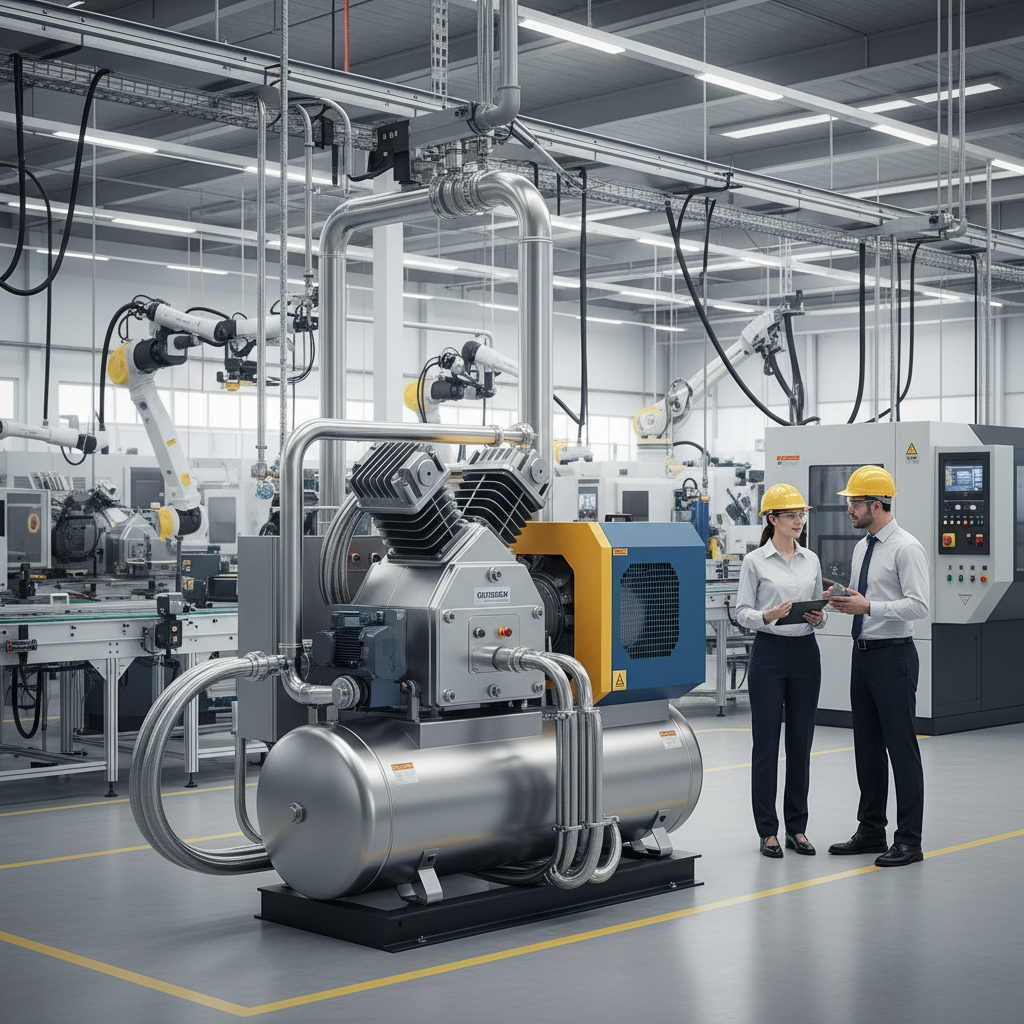
Advantages of Rotary Screw Air Compressors in Industrial Applications
Rotary screw air compressors have become a preferred choice for many industrial applications, thanks to their efficiency and reliability. According to market analysis, the screw compressor sector is projected to reach USD 22.9 billion by 2035, with a compound annual growth rate (CAGR) of 3.4% during the forecast period from 2025 to 2035. This trend reflects the growing demand for consistent and high-quality compressed air in various industries, from manufacturing to food processing.
One of the key advantages of rotary screw compressors is their ability to deliver a continuous flow of compressed air, which is essential for high-demand operations. Unlike reciprocating compressors, which tend to deliver air in bursts, rotary screw compressors operate smoothly, minimizing pressure fluctuations and enhancing operational efficiency. Furthermore, the compressor oil market is also on an upward trajectory, expected to reach USD 11.5 billion by 2035, driven by the rise in industrial automation and the transition towards synthetic formulations, which work synergistically with rotary screw compressors to improve performance and extend equipment life.

 Rotary screw air compressors are increasingly recognized in industrial settings for their maintenance benefits. Unlike reciprocating compressors that require frequent and intensive maintenance, rotary screw versions benefit from fewer moving parts and less wear over time. This translates into longer intervals between required maintenance, reducing downtime and associated costs. Additionally, advancements in technology have led to the development of
 Related Posts
-
2025 Top 5 Rotary Screw Air Compressors for Enhanced Performance
-
Exploring the Amazing World of CNC Routers for DIY Enthusiasts
-
2025 Top 10 Woodworking Machinery Innovations You Can't Miss
-

2025 Guide: How to Choose the Best CNC Machining Parts for Your Projects
-
Unlocking the Potential of Wood CNC Machines for Your Next Creative Project
-
Unlocking Precision: How Small CNC Machines Revolutionize DIY Projects and Prototyping