

For support and service of your machinery, Stiles has experts available 24/7 to help reduce downtime and get you back in action.
Technical Support: 616-698-6615
Service & Repairs: 616-698-7500
24/7 Parts: 1-800-727-8780
sale@inlandmachineokc.com
Parts are available from Stiles 24 hours a day, seven days a week, and are shipped from our Grand Rapids, Michigan fulfillment center.
24/7 Parts: 800-727-8780

With a customized Stiles University course, we can provide expert training for your team, on-location. Whether it's programming, operation or maintenance, we want to help you train your personnel to meet your production goals efficiently and effectively.

Experience the trusted workforce development training and machinery knowledge you rely on from Stiles University, now at your convenience. With technology changing every day and new methods being developed constantly, Stiles University Online has the latest information and training content available at your fingertips.
616-698-7500

Do you want to produce more efficiently? Processes and flows are key. We optimize these together with you, re-organize them and make sure that you reduce your lead time and save costs. This enables you to implement customized manufacturing and achieve your business goals.

Industrialized construction is evolving. Automation, robotics and advanced technology are raising the level of productivity, efficiency and precision for builders in North America.

Stiles Machinery is at the forefront of providing technology and machining for producing high quality mass timber. Automated solutions for your mass timber production can increase your manufacturing quality and productivity.

Project management services from Stiles make it easy to streamline your entire project— from concept and consultation to integration and implementation.
For support and service of your machinery, Stiles has experts available 24/7 to help reduce downtime and get you back in action.
Technical Support: 616-698-6615
Service & Repairs: 616-698-7500
24/7 Parts: 1-800-727-8780
sale@inlandmachineokc.com
Parts are available from Stiles 24 hours a day, seven days a week, and are shipped from our Grand Rapids, Michigan fulfillment center.
24/7 Parts: 800-727-8780

With a customized Stiles University course, we can provide expert training for your team, on-location. Whether it's programming, operation or maintenance, we want to help you train your personnel to meet your production goals efficiently and effectively.

Experience the trusted workforce development training and machinery knowledge you rely on from Stiles University, now at your convenience. With technology changing every day and new methods being developed constantly, Stiles University Online has the latest information and training content available at your fingertips.
616-698-7500

Do you want to produce more efficiently? Processes and flows are key. We optimize these together with you, re-organize them and make sure that you reduce your lead time and save costs. This enables you to implement customized manufacturing and achieve your business goals.

Industrialized construction is evolving. Automation, robotics and advanced technology are raising the level of productivity, efficiency and precision for builders in North America.

Stiles Machinery is at the forefront of providing technology and machining for producing high quality mass timber. Automated solutions for your mass timber production can increase your manufacturing quality and productivity.

Project management services from Stiles make it easy to streamline your entire project— from concept and consultation to integration and implementation.
For support and service of your machinery, Stiles has experts available 24/7 to help reduce downtime and get you back in action.
Technical Support: 616-698-6615 Service & Repairs: 616-698-7500 24/7 Parts: 1-800-727-8780
Parts are available from Stiles 24 hours a day, seven days a week, and are shipped from our Grand Rapids, Michigan fulfillment center.
24/7 Parts: 800-727-8780For support and service of your machinery, Stiles has experts available 24/7 to help reduce downtime and get you back in action.
Technical Support: 616-698-6615 Service & Repairs: 616-698-7500 24/7 Parts: 1-800-727-8780
Parts are available from Stiles 24 hours a day, seven days a week, and are shipped from our Grand Rapids, Michigan fulfillment center.
24/7 Parts: 800-727-8780Welding Protection is vital for anyone involved in welding tasks. This process can create extreme heat and sparks, which pose serious risks. Workers often overlook these dangers. They might underestimate the importance of proper gear. This negligence can lead to injuries and affect job quality.
Proper welding protection includes helmets, gloves, and protective clothing. These items shield workers from burns and harmful rays. A welder’s environment should also be safe. Poor air quality can cause respiratory issues. Yet, many still work without effective ventilation. This negligence can lead to long-term health problems.
Investing in welding protection is not just about safety. It also ensures high-quality work. Flawed welds may result from inadequate protection. In turn, this impacts the integrity of the project. Ignoring welding protection makes a worker's skills worthless. Emphasizing safety can save lives and improve workmanship. Reflecting on this can drive change in the welding industry.
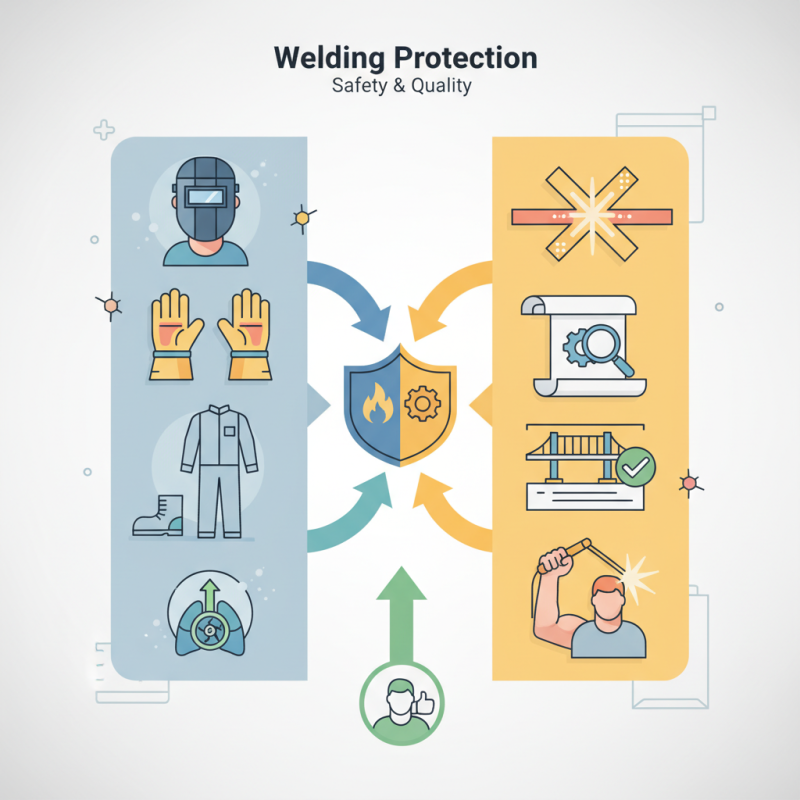
Welding is a critical process in many industries, from construction to manufacturing. Yet, it comes with significant risks. Proper welding protection is vital for ensuring worker safety. According to the American Welding Society, over 500,000 welders operate in the United States, and they face numerous hazards daily, including exposure to harmful fumes and burns.
Protective gear, like helmets, gloves, and protective clothing, is essential. Studies indicate that over 40% of welding-related injuries result from inadequate protective measures. When workers neglect to wear proper protection, they expose themselves to dangerous UV radiation and hot sparks. A report by the National Institute for Occupational Safety and Health emphasizes that wearing the right gear can reduce the risk of injury by up to 50%.
Many welders still take shortcuts. Some might skip gloves or eye protection to save time. This habit can lead to severe long-term consequences. The welding industry must acknowledge these dangers. Training programs must enforce the importance of protective measures. Awareness is crucial. Understanding the risks can be the difference between a safe working environment and a tragic incident.
Welding is often seen as an industrial craft, but it poses serious hazards. The American Welding Society states that over 500,000 welders work in the U.S. alone. These workers face risks that can lead to injuries and health issues. Understanding these hazards is crucial for maintaining safety and quality in welding operations.
One major hazard is exposure to intense UV radiation. Welders can suffer from “welder’s flash,” which causes painful eye damage. Protective gear, such as helmets with proper filtration, is vital. According to the Occupational Safety and Health Administration (OSHA), improper eye protection can lead to severe long-term vision problems.
Another risk is inhalation of harmful fumes. The National Institute for Occupational Safety and Health (NIOSH) emphasizes that welding fumes contain harmful metals. These fumes can lead to respiratory diseases down the line. Workers should use appropriate ventilation systems to combat this issue. Practical solutions, like fume extraction equipment, are not always in place. This oversight can create a hazardous work environment.
| Hazard Type | Description | Associated Risks | Protective Measures |
|---|---|---|---|
| Fumes and Gases | Emissions from welding processes | Respiratory issues, poisoning | Use of fume extraction systems, respiratory protection |
| Heat and Light | Intense heat and UV radiation during welding | Burns, eye damage | Flame-resistant clothing, welding helmets with UV protection |
| Electric Shock | Risk from electric arc welding | Severe injury or death | Proper insulation, grounding, and use of protective gear |
| Noise | Loud sounds from welding machines | Hearing loss | Hearing protection devices |
| Fire Hazards | Flammable materials near welding areas | Fires, explosions | Fire extinguisher access, removal of flammable materials |
Welding is a critical skill, but it comes with significant risks. Protecting oneself is not optional; it is essential. Personal protective equipment (PPE) plays a vital role in ensuring safety. Welders face hazards like intense heat, sparks, and harmful fumes. Without adequate protection, serious injuries can occur.
Proper gear includes helmets with face shields and goggles. These protect against flying debris and harmful light. Gloves should be heat-resistant and durable. Welders need to maintain dexterity while guarding their hands. Protective clothing is equally important. Flame-resistant materials can save skin from burns and cuts.
Foot protection shouldn't be overlooked. Sturdy, steel-toed boots enhance safety on the job. However, some may neglect to use the proper gear or wear faulty equipment. This oversight can lead to accidents. It’s vital for welders to regularly check their PPE for damage. Each piece of equipment contributes to overall safety. Every welder must prioritize their well-being on the job.
Welding operations pose unique risks. A single oversight can lead to serious injury. Proper protection is vital. It is more than just wearing a helmet and gloves. The environment plays a significant role too. A clean, organized workspace minimizes hazards. Ensure that flammable materials are stored away from the welding area. This simple step can prevent catastrophic accidents.
Welders should regularly inspect their gear. Faulty equipment can lead to accidents. Check for wear and tear on gloves and helmets. Ensure that faceshields are clear and free of cracks. Regular maintenance is crucial but often overlooked. Pay attention to ventilation in the workspace. Poor air quality can lead to harmful inhalation. This aspect is frequently underestimated.
Training is key. New welders often lack experience. They might skip important safety checks. A culture of safety must be instilled. Encourage communication among team members about potential risks. This not only creates awareness but also fosters teamwork. There is always room for improvement. Reflecting on safety practices can save lives. Making safety a habit should never be optional.
Welding protection is crucial for ensuring quality workmanship. Proper gear significantly reduces the risk of injuries. The American Welding Society (AWS) reports that inadequate protective measures lead to 30% of welding-related accidents. This statistic shocks many in the industry and highlights the need for high safety standards.
When welders use appropriate protective equipment, the quality of their work improves. Protective gear shields against sparks, heat, and harmful UV rays. A study published by the National Institute for Occupational Safety and Health (NIOSH) indicates that using protective clothing increases productivity by up to 20%. Workers can focus better, knowing they are safe.
However, not all welders have access to such equipment. Some may overlook the importance of proper protection. This leads to subpar workmanship and potential hazards. Investing in quality protective gear often seems expensive, but the long-term benefits outweigh the costs. When safety is prioritized, the standard of work improves significantly. Rethinking these priorities is essential for a thriving welding environment.







