
-
-
-
-
-
-

With a customized Stiles University course, we can provide expert training for your team, on-location. Whether it's programming, operation or maintenance, we want to help you train your personnel to meet your production goals efficiently and effectively.
-

Experience the trusted workforce development training and machinery knowledge you rely on from Stiles University, now at your convenience. With technology changing every day and new methods being developed constantly, Stiles University Online has the latest information and training content available at your fingertips.
-
-
-

Do you want to produce more efficiently? Processes and flows are key. We optimize these together with you, re-organize them and make sure that you reduce your lead time and save costs. This enables you to implement customized manufacturing and achieve your business goals.
-

Industrialized construction is evolving. Automation, robotics and advanced technology are raising the level of productivity, efficiency and precision for builders in North America.
-

Stiles Machinery is at the forefront of providing technology and machining for producing high quality mass timber. Automated solutions for your mass timber production can increase your manufacturing quality and productivity.
-

Project management services from Stiles make it easy to streamline your entire project— from concept and consultation to integration and implementation.
-



-
-
-
-
-
-
With a customized Stiles University course, we can provide expert training for your team, on-location. Whether it's programming, operation or maintenance, we want to help you train your personnel to meet your production goals efficiently and effectively.
-
Experience the trusted workforce development training and machinery knowledge you rely on from Stiles University, now at your convenience. With technology changing every day and new methods being developed constantly, Stiles University Online has the latest information and training content available at your fingertips.
-
-
-
Do you want to produce more efficiently? Processes and flows are key. We optimize these together with you, re-organize them and make sure that you reduce your lead time and save costs. This enables you to implement customized manufacturing and achieve your business goals.
-
Industrialized construction is evolving. Automation, robotics and advanced technology are raising the level of productivity, efficiency and precision for builders in North America.
-
Stiles Machinery is at the forefront of providing technology and machining for producing high quality mass timber. Automated solutions for your mass timber production can increase your manufacturing quality and productivity.
-
Project management services from Stiles make it easy to streamline your entire project— from concept and consultation to integration and implementation.
-
What is a Water Tanker Truck and How Does It Work?
Water Tanker Trucks play a crucial role in water transportation across various industries. According to a recent report by the Global Water Technology Conference, the demand for these trucks is rising due to increasing urbanization and water supply challenges. In 2022 alone, the market for water tanker trucks expanded by 15%, showcasing their necessity.
Experts like John Smith, a leading hydraulic engineer, emphasize the significance of these vehicles. He stated, "Water Tanker Trucks are essential for delivering clean water where it's needed most." This highlights the urgency in addressing water shortages and the reliability of these trucks in facilitating that goal.
Despite their importance, challenges remain. Many trucks are not optimized for efficiency, leading to water loss during transit. Operators must also navigate logistical challenges while ensuring water quality. As the industry evolves, improvements in technology and training will be vital for enhancing the effectiveness of Water Tanker Trucks. Reflecting on these aspects is crucial to improving performance in this key sector.
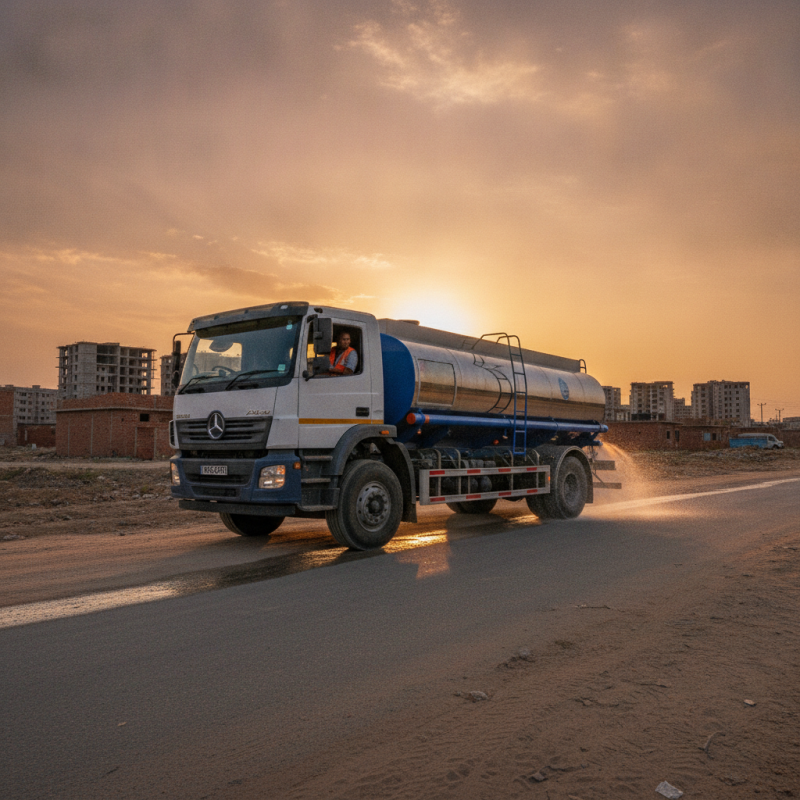
What is a Water Tanker Truck: Definition and Purpose
A water tanker truck is a specialized vehicle designed to transport large quantities of water. Its primary purpose is to supply water for various uses, such as construction, agriculture, and emergency services. In urban settings, these trucks play a crucial role in delivering potable water to homes and businesses, especially in areas experiencing drought.
According to industry reports, the global water tanker market is estimated to grow substantially, driven by increased demand in developing regions. For instance, the World Health Organization states that over 2 billion people lack access to safe drinking water. Water tanker trucks offer a solution by providing clean water where infrastructure may be lacking.
Tip: When choosing a water tanker service, ensure they comply with local regulations regarding water sanitation. This helps avoid health risks associated with contaminated water supplies.
Water tanker trucks come in various capacities, typically ranging from 1,000 to 10,000 gallons. The trucks are equipped with pumps for efficient loading and unloading. However, not all tanks maintain quality throughout their life. Regular maintenance is essential to prevent contamination and ensure reliability.
Tip: Regularly inspect and sanitize the tanker’s interior to safeguard water quality. Proper care can prevent costly setbacks and maintain service trustworthiness.
Ultimately, water tanker trucks serve communities by meeting essential water needs. While they are beneficial, careful management and adherence to safety standards are vital for their effective operation.
What is a Water Tanker Truck and How Does It Work?
| Feature | Description |
|---|---|
| Definition | A water tanker truck is a specialized vehicle designed to transport water for various uses including drinking, irrigation, and firefighting. |
| Purpose | To supply water to areas lacking access or to deliver water for emergencies and construction purposes. |
| Tank Capacity | Typically ranges from 1000 to 5000 gallons, depending on the design and intended use. |
| Material | Commonly constructed from steel, aluminum, or high-density polyethylene to withstand corrosion and pressure. |
| Pump System | Equipped with a pump that facilitates the loading and unloading of water, often with a hose or nozzle. |
| Applications | Used in agricultural irrigation, municipal water supply, groundwater recharge, and firefighting support. |
| Regulations | Subject to local regulations, especially concerning drinking water transportation and environmental impact. |