
-
-
-
-
-
-

With a customized Stiles University course, we can provide expert training for your team, on-location. Whether it's programming, operation or maintenance, we want to help you train your personnel to meet your production goals efficiently and effectively.
-

Experience the trusted workforce development training and machinery knowledge you rely on from Stiles University, now at your convenience. With technology changing every day and new methods being developed constantly, Stiles University Online has the latest information and training content available at your fingertips.
-
-
-

Do you want to produce more efficiently? Processes and flows are key. We optimize these together with you, re-organize them and make sure that you reduce your lead time and save costs. This enables you to implement customized manufacturing and achieve your business goals.
-

Industrialized construction is evolving. Automation, robotics and advanced technology are raising the level of productivity, efficiency and precision for builders in North America.
-

Stiles Machinery is at the forefront of providing technology and machining for producing high quality mass timber. Automated solutions for your mass timber production can increase your manufacturing quality and productivity.
-

Project management services from Stiles make it easy to streamline your entire project— from concept and consultation to integration and implementation.
-



-
-
-
-
-
-
With a customized Stiles University course, we can provide expert training for your team, on-location. Whether it's programming, operation or maintenance, we want to help you train your personnel to meet your production goals efficiently and effectively.
-
Experience the trusted workforce development training and machinery knowledge you rely on from Stiles University, now at your convenience. With technology changing every day and new methods being developed constantly, Stiles University Online has the latest information and training content available at your fingertips.
-
-
-
Do you want to produce more efficiently? Processes and flows are key. We optimize these together with you, re-organize them and make sure that you reduce your lead time and save costs. This enables you to implement customized manufacturing and achieve your business goals.
-
Industrialized construction is evolving. Automation, robotics and advanced technology are raising the level of productivity, efficiency and precision for builders in North America.
-
Stiles Machinery is at the forefront of providing technology and machining for producing high quality mass timber. Automated solutions for your mass timber production can increase your manufacturing quality and productivity.
-
Project management services from Stiles make it easy to streamline your entire project— from concept and consultation to integration and implementation.
-
2026 Top Waste Heat Boiler Solutions for Global Buyers?
In the quest for sustainable energy solutions, Waste heat boilers play a pivotal role. Many industries generate excess heat during their operations. Capturing and utilizing this heat can minimize energy waste effectively. The 2026 market is witnessing innovative developments in waste heat boiler technology.
Global buyers face a myriad of choices when selecting waste heat boiler solutions. Factors such as efficiency, durability, and cost-effectiveness are crucial. Several leading manufacturers are emerging, each offering unique features. However, it is essential to scrutinize each option carefully. Misleading marketing can cloud judgment, leading to suboptimal purchases.
As industries strive for greener practices, advancements in waste heat boiler solutions will be crucial. Evaluating not just technical specifications, but also user experiences will help buyers make informed decisions. The journey toward responsible energy usage is complex but necessary. Embracing waste heat boiler technology is a step in the right direction.
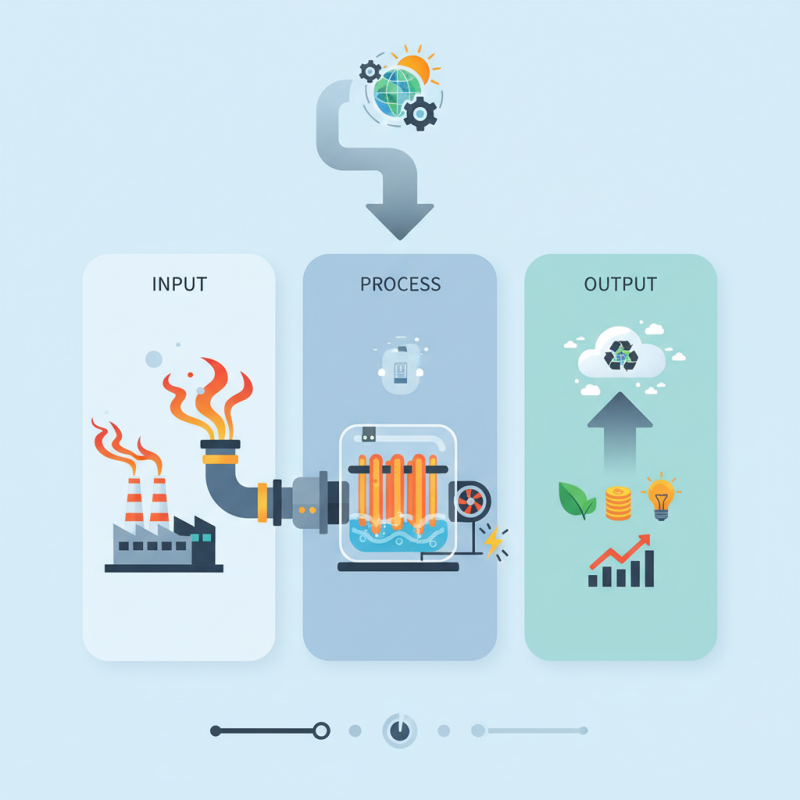
Overview of Waste Heat Boiler Technology and Its Benefits
Waste heat boilers are pivotal in improving energy efficiency across industries. These systems capture and reuse heat that would otherwise be lost—an advantage for both cost savings and sustainability. According to a report from McKinsey, optimizing waste heat recovery can increase energy efficiency by up to 30%. This technology significantly reduces greenhouse gas emissions, a crucial step for industries facing stricter regulations.
Implementing waste heat recovery can be complex. Challenges include the need for precise integration with existing systems and the variability in heat quality. However, the potential financial and environmental benefits are substantial. A detailed study released by the International Energy Agency shows that industries optimizing waste heat systems can achieve annual savings of up to $5 billion.
**Tip:** Regular maintenance of waste heat boilers is essential for optimal performance. Neglecting upkeep can lead to reduced efficiency and higher emissions.
Understanding the technology behind waste heat boilers is crucial for global buyers. With options available for diverse applications, selecting the right system requires expertise. The technology's evolution reflects significant advancements, but the market still faces hurdles. Buyers should consider the total lifecycle cost, not just the initial investment.
**Tip:** Engage with experts to evaluate different waste heat recovery options before making decisions.
2026 Top Waste Heat Boiler Solutions for Global Buyers - Overview of Waste Heat Boiler Technology and Its Benefits
| Criteria | Description | Benefits | Expected Efficiency (%) | Common Applications |
|---|---|---|---|---|
| Modular Waste Heat Boilers | Designed for easy installation and scalability. | Lower initial cost, flexibility in operation. | 70-85% | Cement, Steel Industries |
| Condensing Waste Heat Boilers | Utilizes flue gas condensation to recover latent heat. | High thermal efficiency, reduced emissions. | 85-95% | Power Plants, Process Industries |
| Exhaust Gas Waste Heat Boilers | Captures heat from exhaust gases of power generation. | Improves overall plant efficiency, reduces operational costs. | 70-80% | Gas Turbines, Industrial Boilers |
| Heat Recovery Steam Generators (HRSG) | Used in combined cycle power plants to generate steam. | Increases energy output, eco-friendly. | 80-90% | Combined Cycle Power Stations |