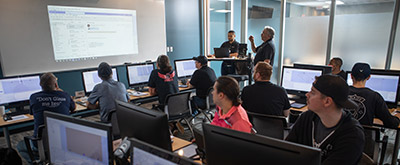
For support and service of your machinery, Stiles has experts available 24/7 to help reduce downtime and get you back in action.
Technical Support: 616-698-6615
Service & Repairs: 616-698-7500
24/7 Parts: 1-800-727-8780
sale@inlandmachineokc.com
Parts are available from Stiles 24 hours a day, seven days a week, and are shipped from our Grand Rapids, Michigan fulfillment center.
24/7 Parts: 800-727-8780

With a customized Stiles University course, we can provide expert training for your team, on-location. Whether it's programming, operation or maintenance, we want to help you train your personnel to meet your production goals efficiently and effectively.

Experience the trusted workforce development training and machinery knowledge you rely on from Stiles University, now at your convenience. With technology changing every day and new methods being developed constantly, Stiles University Online has the latest information and training content available at your fingertips.
616-698-7500

Do you want to produce more efficiently? Processes and flows are key. We optimize these together with you, re-organize them and make sure that you reduce your lead time and save costs. This enables you to implement customized manufacturing and achieve your business goals.

Industrialized construction is evolving. Automation, robotics and advanced technology are raising the level of productivity, efficiency and precision for builders in North America.

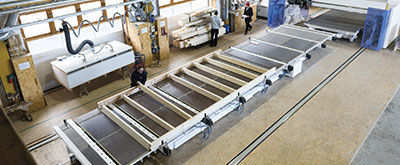
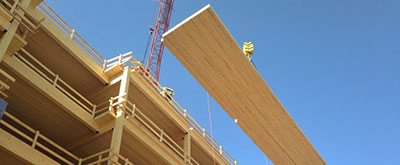
Stiles Machinery is at the forefront of providing technology and machining for producing high quality mass timber. Automated solutions for your mass timber production can increase your manufacturing quality and productivity.

Project management services from Stiles make it easy to streamline your entire project— from concept and consultation to integration and implementation.
For support and service of your machinery, Stiles has experts available 24/7 to help reduce downtime and get you back in action.
Technical Support: 616-698-6615
Service & Repairs: 616-698-7500
24/7 Parts: 1-800-727-8780
sale@inlandmachineokc.com
Parts are available from Stiles 24 hours a day, seven days a week, and are shipped from our Grand Rapids, Michigan fulfillment center.
24/7 Parts: 800-727-8780

With a customized Stiles University course, we can provide expert training for your team, on-location. Whether it's programming, operation or maintenance, we want to help you train your personnel to meet your production goals efficiently and effectively.

Experience the trusted workforce development training and machinery knowledge you rely on from Stiles University, now at your convenience. With technology changing every day and new methods being developed constantly, Stiles University Online has the latest information and training content available at your fingertips.
616-698-7500

Do you want to produce more efficiently? Processes and flows are key. We optimize these together with you, re-organize them and make sure that you reduce your lead time and save costs. This enables you to implement customized manufacturing and achieve your business goals.

Industrialized construction is evolving. Automation, robotics and advanced technology are raising the level of productivity, efficiency and precision for builders in North America.

Stiles Machinery is at the forefront of providing technology and machining for producing high quality mass timber. Automated solutions for your mass timber production can increase your manufacturing quality and productivity.

Project management services from Stiles make it easy to streamline your entire project— from concept and consultation to integration and implementation.
For support and service of your machinery, Stiles has experts available 24/7 to help reduce downtime and get you back in action.
Technical Support: 616-698-6615 Service & Repairs: 616-698-7500 24/7 Parts: 1-800-727-8780
Parts are available from Stiles 24 hours a day, seven days a week, and are shipped from our Grand Rapids, Michigan fulfillment center.
24/7 Parts: 800-727-8780For support and service of your machinery, Stiles has experts available 24/7 to help reduce downtime and get you back in action.
Technical Support: 616-698-6615 Service & Repairs: 616-698-7500 24/7 Parts: 1-800-727-8780
Parts are available from Stiles 24 hours a day, seven days a week, and are shipped from our Grand Rapids, Michigan fulfillment center.
24/7 Parts: 800-727-8780Thermal Imaging Cameras have become essential tools in various industries, from firefighting to building inspections. According to the MarketsandMarkets report, the thermal imaging market is projected to reach $4.4 billion by 2026, growing at a CAGR of 7.5%. This growth is driven by the increasing demand for advanced imaging technologies. Nevertheless, buyers need to navigate numerous features when selecting the right camera.
Understanding the key features is critical to making an informed decision. For instance, resolution is vital for detecting fine details. A Thermal Imaging Camera with a higher resolution provides clearer images and more accurate results. Furthermore, integration capabilities with smartphones and other devices enhance usability. Yet, many buyers overlook the importance of durability in rugged environments. Manufacturers often tout robust designs, but user experiences may reveal shortcomings.
In a rapidly evolving market, staying updated is essential. Advanced features like automated analysis and improved thermal sensitivity are becoming standard. However, not all products deliver as promised. Analyses of customer reviews often expose gaps between expectations and reality. Buyers must conduct thorough research, balancing specifications with real-world performance. This ensures that the chosen Thermal Imaging Camera meets necessary working conditions and delivers reliable results.
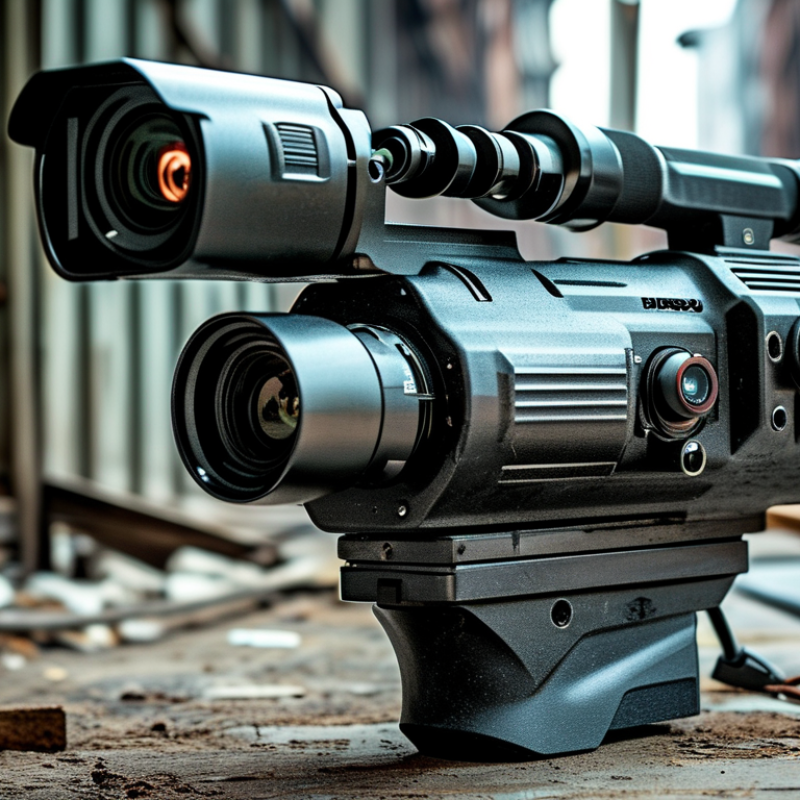
When considering thermal imaging cameras, several key characteristics stand out. Resolution is crucial. A higher resolution translates to clearer images. Reports indicate that thermal cameras with 640x480 resolutions are becoming standard. This is in response to a growing demand for precise thermal assessments. Users need to consider the camera's thermal sensitivity too. A sensitivity of less than 0.1°C can significantly enhance accuracy in detecting temperature differences.
Another important feature is the field of view. Cameras with wider fields allow for a broader capture range. Users often overlook this aspect, which can lead to missed details in inspections. Battery life also plays a vital role. Efficient power management systems can extend operational time, an important consideration for on-site work. According to industry studies, many users report frustration with frequent battery changes.
Finally, features like image storage and Wi-Fi connectivity should not be dismissed. These capabilities enable quick data sharing and analysis. Users should also reflect on ergonomics and weight. A camera that's too heavy can hinder prolonged use. Each of these characteristics contributes to the overall effectiveness of thermal imaging devices in various applications.
Understanding resolution in thermal imaging cameras is crucial for making informed purchasing decisions. The pixel size directly impacts the clarity of the images captured. Higher resolution typically equates to greater detail, making it easier to identify issues. According to a recent report by the International Society for Optics and Photonics, thermal cameras with a pixel resolution of 640x480 provide a significant advantage in capturing fine details. In contrast, cameras with 320x240 resolution can lead to missed critical information, especially in complex environments.
Clarity is not solely defined by pixel count; it also depends on the quality of the sensor and the optics used. For instance, sensors with smaller pixel sizes can capture a broader range of temperatures and produce clearer images. However, they may also be more susceptible to noise, leading to potential misinterpretations. A study from the National Institute of Standards and Technology suggests that balancing pixel size with sensor performance is essential for reliable data.
Buyers need to consider their specific needs. In agricultural applications, for instance, higher resolution can be pivotal for crop health monitoring. Yet, in home inspections, a lower resolution may suffice and save costs. This nuanced understanding of resolution and clarity can help buyers make sound choices that align with their requirements.
When considering thermal imaging cameras, sensibility and thermal resolution are crucial features. Sensitivity refers to the camera's ability to detect low levels of infrared radiation. Higher sensitivity leads to clearer images. According to industry data, many high-end models achieve sensitivities as low as 50 mK. This means they can discern tiny temperature differences, essential for accurate assessments in various applications.
Thermal resolution is another critical factor. It indicates how many pixels are available in the thermal image. A camera with 320x240 resolution shows 76,800 pixels. In comparison, a 640x480 resolution offers 307,200 pixels. Higher resolution enhances image clarity. However, buyers should remember that higher specifications often come with increased costs.
In some cases, focusing too heavily on sensitivity or resolution can lead to overlooking other important features. For instance, users may neglect user interface ease or battery life. If a camera is hard to use or constantly requires recharging, performance can suffer. Thus, it’s vital to balance these specifications to meet specific needs effectively.
Field of view (FOV) is a crucial element to consider when selecting a thermal imaging camera. A wider FOV provides a broader perspective, allowing you to capture more area in a single frame. This is especially useful for tasks like building inspections or wildlife monitoring, where a large scene needs to be evaluated quickly. However, a wider angle can reduce the level of detail. The trade-off often means sacrificing clarity for a broader view.
When considering thermal imaging cameras, additional features can significantly enhance their functionality. Advanced image processing capabilities are among the top features. These improvements allow for clearer images and better differentiation between temperatures. According to a report by Research and Markets, the thermal imaging market is projected to grow by 8.5% annually from 2021 to 2026. This growth is fueled by demand for advanced imaging technologies.
Connectivity options are essential as well. Many modern cameras offer Wi-Fi and Bluetooth capabilities, facilitating easy data transfer. This is crucial for real-time analysis and collaboration among teams. A survey by MarketsandMarkets noted that 39% of users consider connectivity a key feature when purchasing thermal imaging equipment. However, ease of use can sometimes diminish with more complex connectivity options.
Finally, battery life is a critical factor often overlooked. Users prefer cameras that provide extended usage without frequent charging. Some models advertise multiple hours of operation, but real-world usage may differ. Long battery life is often essential for fieldwork, where access to power sources is limited. Always assess these features to align them with practical needs.