

For support and service of your machinery, Stiles has experts available 24/7 to help reduce downtime and get you back in action.
Technical Support: 616-698-6615
Service & Repairs: 616-698-7500
24/7 Parts: 1-800-727-8780
sale@inlandmachineokc.com
Parts are available from Stiles 24 hours a day, seven days a week, and are shipped from our Grand Rapids, Michigan fulfillment center.
24/7 Parts: 800-727-8780

With a customized Stiles University course, we can provide expert training for your team, on-location. Whether it's programming, operation or maintenance, we want to help you train your personnel to meet your production goals efficiently and effectively.

Experience the trusted workforce development training and machinery knowledge you rely on from Stiles University, now at your convenience. With technology changing every day and new methods being developed constantly, Stiles University Online has the latest information and training content available at your fingertips.
616-698-7500

Do you want to produce more efficiently? Processes and flows are key. We optimize these together with you, re-organize them and make sure that you reduce your lead time and save costs. This enables you to implement customized manufacturing and achieve your business goals.

Industrialized construction is evolving. Automation, robotics and advanced technology are raising the level of productivity, efficiency and precision for builders in North America.

Stiles Machinery is at the forefront of providing technology and machining for producing high quality mass timber. Automated solutions for your mass timber production can increase your manufacturing quality and productivity.

Project management services from Stiles make it easy to streamline your entire project— from concept and consultation to integration and implementation.
For support and service of your machinery, Stiles has experts available 24/7 to help reduce downtime and get you back in action.
Technical Support: 616-698-6615
Service & Repairs: 616-698-7500
24/7 Parts: 1-800-727-8780
sale@inlandmachineokc.com
Parts are available from Stiles 24 hours a day, seven days a week, and are shipped from our Grand Rapids, Michigan fulfillment center.
24/7 Parts: 800-727-8780

With a customized Stiles University course, we can provide expert training for your team, on-location. Whether it's programming, operation or maintenance, we want to help you train your personnel to meet your production goals efficiently and effectively.

Experience the trusted workforce development training and machinery knowledge you rely on from Stiles University, now at your convenience. With technology changing every day and new methods being developed constantly, Stiles University Online has the latest information and training content available at your fingertips.
616-698-7500

Do you want to produce more efficiently? Processes and flows are key. We optimize these together with you, re-organize them and make sure that you reduce your lead time and save costs. This enables you to implement customized manufacturing and achieve your business goals.

Industrialized construction is evolving. Automation, robotics and advanced technology are raising the level of productivity, efficiency and precision for builders in North America.

Stiles Machinery is at the forefront of providing technology and machining for producing high quality mass timber. Automated solutions for your mass timber production can increase your manufacturing quality and productivity.

Project management services from Stiles make it easy to streamline your entire project— from concept and consultation to integration and implementation.
For support and service of your machinery, Stiles has experts available 24/7 to help reduce downtime and get you back in action.
Technical Support: 616-698-6615 Service & Repairs: 616-698-7500 24/7 Parts: 1-800-727-8780
Parts are available from Stiles 24 hours a day, seven days a week, and are shipped from our Grand Rapids, Michigan fulfillment center.
24/7 Parts: 800-727-8780For support and service of your machinery, Stiles has experts available 24/7 to help reduce downtime and get you back in action.
Technical Support: 616-698-6615 Service & Repairs: 616-698-7500 24/7 Parts: 1-800-727-8780
Parts are available from Stiles 24 hours a day, seven days a week, and are shipped from our Grand Rapids, Michigan fulfillment center.
24/7 Parts: 800-727-8780In the world of industrial automation, "Mechanical Conveyors" play a crucial role in enhancing productivity. According to Dr. Emily Carter, a renowned expert in conveyor technology, "Efficient material handling through conveyors can transform operational workflows." Her insight highlights the significance of selecting the right mechanical conveyors for optimizing performance.
Mechanical conveyors come in various types, each tailored for specific applications. Belt conveyors transport materials smoothly, while screw conveyors handle bulk solids effectively. These systems reduce manual labor and increase efficiency. However, choosing the right conveyor requires careful consideration of the materials and layout constraints.
Despite their benefits, companies often overlook maintenance needs. Neglecting this can lead to costly downtimes. It's important to regularly assess the condition of your mechanical conveyors. Emphasizing both efficiency and reliability ensures that businesses maintain a competitive edge in their operations.
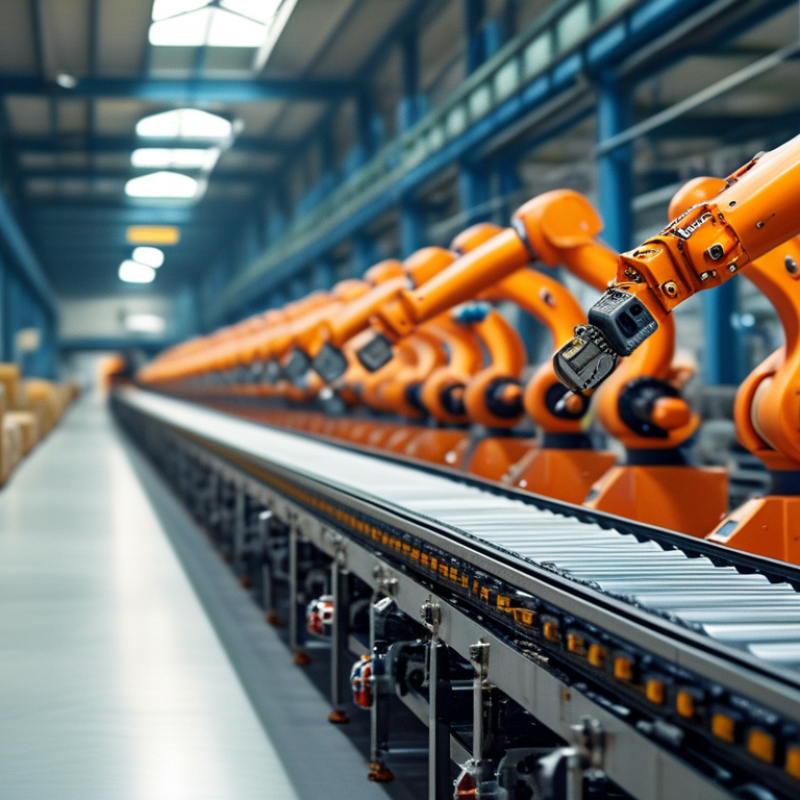
Mechanical conveyors play a vital role in various industries. They facilitate the efficient movement of materials, ensuring smooth operations. These systems reduce manual labor, increasing safety and speed in production processes. The right conveyor can enhance workflow and optimize productivity. Understanding their importance helps industries make better choices in equipment.
Choosing the correct mechanical conveyor depends on the application. For example, consider the type of materials being moved. Heavy items may require durable options, while lighter materials can use simpler designs. The layout of the work environment also dictates the most suitable conveyor system. Space constraints can lead to inefficient designs if not correctly assessed.
Tips for enhancing conveyor efficiency include regular maintenance checks. This prevents unexpected breakdowns and extends the life of the system. Training employees on proper handling of materials can also lead to smoother operations. Inappropriate use may cause wear and tear—something that could have been avoided with proper training. Always assess your system's performance to identify areas for improvement.
Mechanical conveyors are essential in various industries. They transport materials efficiently. Understanding different types of conveyors can optimize operations.
Belt conveyors are widely used for their versatility. They can transport bulk materials over long distances. According to industry data, over 40% of conveyor systems in manufacturing are belt conveyors. This statistic reflects their effectiveness in handling diverse materials. Their design allows for continuous operation, making them reliable.
Another common type is the screw conveyor. These are ideal for handling bulk solids, such as powders and granules. They require less space than other options. Yet, their design might cause maintenance challenges. Statistics indicate that screw conveyors account for about 15% of total conveyor usage in material handling.
Ultimately, understanding the types of mechanical conveyors is crucial. It ensures industries choose the right systems for their needs. Data suggests that optimal conveyor selection improves productivity significantly. However, businesses should regularly assess their systems for efficiency and longevity.
When selecting mechanical conveyors, efficiency hinges on several key features. The first aspect is load capacity. Different materials require various conveyor specifications. Ensure the conveyor can handle the weight and volume of the material being transported effectively. A report from the Conveyor Equipment Manufacturers Association (CEMA) highlights that properly matched load capacities can boost operational efficiency by up to 30%.
Another vital feature is the conveyor speed. This directly affects throughput. A balance must be struck; too fast may lead to spills, while too slow results in delays. Data from a study by McKinsey suggests optimizing speed can enhance productivity by at least 15%.
Tip: Regularly assess the conveyor's speed settings in your operations. Adjustments can lead to significant enhancements.
Additionally, consider the design of the conveyor system. Modular designs offer flexibility and scalability. They can adapt to changing production needs with ease. However, it's crucial to evaluate if a modular system could lead to complications in maintenance or integration.
Tip: Analyze your current setup. Reflect on whether the design genuinely serves your strategic goals or if adjustments are needed. Regular reflections on system efficiency ensure optimal practice.
Mechanical conveyors play a critical role in enhancing efficiency across various industries. They transport materials and products seamlessly, reducing manual handling. Different types of conveyors, like belt and screw conveyors, serve specific purposes. Each conveyor design offers unique advantages, yet they all aim to improve productivity.
Performance depends on several factors, including load capacity and speed. Some conveyors excel in heavy-duty applications, while others are designed for lighter materials. Understanding the application is vital. A conveyor that works well in one setting may not suit another. Adjustments in design can significantly impact performance and efficiency.
Maintenance and reliability are crucial. Neglected conveyors can lead to increased downtime and costs. Regular inspections are essential to ensure that these systems operate smoothly. Investing in conveyor systems can yield long-term benefits, but organizations must remain adaptable. The landscape of mechanical conveyance is ever-evolving. They must stay informed to make the best choices for their operations.
The future of conveyor technology is evolving rapidly. Innovations in materials and automation are shaping how industries operate. Smart sensors and IoT-enabled devices are becoming commonplace. These technologies enhance monitoring and maintenance, leading to improved efficiency.
Adopting automation comes with challenges. Not all facilities can easily transition to these new systems. Sometimes, legacy equipment complicates integration efforts. Additionally, workforce training is essential for maximizing these advancements. Companies must invest in skill development to leverage new capabilities fully.
Sustainability is another significant trend. Many manufacturers are exploring eco-friendly materials for conveyor systems. This shift requires careful consideration of durability and performance. Balancing environmental impact with operational needs is complex. Future conveyor systems must address these demands while remaining effective and reliable.







