
-
-
-
-
-
-

With a customized Stiles University course, we can provide expert training for your team, on-location. Whether it's programming, operation or maintenance, we want to help you train your personnel to meet your production goals efficiently and effectively.
-

Experience the trusted workforce development training and machinery knowledge you rely on from Stiles University, now at your convenience. With technology changing every day and new methods being developed constantly, Stiles University Online has the latest information and training content available at your fingertips.
-
-
-

Do you want to produce more efficiently? Processes and flows are key. We optimize these together with you, re-organize them and make sure that you reduce your lead time and save costs. This enables you to implement customized manufacturing and achieve your business goals.
-

Industrialized construction is evolving. Automation, robotics and advanced technology are raising the level of productivity, efficiency and precision for builders in North America.
-

Stiles Machinery is at the forefront of providing technology and machining for producing high quality mass timber. Automated solutions for your mass timber production can increase your manufacturing quality and productivity.
-

Project management services from Stiles make it easy to streamline your entire project— from concept and consultation to integration and implementation.
-



-
-
-
-
-
-
With a customized Stiles University course, we can provide expert training for your team, on-location. Whether it's programming, operation or maintenance, we want to help you train your personnel to meet your production goals efficiently and effectively.
-
Experience the trusted workforce development training and machinery knowledge you rely on from Stiles University, now at your convenience. With technology changing every day and new methods being developed constantly, Stiles University Online has the latest information and training content available at your fingertips.
-
-
-
Do you want to produce more efficiently? Processes and flows are key. We optimize these together with you, re-organize them and make sure that you reduce your lead time and save costs. This enables you to implement customized manufacturing and achieve your business goals.
-
Industrialized construction is evolving. Automation, robotics and advanced technology are raising the level of productivity, efficiency and precision for builders in North America.
-
Stiles Machinery is at the forefront of providing technology and machining for producing high quality mass timber. Automated solutions for your mass timber production can increase your manufacturing quality and productivity.
-
Project management services from Stiles make it easy to streamline your entire project— from concept and consultation to integration and implementation.
-
Top Heat Pipe Cooling Solutions for Global Buyers?
Heat Pipe Cooling has become a vital technology in modern electronics. This is due to its exceptional ability to manage heat efficiently. Global buyers are increasingly looking for reliable cooling solutions. Performance and durability are crucial factors in this landscape.
Heat Pipe Cooling systems are versatile. They find applications in various industries, from automotive to aerospace. Efficient design is essential, but not all heat pipes are created equal. Some products may underperform in specific environments, highlighting the need for careful selection. Buyers must consider temperature ranges and material compatibility.
Moreover, innovation in heat pipe technology is ongoing. New materials and designs emerge regularly, but not every solution is optimal. Industry professionals must stay informed of advancements. Awareness can aid in making informed decisions. This evolving field presents both opportunities and challenges for global buyers seeking effective cooling.
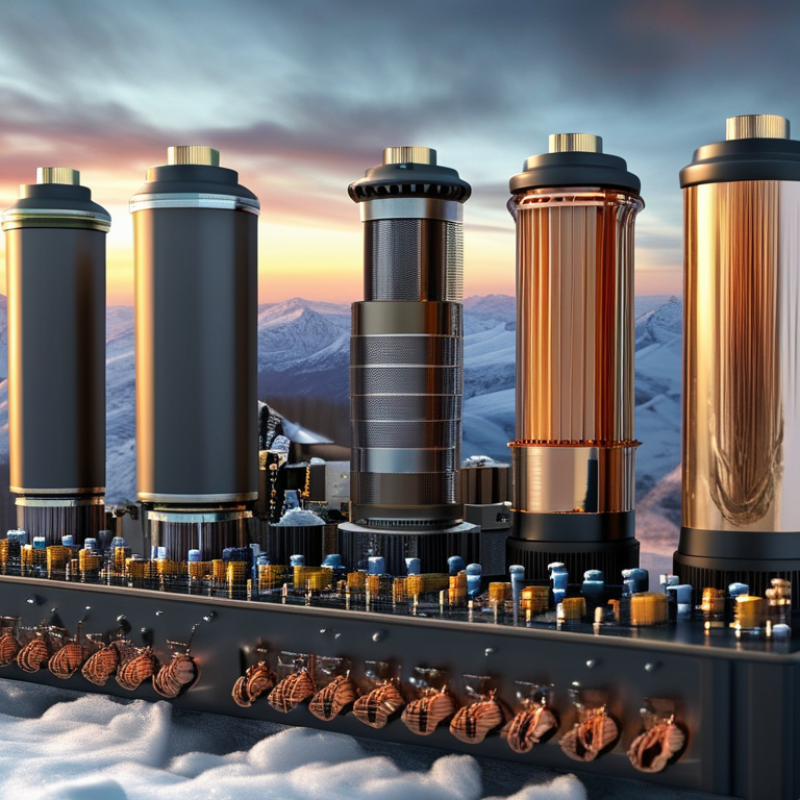
Overview of Heat Pipe Cooling Technology
Heat pipe cooling technology is a reliable solution for managing thermal energy in various applications. Its design leverages the principles of phase change and thermal conduction. Inside a sealed pipe, a small amount of liquid evaporates when heat is applied. This vapor travels to a cooler end, where it condenses back into liquid. This continuous cycle absorbs and dissipates heat efficiently.
Many industries are adopting this technology due to its effectiveness. Heat pipes can be found in electronics, HVAC systems, and even spacecraft. They are compact and offer high thermal conductivity. However, the performance of heat pipes can vary based on the working fluid, design, and operating conditions. Improper design can lead to ineffective cooling. Understanding these nuances is crucial for selecting the right heat pipe for each specific need.
While heat pipes excel in many scenarios, challenges remain. Issues like orientation sensitivity can impact their performance. In vertical setups, gravity can hinder liquid return, affecting efficiency. Furthermore, there is a need for reliable thermal interface materials. Without proper contact, heat transfer can be subpar. Addressing these concerns requires careful consideration and a willingness to adapt.
Top Heat Pipe Cooling Solutions for Global Buyers
| Cooling Technology | Material Used | Max Temperature (°C) | Heat Transfer Capacity (W) | Application Area |
|---|---|---|---|---|
| Vapor Chamber | Copper, Aluminum | 100 | 300 | Electronics, Aerospace |
| Hybrid Heat Pipe | Copper, Water | 120 | 500 | Industrial, Renewable Energy |
| Flat Heat Pipe | Graphite, Water | 85 | 200 | Telecommunications, Automotive |
| Loop Heat Pipe | Copper, Ammonia | 150 | 600 | Spacecraft, Defense |