
-
-
-
-
-
-
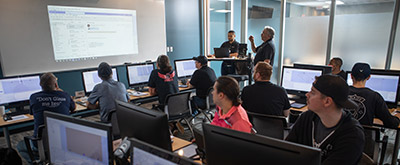
With a customized Stiles University course, we can provide expert training for your team, on-location. Whether it's programming, operation or maintenance, we want to help you train your personnel to meet your production goals efficiently and effectively.
-

Experience the trusted workforce development training and machinery knowledge you rely on from Stiles University, now at your convenience. With technology changing every day and new methods being developed constantly, Stiles University Online has the latest information and training content available at your fingertips.
-
-
-

Do you want to produce more efficiently? Processes and flows are key. We optimize these together with you, re-organize them and make sure that you reduce your lead time and save costs. This enables you to implement customized manufacturing and achieve your business goals.
-
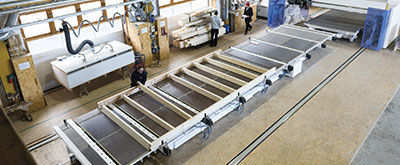
Industrialized construction is evolving. Automation, robotics and advanced technology are raising the level of productivity, efficiency and precision for builders in North America.
-

Stiles Machinery is at the forefront of providing technology and machining for producing high quality mass timber. Automated solutions for your mass timber production can increase your manufacturing quality and productivity.
-

Project management services from Stiles make it easy to streamline your entire project— from concept and consultation to integration and implementation.
-


-
-
-
-
-
-
With a customized Stiles University course, we can provide expert training for your team, on-location. Whether it's programming, operation or maintenance, we want to help you train your personnel to meet your production goals efficiently and effectively.
-
Experience the trusted workforce development training and machinery knowledge you rely on from Stiles University, now at your convenience. With technology changing every day and new methods being developed constantly, Stiles University Online has the latest information and training content available at your fingertips.
-
-
-
Do you want to produce more efficiently? Processes and flows are key. We optimize these together with you, re-organize them and make sure that you reduce your lead time and save costs. This enables you to implement customized manufacturing and achieve your business goals.
-
Industrialized construction is evolving. Automation, robotics and advanced technology are raising the level of productivity, efficiency and precision for builders in North America.
-
Stiles Machinery is at the forefront of providing technology and machining for producing high quality mass timber. Automated solutions for your mass timber production can increase your manufacturing quality and productivity.
-
Project management services from Stiles make it easy to streamline your entire project— from concept and consultation to integration and implementation.
-
Top 10 Counter Drone Solutions for Global Buyers
In today's rapidly evolving security landscape, the rise of drone technology poses unique challenges. Counter Drone solutions are becoming essential for various sectors, from military to commercial applications. These solutions are designed to detect, track, and neutralize unauthorized drones.
Selecting the right Counter Drone technology requires careful consideration. Various factors influence the effectiveness of each solution, including environmental conditions and specific threats. Many products on the market offer innovative approaches, yet effectiveness may vary.
Understanding available Counter Drone options is crucial for global buyers. Each solution presents distinct strengths and weaknesses. Buyers must analyze real-world applications and seek expert guidance to make informed decisions. As drone threats grow, so does the need for robust countermeasures.

Overview of Counter Drone Solutions in the Global Market
Counter drone solutions are increasingly vital as drones become more accessible. Many industries face challenges posed by unauthorized drone activities. This has led to a surge in counter-drone technologies designed to mitigate these risks. Various solutions are emerging in the global market, reflecting diverse approaches to this pressing issue.
The landscape of counter-drone solutions includes several types of systems. Some use jamming technology, disrupting communication between the drone and its operator. This method, while effective, raises concerns about potential interference with other devices. Other solutions rely on capture mechanisms, such as nets or drones designed to intercept. These can require precise targeting and are not always foolproof. Furthermore, various regulations complicate the deployment of specific solutions, which may vary by region.
Innovative techniques continue to develop, yet challenges remain. Many options show promise, yet each has limitations. Effective training for operators is crucial in enhancing the reliability of these systems. Addressing these issues can lead to improved methodologies that advance safety while respecting privacy and legalities. Stakeholders must remain vigilant and adaptable as this technology evolves.
Top 10 Counter Drone Solutions for Global Buyers
| Solution Type | Detection Range (km) | Neutralization Method | Operational Environment | Features |
|---|---|---|---|---|
| Radio Frequency Jammers | 1-5 | Signal Disruption | Urban/Rural | Portable, Easy to Deploy |
| Drone Detection Radars | 2-10 | Tracking | Urban | Long Range, 360° Coverage |
| Laser Systems | 1-3 | Destruction | Military | High Precision, Silent Operation |
| CCTV & AI Systems | 0.5-2 | Identification | Urban/Rural | Integration with Existing Security |
| Net Guns | 0.1-1 | Capture | Urban | Non-Damaging, Reusable |
| Acoustic Sensors | 1-5 | Detection | Urban | Detection of Drone Noise |
| Balloon Based Systems | 2-7 | Surveillance | Open Areas | High Altitude, Wide Area Coverage |
| EMP Devices | 1-5 | Signal Disruption | Military | High Impact, Effective Against Electronics |
| Ground-based Interceptors | 1-5 | Neutralization | Military | Mobility, Rapid Deployment |
| Software Solutions | N/A | Cyber Neutralization | Urban/Rural | Remote Operations, Data Analysis |