
-
-
-
-
-
-

With a customized Stiles University course, we can provide expert training for your team, on-location. Whether it's programming, operation or maintenance, we want to help you train your personnel to meet your production goals efficiently and effectively.
-

Experience the trusted workforce development training and machinery knowledge you rely on from Stiles University, now at your convenience. With technology changing every day and new methods being developed constantly, Stiles University Online has the latest information and training content available at your fingertips.
-
-
-

Do you want to produce more efficiently? Processes and flows are key. We optimize these together with you, re-organize them and make sure that you reduce your lead time and save costs. This enables you to implement customized manufacturing and achieve your business goals.
-

Industrialized construction is evolving. Automation, robotics and advanced technology are raising the level of productivity, efficiency and precision for builders in North America.
-

Stiles Machinery is at the forefront of providing technology and machining for producing high quality mass timber. Automated solutions for your mass timber production can increase your manufacturing quality and productivity.
-

Project management services from Stiles make it easy to streamline your entire project— from concept and consultation to integration and implementation.
-



-
-
-
-
-
-
With a customized Stiles University course, we can provide expert training for your team, on-location. Whether it's programming, operation or maintenance, we want to help you train your personnel to meet your production goals efficiently and effectively.
-
Experience the trusted workforce development training and machinery knowledge you rely on from Stiles University, now at your convenience. With technology changing every day and new methods being developed constantly, Stiles University Online has the latest information and training content available at your fingertips.
-
-
-
Do you want to produce more efficiently? Processes and flows are key. We optimize these together with you, re-organize them and make sure that you reduce your lead time and save costs. This enables you to implement customized manufacturing and achieve your business goals.
-
Industrialized construction is evolving. Automation, robotics and advanced technology are raising the level of productivity, efficiency and precision for builders in North America.
-
Stiles Machinery is at the forefront of providing technology and machining for producing high quality mass timber. Automated solutions for your mass timber production can increase your manufacturing quality and productivity.
-
Project management services from Stiles make it easy to streamline your entire project— from concept and consultation to integration and implementation.
-
Essential Tips for Choosing Steel Wire Mesh Fencing?
Choosing the right fencing solution can be challenging. steel wire mesh fencing is often preferred for its durability and versatility. According to a report by Grand View Research, the global market for fencing is projected to reach $35.8 billion by 2025. This growth highlights its importance in construction and agriculture.
Expert Mark Peterson emphasizes, "Investing in quality steel wire mesh fencing ensures long-term safety and security." His statement underscores the necessity of thoughtful selection. There are key factors to consider. For example, the wire gauge, coating type, and mesh size significantly affect the fencing's strength and lifespan.
Many buyers overlook these details. Instead, they focus on price alone. This can lead to unanticipated challenges. Selecting inferior products may require replacements sooner than expected. Paying attention to quality can ultimately save money and ensure effectiveness. Steel wire mesh fencing remains a robust solution against various environmental factors. Selecting wisely is crucial to success in any fencing project.
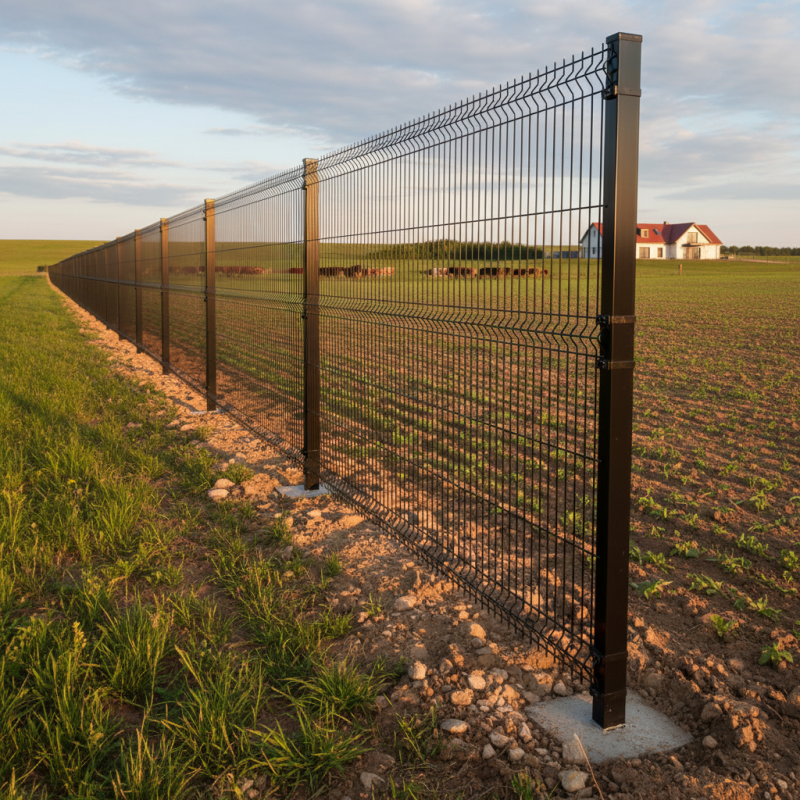
Types of Steel Wire Mesh Fencing: A Comprehensive Overview
When selecting steel wire mesh fencing, it’s essential to explore the various types available. There are multiple options to choose from, each with specific features. Welded wire mesh is a popular choice for many. The wires are fused at each intersection, creating a strong structure. This type works well for livestock enclosures and security applications.
Another option is woven wire mesh. It consists of wires that are interlaced rather than welded. This design offers flexibility, making it suitable for terrains that may shift. People often use woven mesh for garden fencing or pet containment. Some may find it less durable than welded varieties, so reflecting on your needs is vital.
Chain link fencing represents a budget-friendly choice. It is lightweight yet functional, making it suitable for various purposes. However, it may lack aesthetic appeal. Some homeowners prefer decorative steel mesh, which features varying patterns. These can enhance the visual appeal while maintaining security. Each type has its advantages and drawbacks, so careful consideration is necessary to make the right choice.