
-
-
-
-
-
-
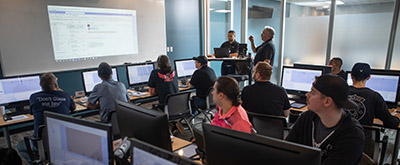
With a customized Stiles University course, we can provide expert training for your team, on-location. Whether it's programming, operation or maintenance, we want to help you train your personnel to meet your production goals efficiently and effectively.
-

Experience the trusted workforce development training and machinery knowledge you rely on from Stiles University, now at your convenience. With technology changing every day and new methods being developed constantly, Stiles University Online has the latest information and training content available at your fingertips.
-
-
-

Do you want to produce more efficiently? Processes and flows are key. We optimize these together with you, re-organize them and make sure that you reduce your lead time and save costs. This enables you to implement customized manufacturing and achieve your business goals.
-
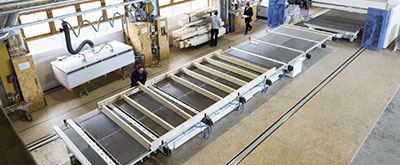
Industrialized construction is evolving. Automation, robotics and advanced technology are raising the level of productivity, efficiency and precision for builders in North America.
-

Stiles Machinery is at the forefront of providing technology and machining for producing high quality mass timber. Automated solutions for your mass timber production can increase your manufacturing quality and productivity.
-
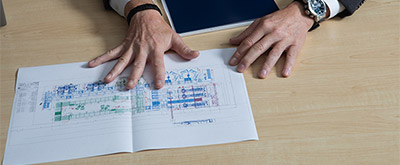
Project management services from Stiles make it easy to streamline your entire project— from concept and consultation to integration and implementation.
-

-
-
-
-
-
-
With a customized Stiles University course, we can provide expert training for your team, on-location. Whether it's programming, operation or maintenance, we want to help you train your personnel to meet your production goals efficiently and effectively.
-
Experience the trusted workforce development training and machinery knowledge you rely on from Stiles University, now at your convenience. With technology changing every day and new methods being developed constantly, Stiles University Online has the latest information and training content available at your fingertips.
-
-
-
Do you want to produce more efficiently? Processes and flows are key. We optimize these together with you, re-organize them and make sure that you reduce your lead time and save costs. This enables you to implement customized manufacturing and achieve your business goals.
-
Industrialized construction is evolving. Automation, robotics and advanced technology are raising the level of productivity, efficiency and precision for builders in North America.
-
Stiles Machinery is at the forefront of providing technology and machining for producing high quality mass timber. Automated solutions for your mass timber production can increase your manufacturing quality and productivity.
-
Project management services from Stiles make it easy to streamline your entire project— from concept and consultation to integration and implementation.
-
Why Choose Super Intalox Saddle for Tower Packing?
Tower packing must create reliable gas–liquid contact without causing excessive pressure drop or flooding. Super Intalox Saddle is a shaped random packing used in absorption, stripping, and distillation towers. Its open geometry can support liquid distribution while leaving space for vapor flow. Actual results, however, depend on the tower and process—not the packing name alone.
The U.S. Environmental Protection Agency’s Packed-Bed/Packed-Tower Scrubber fact sheet (EPA-452/F-03-015) describes operating conditions such as liquid-to-gas ratio, pressure drop, and maintenance as important to scrubber performance. Perry’s Chemical Engineers’ Handbook, 9th edition, likewise provides established guidance for evaluating mass-transfer equipment and tower hydraulics. These references offer useful context, but they do not guarantee a particular Super Intalox Saddle efficiency. Not automatically.
In practice, engineers compare packing size, material, liquid load, vapor velocity, and the risk of fouling. A saddle may be attractive where flow capacity and effective wetting matter, yet poor liquid distribution can undermine its benefits. Even a good design needs verification. Pilot data, supplier specifications, and operating records help determine whether the packing suits a specific duty. This article examines those trade-offs, including capacity, pressure drop, installation, and material choice. A careful selection can improve tower operation; a rushed one may simply move the bottleneck elsewhere.
What Is a Super Intalox Saddle and How Is It Designed?
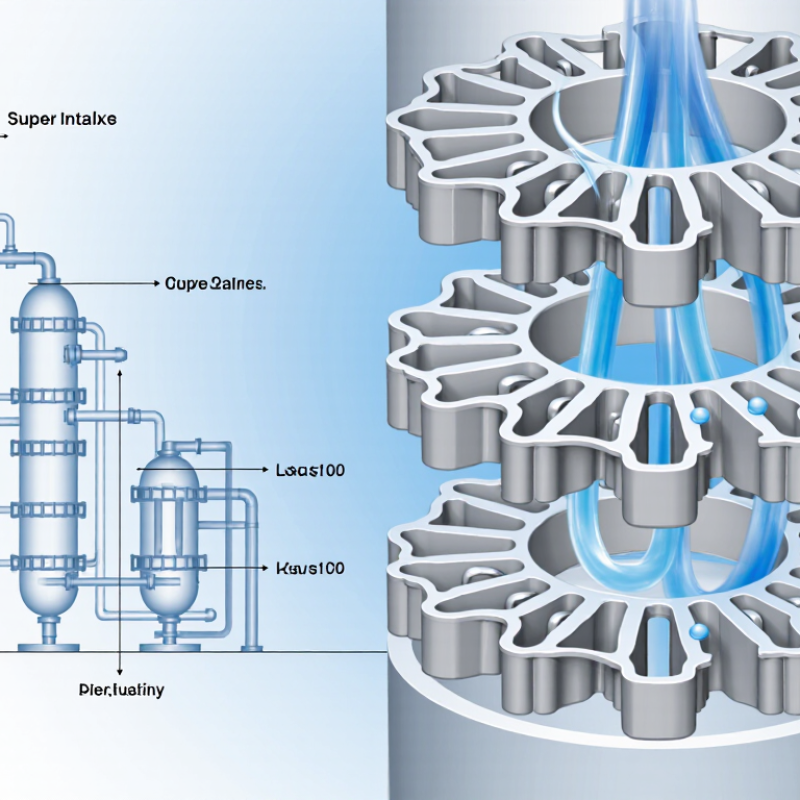
A super saddle is a random tower packing shaped like a curved, open shell. Its ribs and windows expose more surface to rising gas and falling liquid, while gaps between pieces help limit flow resistance. The geometry aims to balance wettable area, open volume, and strength. Small details matter. Perry’s Chemical Engineers’ Handbook, 9th edition (2019), reports specific surface areas of roughly 45–200 m²/m³ across common random-packing designs; the exact value depends on packing type and size, not the name alone.
In a packed column, liquid spreads over the saddle surfaces as gas passes through the voids. Curved edges and openings can interrupt smooth flow and encourage redistribution, but poor installation or uneven feed can still create dry zones. Real towers are less tidy than diagrams. The U.S. EPA’s Packed-Bed/Packed-Tower Scrubber fact sheet (2003) identifies pressure drop and liquid distribution as key design and operating checks. Engineers therefore compare packing dimensions, material, and column diameter against the service conditions, then verify performance using pressure-drop and mass-transfer data. A saddle’s shape helps; it cannot correct a badly designed distributor.
Why Choose Super Intalox Saddle for Tower Packing? - What Is a Super Intalox Saddle and How Is It Designed?
| Design or selection dimension | Description | Practical relevance in a tower |
|---|---|---|
| Basic form | A three-dimensional, saddle-shaped random packing element with a contoured surface and open passages. | The shape provides surface for liquid spreading while leaving pathways for vapor and liquid to flow through the packed bed. |
| Surface contour | Curves, ribs, or lobes are used to create surface area and promote liquid distribution across the packing. | Wetted surface supports gas–liquid contact; actual performance depends on the liquid distribution and operating conditions. |
| Open passages and void space | The element’s open geometry leaves interconnected spaces within a randomly packed bed. | Adequate void space helps gas and liquid pass through the bed; flooding tendency also depends on packing size, fluid properties, and loading. |
| Packing arrangement | Individual pieces are randomly loaded rather than aligned in a fixed, repeating pattern. | Careful loading and a suitable liquid distributor help reduce uneven flow and channeling. |
| Available material families | Saddle-style random packing is manufactured in materials such as ceramic, metal, and thermoplastics, depending on the product design. | Material choice should account for chemical compatibility, temperature, mechanical loading, and process conditions. |
| Mass-transfer service | Random saddle packing can be used in gas–liquid contacting operations, including absorption and stripping. | The appropriate packing depends on required separation, throughput, allowable pressure drop, and liquid distribution. |
| Pressure drop and capacity | These are system-level performance measures, not fixed values of the packing shape alone. | They vary with packing size and material, tower diameter, gas and liquid rates, and fluid properties; use design data for the selected packing. |
| Selection checks | Review packing dimensions, material compatibility, mechanical strength, bed depth, and the tower’s operating envelope. | Confirm hydraulic performance and distributor suitability with process-specific calculations or validated design data before selection. |