For support and service of your machinery, Stiles has experts available 24/7 to help reduce downtime and get you back in action.
Technical Support: 616-698-6615
Service & Repairs: 616-698-7500
24/7 Parts: 1-800-727-8780
sale@inlandmachineokc.com
Parts are available from Stiles 24 hours a day, seven days a week, and are shipped from our Grand Rapids, Michigan fulfillment center.
24/7 Parts: 800-727-8780

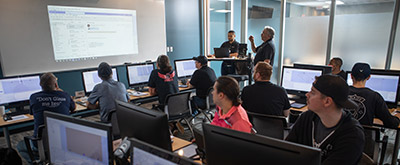
With a customized Stiles University course, we can provide expert training for your team, on-location. Whether it's programming, operation or maintenance, we want to help you train your personnel to meet your production goals efficiently and effectively.

Experience the trusted workforce development training and machinery knowledge you rely on from Stiles University, now at your convenience. With technology changing every day and new methods being developed constantly, Stiles University Online has the latest information and training content available at your fingertips.
616-698-7500

Do you want to produce more efficiently? Processes and flows are key. We optimize these together with you, re-organize them and make sure that you reduce your lead time and save costs. This enables you to implement customized manufacturing and achieve your business goals.

Industrialized construction is evolving. Automation, robotics and advanced technology are raising the level of productivity, efficiency and precision for builders in North America.

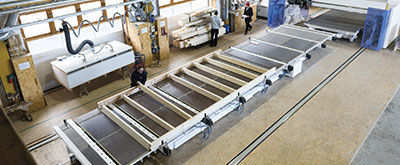
Stiles Machinery is at the forefront of providing technology and machining for producing high quality mass timber. Automated solutions for your mass timber production can increase your manufacturing quality and productivity.

Project management services from Stiles make it easy to streamline your entire project— from concept and consultation to integration and implementation.
For support and service of your machinery, Stiles has experts available 24/7 to help reduce downtime and get you back in action.
Technical Support: 616-698-6615
Service & Repairs: 616-698-7500
24/7 Parts: 1-800-727-8780
sale@inlandmachineokc.com
Parts are available from Stiles 24 hours a day, seven days a week, and are shipped from our Grand Rapids, Michigan fulfillment center.
24/7 Parts: 800-727-8780

With a customized Stiles University course, we can provide expert training for your team, on-location. Whether it's programming, operation or maintenance, we want to help you train your personnel to meet your production goals efficiently and effectively.

Experience the trusted workforce development training and machinery knowledge you rely on from Stiles University, now at your convenience. With technology changing every day and new methods being developed constantly, Stiles University Online has the latest information and training content available at your fingertips.
616-698-7500

Do you want to produce more efficiently? Processes and flows are key. We optimize these together with you, re-organize them and make sure that you reduce your lead time and save costs. This enables you to implement customized manufacturing and achieve your business goals.

Industrialized construction is evolving. Automation, robotics and advanced technology are raising the level of productivity, efficiency and precision for builders in North America.

Stiles Machinery is at the forefront of providing technology and machining for producing high quality mass timber. Automated solutions for your mass timber production can increase your manufacturing quality and productivity.

Project management services from Stiles make it easy to streamline your entire project— from concept and consultation to integration and implementation.
For support and service of your machinery, Stiles has experts available 24/7 to help reduce downtime and get you back in action.
Technical Support: 616-698-6615 Service & Repairs: 616-698-7500 24/7 Parts: 1-800-727-8780
Parts are available from Stiles 24 hours a day, seven days a week, and are shipped from our Grand Rapids, Michigan fulfillment center.
24/7 Parts: 800-727-8780For support and service of your machinery, Stiles has experts available 24/7 to help reduce downtime and get you back in action.
Technical Support: 616-698-6615 Service & Repairs: 616-698-7500 24/7 Parts: 1-800-727-8780
Parts are available from Stiles 24 hours a day, seven days a week, and are shipped from our Grand Rapids, Michigan fulfillment center.
24/7 Parts: 800-727-8780The concept of an Interactive Humanoid Robot is captivating and complex. These robots mimic human appearance and behavior, engaging users in interactive experiences. They blend sophisticated technology with human-like traits, making them unique in robotics.
An Interactive Humanoid Robot operates using advanced algorithms and sensors. These features allow them to perceive and respond to their environment. They can recognize voices, interpret movements, and engage in conversations. However, their responses might not always align with human expectations. This unpredictability can lead to moments of confusion or frustration for users.
While the technology is impressive, there are challenges to consider. Developers strive to create more lifelike interactions, but achieving true human-like response remains a work in progress. Consequently, users may experience an emotional disconnect. This gap in interaction offers insights into the evolving relationship between humans and machines, prompting reflections on our expectations of technology.
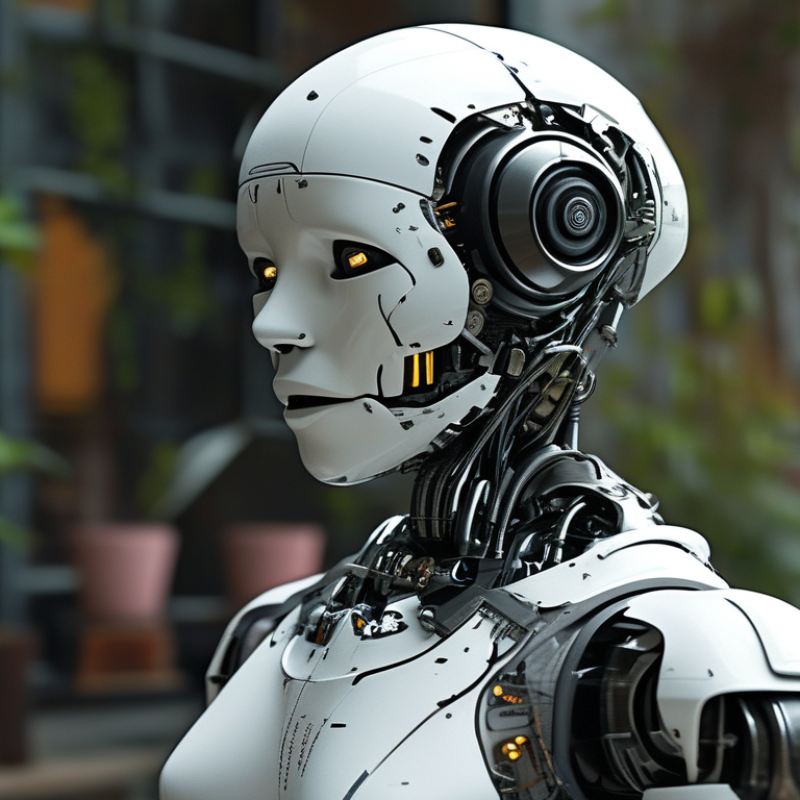
Interactive humanoid robots are machines designed to engage with humans in a meaningful way. They often mimic human behaviors and emotions, making interactions feel more natural. This type of robot typically incorporates advanced sensors, artificial intelligence, and mobility. It can perceive human actions, respond verbally, and adjust its behavior based on feedback. For instance, a humanoid robot might recognize a person's facial expressions and respond with appropriate gestures or words.
Tips: When considering an interactive humanoid robot, think about the intended use. Is it for education, companionship, or healthcare? Each application requires different functionalities. In education, for example, the robot may need to teach or inspire curiosity. In healthcare, responsiveness and empathy are crucial.
The definition of an interactive humanoid robot also includes the ability to learn from interactions. They can store information based on previous conversations and adapt to new scenarios. While this technology is promising, it raises questions. How accurately can a robot imitate genuine emotions? Can they truly understand complex human feelings? These limitations prompt important discussions about the technology's future.
Interactive humanoid robots are fascinating technologies that combine advanced sensors and actuators. Sensors allow robots to gather data from their environment. Common sensors include cameras, microphones, and touch sensors. They help robots perceive objects, recognize faces, and detect sounds. According to a report by Market Research Future, the global market for sensor technologies in robotics is expected to expand significantly, reaching $100 billion by 2025.
Actuators are essential for robot movement and interaction. They convert energy into mechanical motion. Types of actuators include electric motors and hydraulic systems. Each actuator type offers unique advantages. For example, electric motors are precise and compact, while hydraulic systems can provide powerful force. Research from the International Journal of Robotics Research indicates that the integration of sensors and actuators is crucial for enhancing robot responsiveness.
Despite the technological advancements, challenges remain. Some sensors struggle with complex environments, leading to misinterpretations. Actuator performance can also be inconsistent, affecting reliability. Developers need to address these issues to improve robot efficiency. Ongoing research aims to refine these components, paving the way for smarter and more adaptable humanoid robots.
Interactive humanoid robots are becoming increasingly advanced due to the role of AI and machine learning. These technologies enable robots to understand human emotions, gestures, and conversations. Through natural language processing, robots can respond in a way that feels intuitive. Their design allows them to engage in meaningful interactions with users.
To enhance the interactivity of these robots, developers often integrate machine learning algorithms. These algorithms allow robots to learn from each interaction, improving their responses over time. For instance, a robot might adapt its communication style based on user feedback. This creates a more personalized experience, fostering a sense of companionship.
Tip: Always consider the emotional needs of users. Designing robots that can genuinely understand emotions can elevate interactivity. It’s important to gather user feedback frequently. This will highlight areas for improvement.
This field, while promising, faces challenges. Robots may misinterpret human emotions, leading to awkward interactions. Developers must continually refine algorithms to minimize these errors. Users should remain patient and aware of these limitations. An imperfect performance can sometimes lead to valuable insights, helping shape the future of humanoid robotics.
| Feature | Description | Technology Used |
|---|---|---|
| Voice Recognition | Allows the robot to understand and respond to spoken commands. | Natural Language Processing (NLP) |
| Facial Recognition | Enables the robot to identify and remember individual users. | Computer Vision |
| Gesture Recognition | Allows interaction through hand movements and body language. | Sensor Technology |
| Emotion Detection | Identifies human emotions to provide appropriate responses and actions. | Machine Learning Algorithms |
| Movement Coordination | Enables the robot to walk, run or perform complex movements. | Robotics Control Systems |
| Learning and Adaptation | Improves interaction capability through experience and user feedback. | Reinforcement Learning |
Interactive humanoid robots are making waves in various sectors. In education, they serve as engaging tools that can teach subjects like math and science. These robots can adapt to different learning speeds, which is a significant advantage. However, their implementation can pose challenges. Schools must ensure the technology aligns with educational goals.
Healthcare is another field benefiting from these robots. They assist in elder care by providing companionship and monitoring health conditions. Robots like these can remind patients to take medications, which supports better health management. Yet, reliance on robots raises concerns about social interaction. Human connection remains vital for emotional well-being.
Tips for implementing interactive humanoid robots include starting small and evaluating outcomes. This approach allows for adjustments based on user feedback. Also, consider training staff thoroughly. They need to understand both the technology and how it fits into their workflows. Balancing technology with human interaction is crucial.
The interactive humanoid robotics industry is evolving rapidly. As technology improves, these robots are finding applications in various fields, including healthcare, education, and entertainment. However, this progress comes with challenges. One major issue is the integration of human-like interactions. Creating robots that respond naturally requires advanced programming and understanding of human emotions.
Another significant challenge is the ethical implications of humanoid robots. How should they be treated? What rights might they have? These questions prompt important debates. Developers must consider how their creations will impact society.
Tips: Focus on user experience when designing robots. Understand the needs of your audience. Prioritize safety in all interactions, ensuring robots do not harm users or others. Regularly update your technology to address security risks.
Future trends may involve more personalized robots. People want companions that understand their preferences. The success of interactive humanoids will depend on their ability to form meaningful connections. Investing in research is crucial to overcome current limitations.