
-
-
-
-
-
-

With a customized Stiles University course, we can provide expert training for your team, on-location. Whether it's programming, operation or maintenance, we want to help you train your personnel to meet your production goals efficiently and effectively.
-

Experience the trusted workforce development training and machinery knowledge you rely on from Stiles University, now at your convenience. With technology changing every day and new methods being developed constantly, Stiles University Online has the latest information and training content available at your fingertips.
-
-
-

Do you want to produce more efficiently? Processes and flows are key. We optimize these together with you, re-organize them and make sure that you reduce your lead time and save costs. This enables you to implement customized manufacturing and achieve your business goals.
-

Industrialized construction is evolving. Automation, robotics and advanced technology are raising the level of productivity, efficiency and precision for builders in North America.
-

Stiles Machinery is at the forefront of providing technology and machining for producing high quality mass timber. Automated solutions for your mass timber production can increase your manufacturing quality and productivity.
-

Project management services from Stiles make it easy to streamline your entire project— from concept and consultation to integration and implementation.
-



-
-
-
-
-
-
With a customized Stiles University course, we can provide expert training for your team, on-location. Whether it's programming, operation or maintenance, we want to help you train your personnel to meet your production goals efficiently and effectively.
-
Experience the trusted workforce development training and machinery knowledge you rely on from Stiles University, now at your convenience. With technology changing every day and new methods being developed constantly, Stiles University Online has the latest information and training content available at your fingertips.
-
-
-
Do you want to produce more efficiently? Processes and flows are key. We optimize these together with you, re-organize them and make sure that you reduce your lead time and save costs. This enables you to implement customized manufacturing and achieve your business goals.
-
Industrialized construction is evolving. Automation, robotics and advanced technology are raising the level of productivity, efficiency and precision for builders in North America.
-
Stiles Machinery is at the forefront of providing technology and machining for producing high quality mass timber. Automated solutions for your mass timber production can increase your manufacturing quality and productivity.
-
Project management services from Stiles make it easy to streamline your entire project— from concept and consultation to integration and implementation.
-
How to Choose a Nitrogen Generator?
Choosing a Nitrogen Generator is not simply a matter of comparing flow rates and prices. It is a process decision.
A food-packaging line may need stable nitrogen purity, while a laser-cutting workshop may prioritize flow, pressure, and operating cost. Oil-free compressed air, ambient temperature, moisture control, and installation space also affect performance. A specification sheet can look impressive and still hide an expensive mismatch.
Industry forecasts show why this decision deserves careful attention. MarketsandMarkets estimated the global nitrogen generator market at about USD 16 billion in 2024, with continued growth expected through 2029. Grand View Research also reported expanding demand, driven by food preservation, pharmaceuticals, electronics, and metal processing. These figures vary because research firms define the market differently. That uncertainty matters.
Membrane and PSA systems should not be selected from market size alone. Consider purity requirements, peak demand, duty cycle, maintenance skills, and the cost of rejected products. PSA systems may deliver higher purity. Membrane systems can offer simpler operation.
Keep it practical.
Richard W. Baker, a respected membrane-technology researcher, wrote, “Membrane technology is rapidly becoming one of the most important separation technologies.” His observation remains relevant when evaluating compact nitrogen production.
In real installations, small details often decide success. A wet air line can damage performance. An undersized compressor can create unstable output. I have also seen buyers focus too heavily on purity and overlook lifecycle costs. That is a mistake worth reconsidering. The right Nitrogen Generator should match the application, not merely win a comparison table.
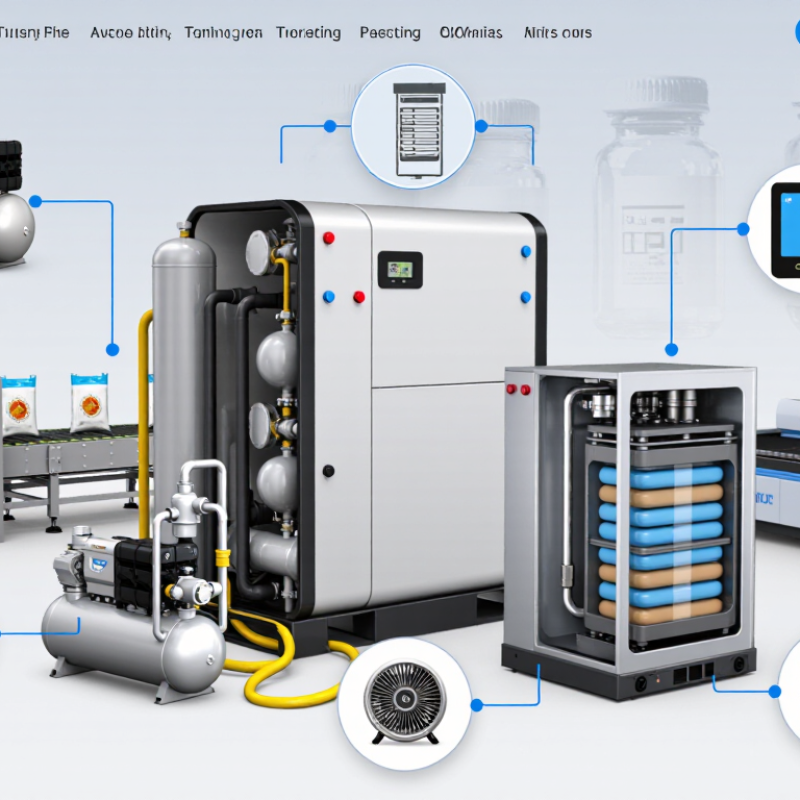
Define the Nitrogen Purity and Flow Requirements
How to Choose a Nitrogen Generator?
Define the Nitrogen Purity and Flow Requirements
Begin with the process, not the generator. Identify the required nitrogen purity at the actual point of use. Packaging may need 99.5% purity, while laboratory instruments can require 99.999%. Oxygen limits, moisture levels, and pressure can matter equally. Check the equipment manual and process specification carefully. A higher purity is not always better. It can increase energy use and operating costs.
Measure average and peak flow separately. Record consumption during startup, continuous operation, and cleaning cycles. Express demand in Nm³/h or another consistent unit. Include inlet pressure, outlet pressure, and daily operating hours. A small buffer tank can manage short peaks. However, an oversized generator may cycle inefficiently. I have seen systems selected from average demand alone, then struggle during production changes.
Tips: Use a flow meter for several working days. Ask operators when demand rises suddenly. Confirm purity at the outlet, not only inside the generator. Leave a practical reserve, but question every extra percentage.
Allow for leakage, future expansion, and unstable compressed-air supply. These details are easy to overlook. They can change the required capacity significantly. Compare test data, maintenance intervals, and alarm functions before choosing. Ask for documented performance under your actual pressure and temperature conditions. Specifications can look precise, yet field conditions are rarely perfect. Be willing to revise the estimate after a trial measurement.