
-
-
-
-
-
-

With a customized Stiles University course, we can provide expert training for your team, on-location. Whether it's programming, operation or maintenance, we want to help you train your personnel to meet your production goals efficiently and effectively.
-

Experience the trusted workforce development training and machinery knowledge you rely on from Stiles University, now at your convenience. With technology changing every day and new methods being developed constantly, Stiles University Online has the latest information and training content available at your fingertips.
-
-
-

Do you want to produce more efficiently? Processes and flows are key. We optimize these together with you, re-organize them and make sure that you reduce your lead time and save costs. This enables you to implement customized manufacturing and achieve your business goals.
-

Industrialized construction is evolving. Automation, robotics and advanced technology are raising the level of productivity, efficiency and precision for builders in North America.
-

Stiles Machinery is at the forefront of providing technology and machining for producing high quality mass timber. Automated solutions for your mass timber production can increase your manufacturing quality and productivity.
-

Project management services from Stiles make it easy to streamline your entire project— from concept and consultation to integration and implementation.
-



-
-
-
-
-
-
With a customized Stiles University course, we can provide expert training for your team, on-location. Whether it's programming, operation or maintenance, we want to help you train your personnel to meet your production goals efficiently and effectively.
-
Experience the trusted workforce development training and machinery knowledge you rely on from Stiles University, now at your convenience. With technology changing every day and new methods being developed constantly, Stiles University Online has the latest information and training content available at your fingertips.
-
-
-
Do you want to produce more efficiently? Processes and flows are key. We optimize these together with you, re-organize them and make sure that you reduce your lead time and save costs. This enables you to implement customized manufacturing and achieve your business goals.
-
Industrialized construction is evolving. Automation, robotics and advanced technology are raising the level of productivity, efficiency and precision for builders in North America.
-
Stiles Machinery is at the forefront of providing technology and machining for producing high quality mass timber. Automated solutions for your mass timber production can increase your manufacturing quality and productivity.
-
Project management services from Stiles make it easy to streamline your entire project— from concept and consultation to integration and implementation.
-
Why You Should Consider a CNC Router for Your Next Project
In today's rapidly evolving landscape of manufacturing and craftsmanship, the CNC router has emerged as a game-changing tool that revolutionizes how projects are conceived and executed. As noted by industry expert John Smith, a prominent figure in CNC technology, "Investing in a CNC router opens up a world of possibilities for precision and creativity." This sentiment captures the essence of why integrating a CNC router into your toolkit can enhance both the quality and efficiency of your projects.
Whether you are a hobbyist looking to elevate your craft or a professional designer seeking to refine your production process, the versatility of a CNC router cannot be overstated. These machines allow for intricate designs, detailed carvings, and precise cuts, all while reducing the risk of human error. As technology continues to advance, the applications for CNC routers expand, catering to a wide array of industries including woodworking, metalworking, and even aerospace.
As you contemplate your next project, considering the adoption of a CNC router could be the turning point that propels your work to new heights. With the ability to leverage automation and precision, you can transform your creative visions into reality more efficiently than ever before.
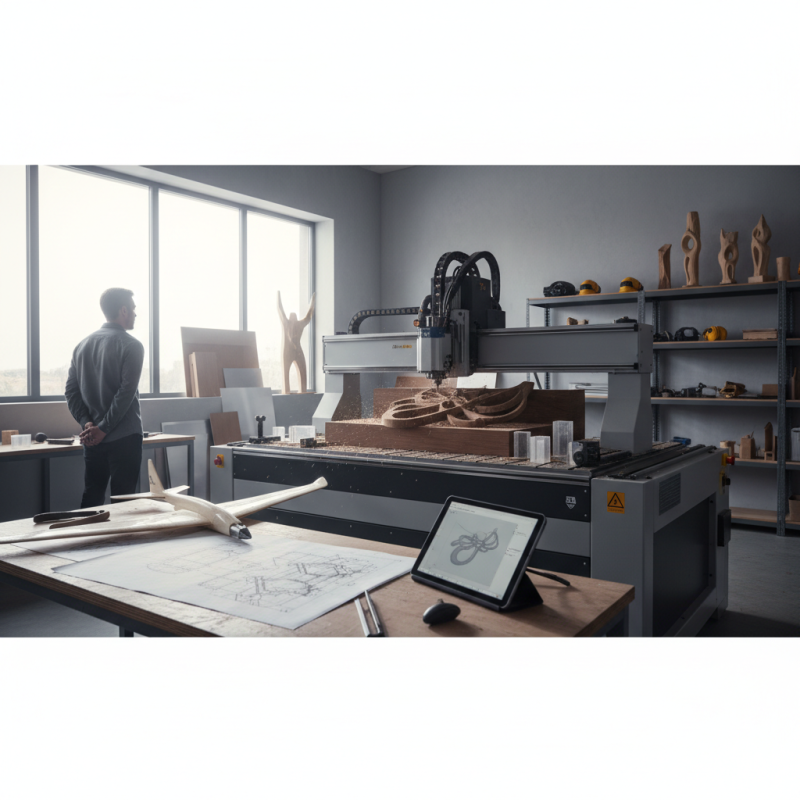
Advantages of Using a CNC Router for Various Projects
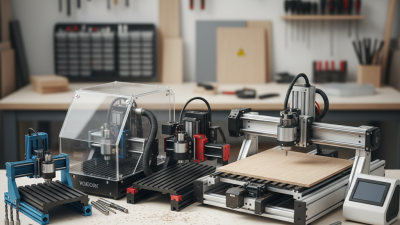
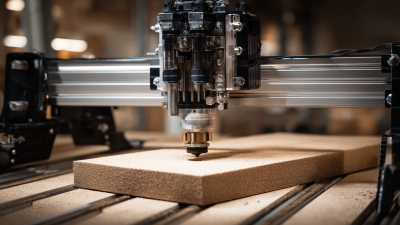
CNC routers offer a multitude of advantages that make them an excellent choice for various projects across different industries. One of the primary benefits is their precision and consistency. Unlike manual machining, CNC routers operate using computer numerical control, allowing for intricate designs to be replicated with high accuracy. This makes them ideal for projects that require detailed and repetitive cuts, such as intricate signage, custom furniture, or architectural components. This level of precision not only enhances the quality of the final product but also reduces material waste, as the cuts are calculated to maximize the use of the raw materials.
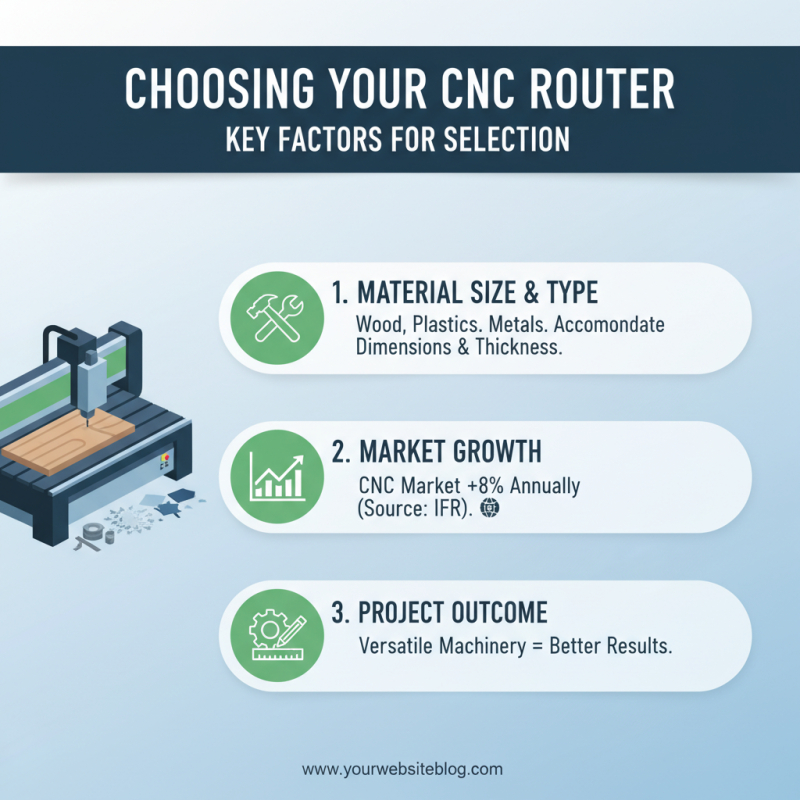
Another significant advantage of using a CNC router is their versatility. These machines can work with a wide range of materials, including wood, plastics, composites, and even some metals. This versatility opens up endless possibilities for creativity and innovation, whether you are designing a unique art piece or fabricating parts for machinery. Additionally, CNC routers can be easily programmed to execute complex tasks that would be challenging or impossible with traditional equipment. This adaptability ensures that users can tackle diverse projects efficiently, making CNC routers a valuable asset in workshops, manufacturing plants, and creative spaces alike.
Related Posts
-
10 Essential Tips for Choosing the Right CNC Router for Your Projects
-
Best CNC Router Machine for Beginners and Professionals in 2023
-
Top 5 CNC Router Kits for Precision Crafting and DIY Projects
-
Exploring the Future of Manufacturing: How CNC Machines are Revolutionizing Production Techniques
-
Exploring the Amazing World of CNC Routers for DIY Enthusiasts
-
The Future of Manufacturing How CNC Machining Parts Revolutionize Production Processes