For support and service of your machinery, Stiles has experts available 24/7 to help reduce downtime and get you back in action.
Technical Support: 616-698-6615
Service & Repairs: 616-698-7500
24/7 Parts: 1-800-727-8780
sale@inlandmachineokc.com
Parts are available from Stiles 24 hours a day, seven days a week, and are shipped from our Grand Rapids, Michigan fulfillment center.
24/7 Parts: 800-727-8780

With a customized Stiles University course, we can provide expert training for your team, on-location. Whether it's programming, operation or maintenance, we want to help you train your personnel to meet your production goals efficiently and effectively.

Experience the trusted workforce development training and machinery knowledge you rely on from Stiles University, now at your convenience. With technology changing every day and new methods being developed constantly, Stiles University Online has the latest information and training content available at your fingertips.
616-698-7500

Do you want to produce more efficiently? Processes and flows are key. We optimize these together with you, re-organize them and make sure that you reduce your lead time and save costs. This enables you to implement customized manufacturing and achieve your business goals.

Industrialized construction is evolving. Automation, robotics and advanced technology are raising the level of productivity, efficiency and precision for builders in North America.

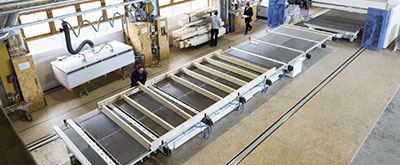
Stiles Machinery is at the forefront of providing technology and machining for producing high quality mass timber. Automated solutions for your mass timber production can increase your manufacturing quality and productivity.

Project management services from Stiles make it easy to streamline your entire project— from concept and consultation to integration and implementation.
For support and service of your machinery, Stiles has experts available 24/7 to help reduce downtime and get you back in action.
Technical Support: 616-698-6615 Service & Repairs: 616-698-7500 24/7 Parts: 1-800-727-8780
Parts are available from Stiles 24 hours a day, seven days a week, and are shipped from our Grand Rapids, Michigan fulfillment center.
24/7 Parts: 800-727-8780For support and service of your machinery, Stiles has experts available 24/7 to help reduce downtime and get you back in action.
Technical Support: 616-698-6615 Service & Repairs: 616-698-7500 24/7 Parts: 1-800-727-8780
Parts are available from Stiles 24 hours a day, seven days a week, and are shipped from our Grand Rapids, Michigan fulfillment center.
24/7 Parts: 800-727-8780A Cnc Prototype is a physical sample produced with computer numerical control machining. It helps engineers test a design before committing to expensive production tooling. Unlike a digital model, it reveals real issues through weight, texture, fit, and movement. A machined aluminum housing may look perfect on screen, yet its cover can still bind during assembly.
The process begins with a three-dimensional CAD file. Engineers convert that design into machining instructions through CAM software. The resulting G-code controls cutting paths, spindle speed, feed rate, and tool changes. A machinist then secures the material, selects suitable cutters, and checks the first operation carefully. Small choices matter. Tool deflection, heat, burrs, and incorrect workholding can change the final result.
John Saunders, founder of Saunders Machine Works and a respected CNC machining educator, says, “The best way to learn is to make.” That idea fits prototype development well. Each Cnc Prototype creates evidence, not just confidence. It can expose thin walls, sharp internal corners, weak threads, or tolerances that cost too much to maintain.
The method is highly repeatable, but it is not effortless. Software cannot replace practical judgment. A prototype may also fail because the design is wrong, not because the machine performed poorly. That distinction deserves honest review. When engineers inspect dimensions, test assembly, and record revisions, CNC machining becomes a reliable bridge between concept and manufacturable product.
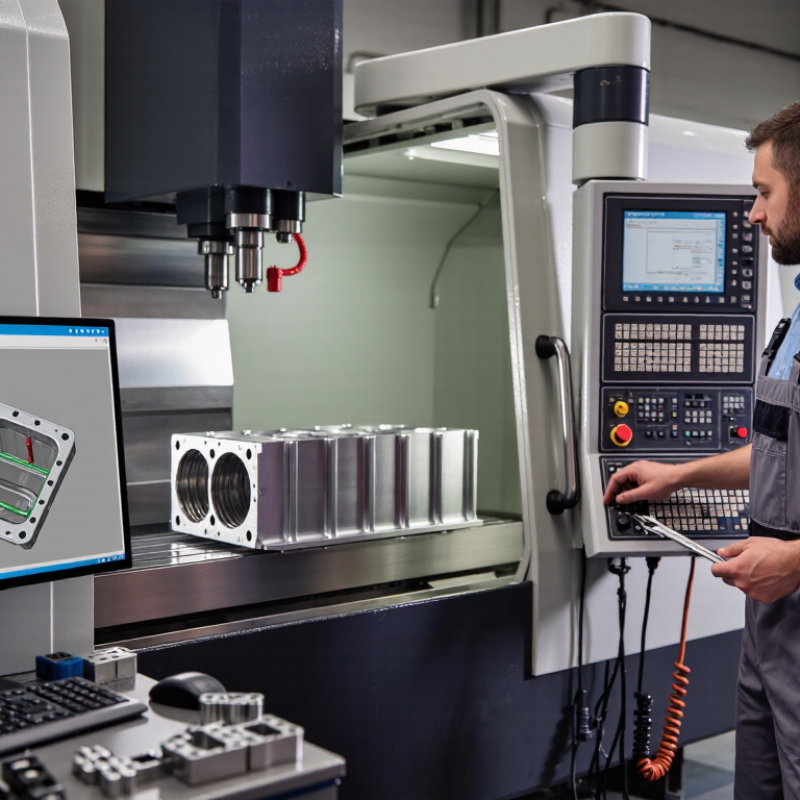
A CNC prototype is a physical test part made by computer-controlled machining. Engineers begin with a 3D CAD model, then create toolpaths for cutting, drilling, or turning. The machine removes material from aluminum, plastic, steel, or other stock. Unlike a sketch or digital model, the prototype fits in a hand and can face real assembly conditions.
The process usually follows a practical loop. A designer checks wall thickness, holes, tolerances, and surface requirements. A machinist then selects tools, cutting speeds, fixtures, and inspection methods. The machine follows coded instructions while sensors and operators monitor its movement. Small details matter. A deep pocket may trap chips. A thin rib may vibrate. These issues rarely appear clearly on a screen.
The global CNC machine market was valued at about USD 83.99 billion in 2023, according to Grand View Research, with projected growth through 2030.
This expanding market reflects wider use of digitally controlled production. The 2024 Wohlers Report also identifies prototyping as a major driver of advanced manufacturing adoption, although it focuses mainly on additive methods. That comparison is useful, but not perfect.
A CNC prototype can reveal expensive mistakes early. It may expose poor fit, sharp edges, weak geometry, or an unrealistic tolerance. Yet one prototype cannot prove full production stability. Material batches vary. Tool wear changes dimensions. Inspection can also miss functional problems. Careful teams test, revise, and sometimes admit the first design needs more work.
CNC prototyping converts a digital design into a measurable physical part. Engineers begin with a CAD model and define dimensions, tolerances, and material requirements. CAM software then creates toolpaths for milling or turning operations. The machine removes material from a metal, plastic, or composite block. Cutting tools follow programmed coordinates with controlled speed and depth. Fixtures hold the material steady during machining.
A finished prototype may show sharp edges, tool marks, or small dimensional changes. CAD-perfect is not always shop-perfect.
This process helps teams test fit, movement, strength, and assembly before full production. Operators inspect critical features using calipers, gauges, or coordinate measuring equipment. Feedback then returns to the CAD model for adjustment.
The 2024 Wohlers industry report valued global additive manufacturing at 20.035 billion dollars in 2023. That growth reflects stronger demand for rapid physical validation, even when CNC remains better for solid, functional parts. CNC prototypes can reveal an overlooked wall thickness or an unrealistic tolerance. That is useful, but sometimes expensive.
Tips:
CNC prototypes commonly use aluminum, engineering plastics, stainless steel, and tool steel. Aluminum is popular because it cuts quickly and removes heat efficiently. It also produces lightweight parts with clean edges. Nylon, POM, and ABS suit housings, brackets, and low-load testing. Stainless steel supports higher strength and corrosion resistance, but machining takes longer. Hard steels need rigid setups and carefully selected cutting tools.
The 2024 market analysis from Grand View Research estimated the global CNC machine market at more than 80 billion US dollars in 2023. This scale reflects wider use across aerospace, medical, automotive, and industrial production. Three-axis mills handle flat faces and simple pockets. Five-axis machines reach angled surfaces with fewer setups. CNC lathes produce shafts, bushings, and other rotational parts. Swiss-type machines can support small, slender components with tight dimensional control.
Material choice still depends on function, tolerance, finish, and budget. A prototype may look accurate but fail under heat or repeated loading. That is an easy mistake. The U.S. Geological Survey’s 2024 reports show aluminum and steel remain major industrial materials, supporting their continued availability for machining. In practice, machinists often begin with aluminum before testing harder alloys. This saves time, though it can hide final-production problems. Surface finish, tool wear, and clamping marks also deserve inspection. Small details matter.
CNC prototyping begins with a production-ready CAD model. The designer checks wall thickness, holes, radii, and assembly points. Sharp internal corners often create machining problems. I usually replace them with practical internal radii. That small change can reduce tool stress and improve consistency.
The next step converts design data into CAM toolpaths. The programmer selects cutting tools, speeds, feeds, and machining sequences. Material choice matters here. Aluminum machines quickly, while stainless steel demands slower cutting and stronger fixturing. The Global CNC Machine Market report by Grand View Research estimated the market at USD 83.8 billion in 2023. This scale reflects growing demand for precise, flexible production, but market growth does not remove basic process risks.
The machinist then secures the stock, sets work offsets, and runs the program. A dry run can reveal collisions before cutting begins. After roughing, finishing passes create the required surfaces and dimensions. Deburring follows, though it is sometimes underestimated. Inspectors measure critical features with calipers, micrometers, or coordinate measuring equipment. The 2023 Deloitte Smart Manufacturing and Operations Survey reported that 86% of manufacturers viewed smart manufacturing as a major competitiveness driver. Still, a prototype can fail despite advanced software. I always compare the part against the drawing, not visual confidence. Feedback may require another toolpath, a revised tolerance, or a completely different fixture.
A CNC prototype is a test part machined directly from engineering material. The process converts CAD data into toolpaths, cutting aluminum, steel, plastics, or other approved materials. Engineers can inspect a physical component before committing to expensive tooling.
CNC prototypes support product testing through measurable evidence. Teams check hole positions, wall thickness, thread fit, surface finish, and assembly clearance. They can also test heat, vibration, load, and repeated operation. The 2024 Wohlers Report recorded a 13.5% expansion in the global additive manufacturing industry, reaching about $20 billion in 2023. This growth reflects stronger demand for faster physical validation across product development. CNC machining remains valuable when prototypes must match production-grade density and mechanical behavior.
A prototype can lie.
Machining may reveal a design error, but it cannot represent every production condition. Different cutting tools, operators, batch materials, or tolerances can change results. That weakness requires documented inspection. The ISO Survey 2023 reported more than 1.26 million ISO 9001 certificates worldwide, highlighting the importance of controlled quality processes. Engineers should record material certificates, measured dimensions, machine settings, and deviations. They should also compare prototype performance with the intended manufacturing method. A beautifully finished part may still fail after long-term cycling. That uncomfortable result is useful. It forces teams to revise the design before testing becomes more expensive.