
-
-
-
-
-
-

With a customized Stiles University course, we can provide expert training for your team, on-location. Whether it's programming, operation or maintenance, we want to help you train your personnel to meet your production goals efficiently and effectively.
-

Experience the trusted workforce development training and machinery knowledge you rely on from Stiles University, now at your convenience. With technology changing every day and new methods being developed constantly, Stiles University Online has the latest information and training content available at your fingertips.
-
-
-

Do you want to produce more efficiently? Processes and flows are key. We optimize these together with you, re-organize them and make sure that you reduce your lead time and save costs. This enables you to implement customized manufacturing and achieve your business goals.
-

Industrialized construction is evolving. Automation, robotics and advanced technology are raising the level of productivity, efficiency and precision for builders in North America.
-

Stiles Machinery is at the forefront of providing technology and machining for producing high quality mass timber. Automated solutions for your mass timber production can increase your manufacturing quality and productivity.
-

Project management services from Stiles make it easy to streamline your entire project— from concept and consultation to integration and implementation.
-



-
-
-
-
-
-
With a customized Stiles University course, we can provide expert training for your team, on-location. Whether it's programming, operation or maintenance, we want to help you train your personnel to meet your production goals efficiently and effectively.
-
Experience the trusted workforce development training and machinery knowledge you rely on from Stiles University, now at your convenience. With technology changing every day and new methods being developed constantly, Stiles University Online has the latest information and training content available at your fingertips.
-
-
-
Do you want to produce more efficiently? Processes and flows are key. We optimize these together with you, re-organize them and make sure that you reduce your lead time and save costs. This enables you to implement customized manufacturing and achieve your business goals.
-
Industrialized construction is evolving. Automation, robotics and advanced technology are raising the level of productivity, efficiency and precision for builders in North America.
-
Stiles Machinery is at the forefront of providing technology and machining for producing high quality mass timber. Automated solutions for your mass timber production can increase your manufacturing quality and productivity.
-
Project management services from Stiles make it easy to streamline your entire project— from concept and consultation to integration and implementation.
-
Top CNC Machine Buying Guide for Global Buyers?
In today's manufacturing landscape, the demand for precision and efficiency makes the CNC machine an essential tool. According to a recent report by Research and Markets, the global CNC machine market is projected to reach $100 billion by 2027, growing at a CAGR of 6.5%. This growth reflects the increasing reliance on automation and superior machining processes in various industries.
Expert Bob Smith, a leading authority in CNC technology, highlights, “Choosing the right CNC machine can redefine productivity and precision in your operations.” His insights emphasize the complexity of selecting the right equipment, which involves considering factors like performance, cost, and specific industry needs. The variety in CNC machines can be overwhelming, with diverse capabilities from milling to laser cutting.
As global buyers venture into this market, understanding the specifics of CNC technology is crucial. Without proper evaluation, businesses may invest in machines that do not align with their operational goals. Therefore, navigating this landscape requires thorough research and expert advice. Cultivating knowledge about CNC machines will undoubtedly lead to better decision-making and successful investments in manufacturing capabilities.
Key Considerations When Choosing a CNC Machine
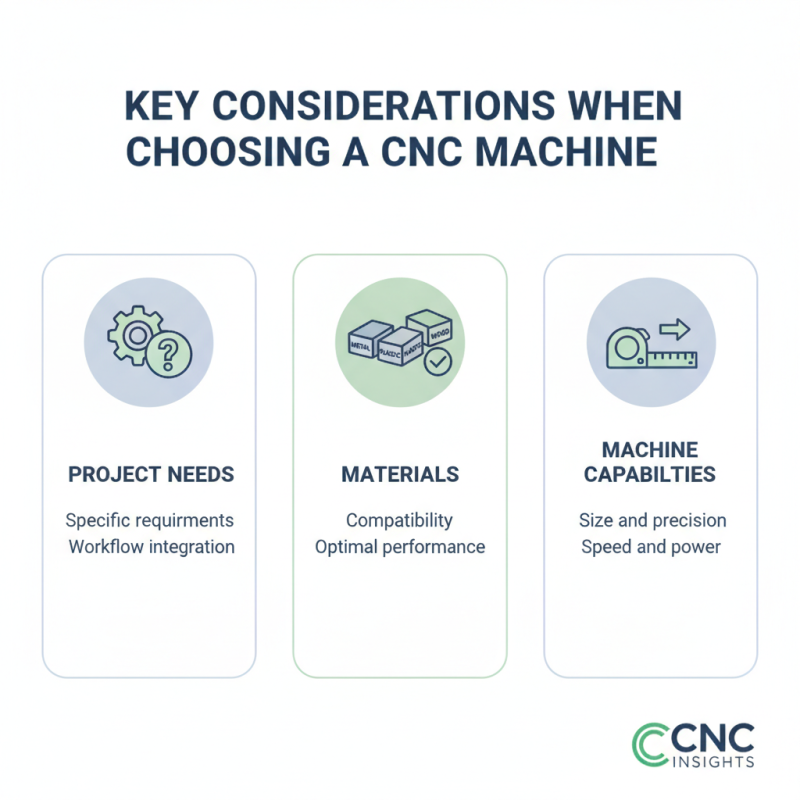
When choosing a CNC machine, several critical factors must be taken into account. Understanding the specific needs of your projects is vital. For example, consider the materials you will work with. Different machines excel with metals, plastics, or wood. The machine’s capability to handle specific materials can significantly affect your workflow and outcomes.
Speed and precision are also essential. Different CNC models offer various spindle speeds and tolerances. A high-speed model can enhance productivity but may require operator expertise. Conversely, machines with tighter tolerances yield better finished products but might take longer to produce. Analyze the trade-offs based on your production goals and workplace capabilities.
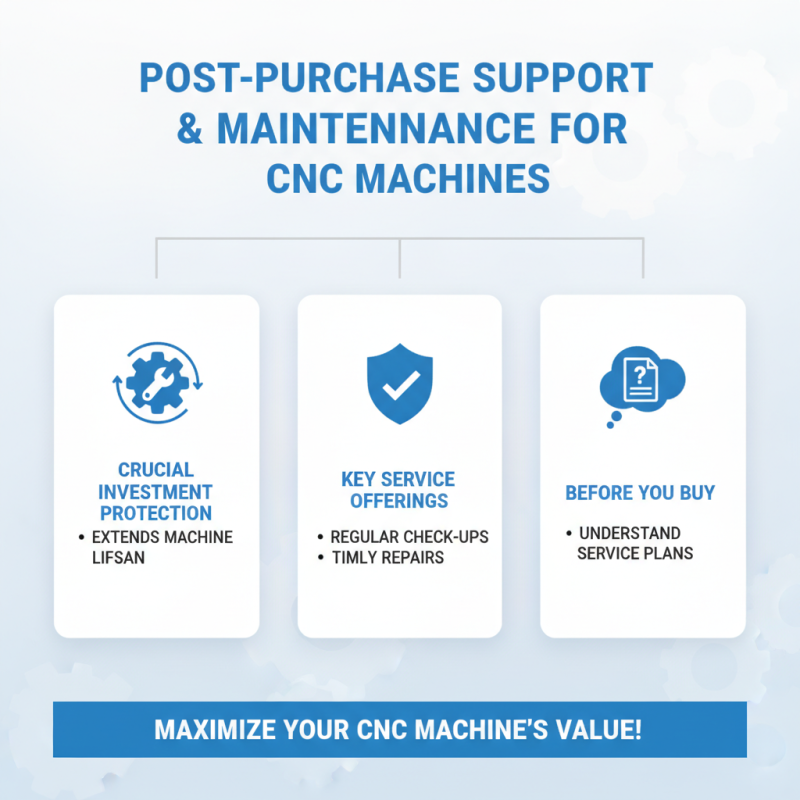
Maintenance should be a priority in your decision-making process. Some machines demand frequent upkeep, while others are designed for longevity with less frequent service. This can impact both your budget and time management. A reliable machine can save costs in the long run, but the upfront investment varies greatly. Before making a choice, reflect on your team’s skills and the long-term needs of your operations.
Related Posts
-
Top 10 CNC Machine Types You Need to Know for Precision Machining
-
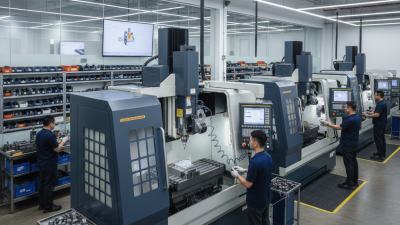
10 Essential Tips for Maximizing Efficiency with Your CNC Mill
-
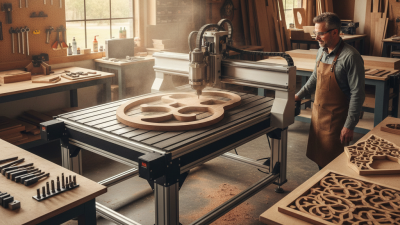
2026 How to Choose the Best CNC Router Table for Your Projects?
-
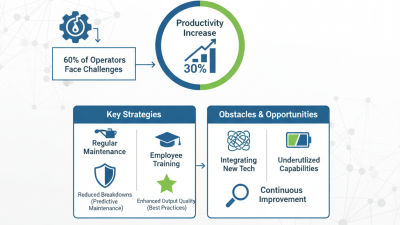
How to Optimize C and C Machine Operations for Maximum Efficiency?
-
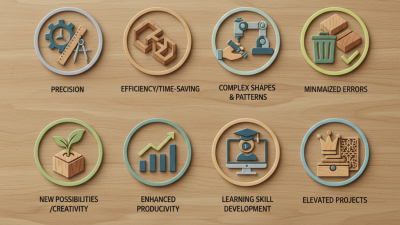
Top 10 Benefits of Using a Woodworking CNC Machine for Your Projects
-

Top 10 Benefits of 5 Axis Machining for Global Buyers?