
-
-
-
-
-
-

With a customized Stiles University course, we can provide expert training for your team, on-location. Whether it's programming, operation or maintenance, we want to help you train your personnel to meet your production goals efficiently and effectively.
-

Experience the trusted workforce development training and machinery knowledge you rely on from Stiles University, now at your convenience. With technology changing every day and new methods being developed constantly, Stiles University Online has the latest information and training content available at your fingertips.
-
-
-

Do you want to produce more efficiently? Processes and flows are key. We optimize these together with you, re-organize them and make sure that you reduce your lead time and save costs. This enables you to implement customized manufacturing and achieve your business goals.
-

Industrialized construction is evolving. Automation, robotics and advanced technology are raising the level of productivity, efficiency and precision for builders in North America.
-

Stiles Machinery is at the forefront of providing technology and machining for producing high quality mass timber. Automated solutions for your mass timber production can increase your manufacturing quality and productivity.
-

Project management services from Stiles make it easy to streamline your entire project— from concept and consultation to integration and implementation.
-



-
-
-
-
-
-
With a customized Stiles University course, we can provide expert training for your team, on-location. Whether it's programming, operation or maintenance, we want to help you train your personnel to meet your production goals efficiently and effectively.
-
Experience the trusted workforce development training and machinery knowledge you rely on from Stiles University, now at your convenience. With technology changing every day and new methods being developed constantly, Stiles University Online has the latest information and training content available at your fingertips.
-
-
-
Do you want to produce more efficiently? Processes and flows are key. We optimize these together with you, re-organize them and make sure that you reduce your lead time and save costs. This enables you to implement customized manufacturing and achieve your business goals.
-
Industrialized construction is evolving. Automation, robotics and advanced technology are raising the level of productivity, efficiency and precision for builders in North America.
-
Stiles Machinery is at the forefront of providing technology and machining for producing high quality mass timber. Automated solutions for your mass timber production can increase your manufacturing quality and productivity.
-
Project management services from Stiles make it easy to streamline your entire project— from concept and consultation to integration and implementation.
-
How to Choose the Right Gate Valve for Your Needs?
Choosing the right Gate Valve for your needs can be daunting. The gate valve plays a crucial role in controlling fluid flow in various systems. According to John Smith, a renowned valve industry expert, “The right gate valve can improve efficiency and reduce costs.” Selecting an appropriate gate valve is essential for any project.
When considering a gate valve, it’s important to understand your specific requirements. Different sizes, materials, and designs can impact performance. Have you thought about the pressure rating or the fluid type? The wrong choice often leads to leaks or system failures. Each detail matters in ensuring reliability and safety.
Many people overlook maintenance. A quality gate valve must be regularly inspected to prevent failures. Sometimes, it’s easy to assume that all gate valves are the same. However, even minor differences can significantly affect functionality. Reflecting on your choices can lead to better outcomes in the long run. Ultimately, a thoughtful approach to selecting a gate valve is essential for success.
Understanding the Different Types of Gate Valves Available
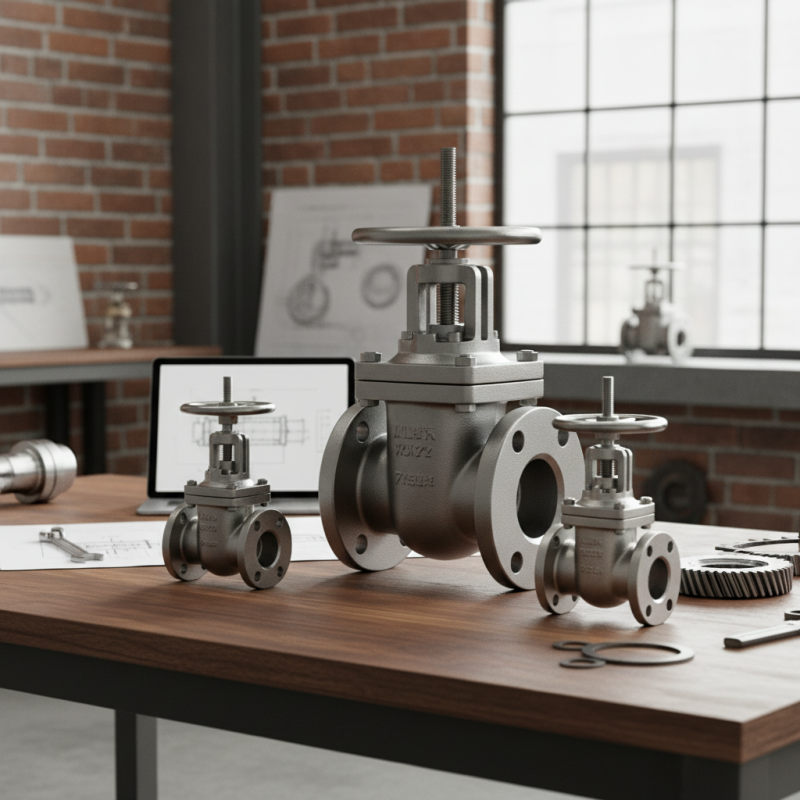
When selecting a gate valve, it’s essential to understand the various types available. You may encounter rising stem and non-rising stem gate valves. Each type serves specific applications and has its own benefits and drawbacks. A rising stem valve’s handle moves up with the stem. This feature makes it easy to see if the valve is open or closed. However, these valves can require additional space above them.
Another type is the wedge gate valve, which has a wedge-shaped disc. This design allows for a tight seal. It’s a good option for high-pressure applications. However, you must consider the materials. Different materials can affect the valve's performance and lifespan. For example, a valve made from stainless steel may offer better corrosion resistance but at a higher cost.
Remember that installation matters too. A poorly installed valve can lead to leaks or operational failures. Maintenance is crucial for longevity. Ensuring that you regularly check your gate valve can prevent unexpected issues. Reflections on your specific needs can guide you in making an informed choice. A thoughtful decision will lead to better efficiency in your system.