
-
-
-
-
-
-

With a customized Stiles University course, we can provide expert training for your team, on-location. Whether it's programming, operation or maintenance, we want to help you train your personnel to meet your production goals efficiently and effectively.
-

Experience the trusted workforce development training and machinery knowledge you rely on from Stiles University, now at your convenience. With technology changing every day and new methods being developed constantly, Stiles University Online has the latest information and training content available at your fingertips.
-
-
-

Do you want to produce more efficiently? Processes and flows are key. We optimize these together with you, re-organize them and make sure that you reduce your lead time and save costs. This enables you to implement customized manufacturing and achieve your business goals.
-

Industrialized construction is evolving. Automation, robotics and advanced technology are raising the level of productivity, efficiency and precision for builders in North America.
-

Stiles Machinery is at the forefront of providing technology and machining for producing high quality mass timber. Automated solutions for your mass timber production can increase your manufacturing quality and productivity.
-

Project management services from Stiles make it easy to streamline your entire project— from concept and consultation to integration and implementation.
-



-
-
-
-
-
-
With a customized Stiles University course, we can provide expert training for your team, on-location. Whether it's programming, operation or maintenance, we want to help you train your personnel to meet your production goals efficiently and effectively.
-
Experience the trusted workforce development training and machinery knowledge you rely on from Stiles University, now at your convenience. With technology changing every day and new methods being developed constantly, Stiles University Online has the latest information and training content available at your fingertips.
-
-
-
Do you want to produce more efficiently? Processes and flows are key. We optimize these together with you, re-organize them and make sure that you reduce your lead time and save costs. This enables you to implement customized manufacturing and achieve your business goals.
-
Industrialized construction is evolving. Automation, robotics and advanced technology are raising the level of productivity, efficiency and precision for builders in North America.
-
Stiles Machinery is at the forefront of providing technology and machining for producing high quality mass timber. Automated solutions for your mass timber production can increase your manufacturing quality and productivity.
-
Project management services from Stiles make it easy to streamline your entire project— from concept and consultation to integration and implementation.
-
How to Choose the Right Flexible Coupling for Your Needs?
Choosing the right Flexible Coupling can be critical for optimal performance in machinery. The global flexible coupling market is expected to reach $3.74 billion by 2027, reflecting a strong demand for these essential components. According to John Anderson, a leading expert in the field, “Selecting the appropriate flexible coupling ensures efficiency and longevity in system operations.”
Various applications require unique specifications and designs. Factors such as torque capacity, misalignment tolerance, and material selection play vital roles in this decision-making process. Engineers must consider the specific needs of their projects, as an incorrect choice can lead to increased maintenance costs and system failures. The right flexible coupling not only improves efficiency but also enhances the lifespan of connected equipment.
While many resources provide general guidance, challenges remain in matching flexible couplings to precise applications. Continuous development in coupling materials and technology complicates these choices. Understanding each coupling's strengths and weaknesses remains essential for engineers. With an informed approach, stakeholders can make better decisions that align with evolving industry standards.
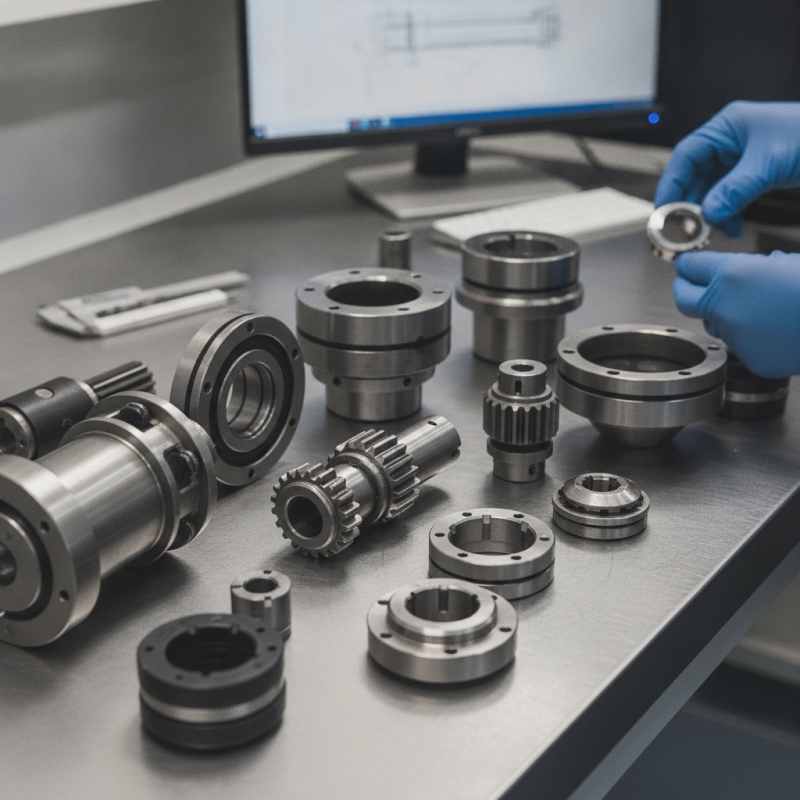
Understanding the Types of Flexible Couplings and Their Applications
Flexible couplings are essential components in mechanical systems, providing the needed connection between shafts. Understanding the types and applications of these couplings is crucial for making informed decisions. Various flexible couplings are available, including elastomeric, metal, and gear couplings. Each type serves specific purposes in different industries.
Elastomeric couplings excel in dampening vibrations and misalignments. They cater to applications in pumps and fans, where noise reduction is vital. According to a recent industry report, these couplings can reduce vibration frequencies by up to 40%. Metal couplings, on the other hand, are robust and resistant to harsh conditions, making them suitable for heavy machinery. They are used in applications involving high torque and shear forces, where reliability is paramount. Gear couplings can accommodate angular misalignments and are often chosen for their versatility in power transmission systems.
Choosing the right coupling depends on factors like load capacity, environmental conditions, and required flexibility. It is important to evaluate the specific needs of each application carefully. Research shows that improper selection can lead to increased wear and maintenance costs. Thus, assessing operational requirements is critical for achieving optimal performance.