

For support and service of your machinery, Stiles has experts available 24/7 to help reduce downtime and get you back in action.
Technical Support: 616-698-6615
Service & Repairs: 616-698-7500
24/7 Parts: 1-800-727-8780
sale@inlandmachineokc.com
Parts are available from Stiles 24 hours a day, seven days a week, and are shipped from our Grand Rapids, Michigan fulfillment center.
24/7 Parts: 800-727-8780

With a customized Stiles University course, we can provide expert training for your team, on-location. Whether it's programming, operation or maintenance, we want to help you train your personnel to meet your production goals efficiently and effectively.

Experience the trusted workforce development training and machinery knowledge you rely on from Stiles University, now at your convenience. With technology changing every day and new methods being developed constantly, Stiles University Online has the latest information and training content available at your fingertips.
616-698-7500

Do you want to produce more efficiently? Processes and flows are key. We optimize these together with you, re-organize them and make sure that you reduce your lead time and save costs. This enables you to implement customized manufacturing and achieve your business goals.

Industrialized construction is evolving. Automation, robotics and advanced technology are raising the level of productivity, efficiency and precision for builders in North America.

Stiles Machinery is at the forefront of providing technology and machining for producing high quality mass timber. Automated solutions for your mass timber production can increase your manufacturing quality and productivity.

Project management services from Stiles make it easy to streamline your entire project— from concept and consultation to integration and implementation.
For support and service of your machinery, Stiles has experts available 24/7 to help reduce downtime and get you back in action.
Technical Support: 616-698-6615
Service & Repairs: 616-698-7500
24/7 Parts: 1-800-727-8780
sale@inlandmachineokc.com
Parts are available from Stiles 24 hours a day, seven days a week, and are shipped from our Grand Rapids, Michigan fulfillment center.
24/7 Parts: 800-727-8780

With a customized Stiles University course, we can provide expert training for your team, on-location. Whether it's programming, operation or maintenance, we want to help you train your personnel to meet your production goals efficiently and effectively.

Experience the trusted workforce development training and machinery knowledge you rely on from Stiles University, now at your convenience. With technology changing every day and new methods being developed constantly, Stiles University Online has the latest information and training content available at your fingertips.
616-698-7500

Do you want to produce more efficiently? Processes and flows are key. We optimize these together with you, re-organize them and make sure that you reduce your lead time and save costs. This enables you to implement customized manufacturing and achieve your business goals.

Industrialized construction is evolving. Automation, robotics and advanced technology are raising the level of productivity, efficiency and precision for builders in North America.

Stiles Machinery is at the forefront of providing technology and machining for producing high quality mass timber. Automated solutions for your mass timber production can increase your manufacturing quality and productivity.

Project management services from Stiles make it easy to streamline your entire project— from concept and consultation to integration and implementation.
For support and service of your machinery, Stiles has experts available 24/7 to help reduce downtime and get you back in action.
Technical Support: 616-698-6615 Service & Repairs: 616-698-7500 24/7 Parts: 1-800-727-8780
Parts are available from Stiles 24 hours a day, seven days a week, and are shipped from our Grand Rapids, Michigan fulfillment center.
24/7 Parts: 800-727-8780For support and service of your machinery, Stiles has experts available 24/7 to help reduce downtime and get you back in action.
Technical Support: 616-698-6615 Service & Repairs: 616-698-7500 24/7 Parts: 1-800-727-8780
Parts are available from Stiles 24 hours a day, seven days a week, and are shipped from our Grand Rapids, Michigan fulfillment center.
24/7 Parts: 800-727-8780Selecting the right Control Valve is essential in various industrial applications. Control valves regulate flow, pressure, and temperature in fluid systems. According to a recent industry report by Research and Markets, the global control valve market is projected to reach $10.59 billion by 2026, reflecting a compound annual growth rate of 5.6%. This growth emphasizes the importance of making informed decisions when choosing control valves.
In many industries, control valves play a critical role in optimizing processes. They can significantly impact efficiency and operational safety. However, selecting the wrong type can lead to failures and costly downtime. A study conducted by the International Society for Automation highlights that improper valve selection can result in up to 20% energy loss in systems. Thus, understanding your specific requirements is vital.
When exploring options, consider factors such as fluid type, pressure, and temperature limits. Each application demands a tailored approach. The complexity of valve performance can be daunting. It’s crucial to consult with experts who understand these nuances. Your choice in a control valve can either enhance efficiency or hinder operational effectiveness.
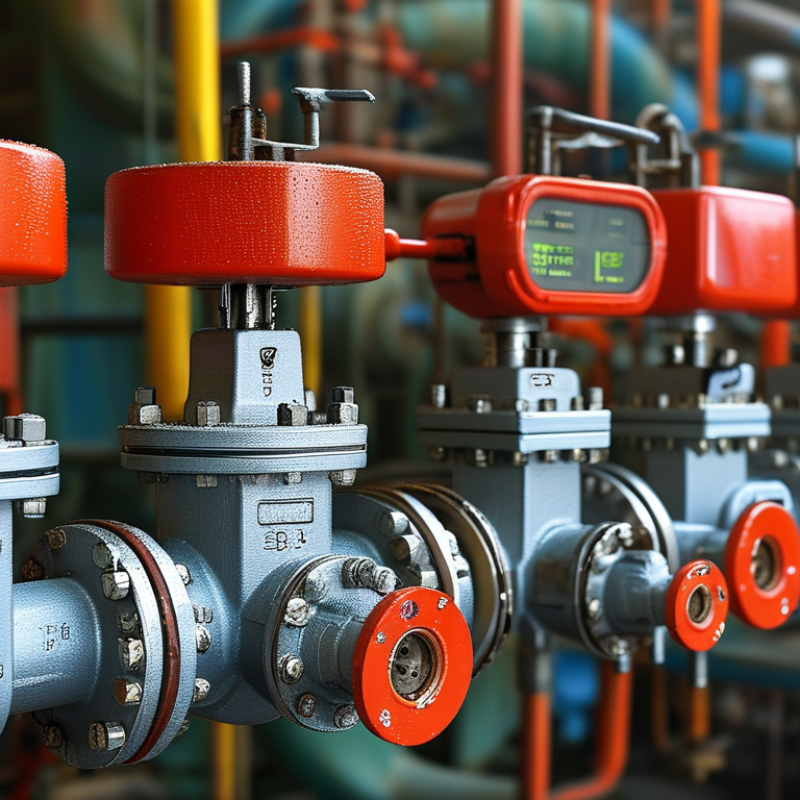
Control valves play a crucial role in various industries. They regulate fluid flow, pressure, and temperature in systems. Understanding their basic principles is essential for making informed choices. A control valve consists of a valve body, actuator, and positioner. The actuator alters the valve's position based on signals from a controller. This allows precise control of the fluid dynamics within a system.
When selecting a control valve, consider factors like flow characteristics and pressure drop. The wrong choice can impact system efficiency and cause failures. Reports indicate that nearly 30% of fluid control system issues stem from poorly chosen valves. Always analyze your specific application requirements to choose the right type.
Tips: Evaluate the operating conditions carefully. Think about fluid type and temperature. A well-chosen valve improves system reliability. Don't overlook maintenance needs. Regular checks prolong valve life and enhance performance. Understand the nuances of valve sizing and positioning, as these can significantly affect operation.
When selecting a control valve, consider the specific application requirements. Different industries require varied performance criteria. For instance, aerospace applications may need valves with high precision. In contrast, water treatment plants often prioritize durability and resistance to corrosion. Understanding your needs is vital.
Tips: Evaluate the fluid properties before choosing. Analyze temperature, pressure, and chemical compatibility. Assess the medium flow rate for optimal performance.
Types of control valves vary significantly. Globe valves are excellent for throttling. They provide a linear flow characteristic, which is helpful in many scenarios. Butterfly valves are often used for on/off control, especially in larger pipelines. Their lightweight design can save on installation costs.
Tips: Always review the installation space before deciding. Keep in mind that some valves may require more room for maintenance than others. Make sure to account for future needs as well.
Selecting the right control valve for your application involves multiple important factors. Start with the fluid characteristics, including temperature, pressure, and viscosity. These aspects directly impact the valve’s performance. A high-temperature fluid requires materials that can withstand heat without degrading. The same applies to pressure; a valve must handle maximum pressure conditions effectively.
Another key factor is the flow requirements. Understand the flow rate necessary for your process. Consider the type of flow, whether it is linear or nonlinear. This will affect the control strategy. A poorly matched control valve can lead to energy inefficiencies, causing operational delays and increased costs.
Don’t overlook the actuator type. Pneumatic, electric, and hydraulic actuators provide different levels of responsiveness and control. Assess your specific needs carefully. A mismatch here can lead to sluggish response times. Reflect on your facility's maintenance capabilities as well. Frequent maintenance may not be feasible for every installation. Make informed decisions, and remember that no single solution fits all scenarios.
When selecting a control valve, sizing and specifications are crucial for optimal performance. The valve's size directly influences flow rate and pressure drop. An oversized valve can lead to poor control, while an undersized valve may cause system failure. Correctly sizing the valve ensures efficient operation and maintains desired process parameters.
Consider the specifications, including the media type and temperature. These factors affect material choice and design. For instance, corrosive fluids require special materials. It’s important to reference pressure ratings and flow coefficients. Inaccurate specifications may result in costly repairs or system inefficiencies.
Every installation presents unique challenges. Sometimes, the initial valve selection may not perform as expected. Monitoring and adjusting specifications can lead to improvements. Regular feedback from system performance helps refine your choice. Learning from experiences provides valuable insights into future selections.
Control valves are critical components in various industrial applications. Regular maintenance can significantly extend their lifespan and ensure optimal performance. Research indicates that poorly maintained control valves can lead to a 30% increase in energy costs and system failures. Thus, understanding maintenance practices is essential for efficiency.
When troubleshooting control valves, it is crucial to identify symptoms like erratic movements or noise. These issues often stem from wear and tear or improper calibration. According to the Flow Control Conference, around 25% of valve failures are attributed to inadequate installation and maintenance. Keeping a detailed log of valve performance can help pinpoint recurring issues. It is vital to perform routine inspections and replace damaged components promptly.
Using appropriate diagnostic tools can streamline the troubleshooting process. For instance, pressure testing and actuator diagnostics can uncover hidden problems. Industry reports suggest that 22% of control valve-related downtime is avoidable with proactive maintenance. However, not all organizations prioritize these practices. Reflecting on maintenance strategies can lead to improved reliability and greater operational efficiency.







