
-
-
-
-
-
-
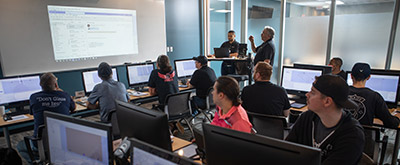
With a customized Stiles University course, we can provide expert training for your team, on-location. Whether it's programming, operation or maintenance, we want to help you train your personnel to meet your production goals efficiently and effectively.
-

Experience the trusted workforce development training and machinery knowledge you rely on from Stiles University, now at your convenience. With technology changing every day and new methods being developed constantly, Stiles University Online has the latest information and training content available at your fingertips.
-
-
-

Do you want to produce more efficiently? Processes and flows are key. We optimize these together with you, re-organize them and make sure that you reduce your lead time and save costs. This enables you to implement customized manufacturing and achieve your business goals.
-
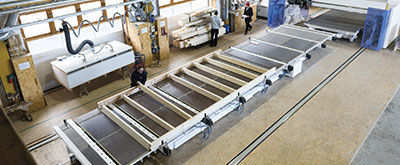
Industrialized construction is evolving. Automation, robotics and advanced technology are raising the level of productivity, efficiency and precision for builders in North America.
-
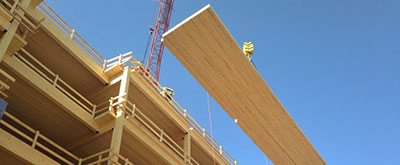
Stiles Machinery is at the forefront of providing technology and machining for producing high quality mass timber. Automated solutions for your mass timber production can increase your manufacturing quality and productivity.
-

Project management services from Stiles make it easy to streamline your entire project— from concept and consultation to integration and implementation.
-


-
-
-
-
-
-
With a customized Stiles University course, we can provide expert training for your team, on-location. Whether it's programming, operation or maintenance, we want to help you train your personnel to meet your production goals efficiently and effectively.
-
Experience the trusted workforce development training and machinery knowledge you rely on from Stiles University, now at your convenience. With technology changing every day and new methods being developed constantly, Stiles University Online has the latest information and training content available at your fingertips.
-
-
-
Do you want to produce more efficiently? Processes and flows are key. We optimize these together with you, re-organize them and make sure that you reduce your lead time and save costs. This enables you to implement customized manufacturing and achieve your business goals.
-
Industrialized construction is evolving. Automation, robotics and advanced technology are raising the level of productivity, efficiency and precision for builders in North America.
-
Stiles Machinery is at the forefront of providing technology and machining for producing high quality mass timber. Automated solutions for your mass timber production can increase your manufacturing quality and productivity.
-
Project management services from Stiles make it easy to streamline your entire project— from concept and consultation to integration and implementation.
-
How to Choose the Right Acoustic Vent Membrane for Your Project?
Choosing the right Acoustic Vent Membrane is crucial for effective sound management in building projects. According to a report by the Acoustical Society of America, improper ventilation can lead to acoustic failures, impacting both comfort and functionality. An efficient Acoustic Vent Membrane can reduce noise transmission, creating a peaceful environment.
Several factors influence the selection of an Acoustic Vent Membrane. These include material quality, thickness, and application methods. Studies show that membranes with optimal sound absorption qualities can enhance a space's acoustic performance by up to 35%. However, the wrong choice can create more issues than it solves. It's essential to consider these specifications carefully.
Consulting with industry experts can help navigate this complex selection process. Their insights may reveal hidden challenges, ensuring a better fit for your specific needs. As we explore the criteria for choosing an Acoustic Vent Membrane, we must acknowledge the importance of careful evaluation and informed decisions.

Understanding Acoustic Vent Membranes: Definition and Function
Acoustic vent membranes play a crucial role in soundproofing and ventilation. They serve as barriers that prevent sound transmission while allowing air to flow. These membranes are widely used in residential, commercial, and industrial applications, emphasizing their versatility and importance in modern architecture.
The effectiveness of acoustic vent membranes can be quantified by their Noise Reduction Coefficient (NRC). Reports indicate that high-quality membranes can achieve an NRC of 0.95, substantially reducing sound levels. Additionally, studies have shown that integrating these membranes in wall assemblies can lower sound transmission by up to 50%. This significant reduction highlights their value in creating quieter environments, especially in urban settings where noise pollution is prevalent.
Choosing the right membrane requires careful consideration of various factors. Material composition, thickness, and installation technique are essential elements. Some projects may benefit from multifaceted membranes that combine acoustics with thermal insulation. However, not all membranes perform equally well across different frequencies. It is essential to assess data from reliable sources before making decisions. Often, architects face challenges in understanding which products truly meet the acoustic needs of their projects, leading to potential shortcomings in sound control.
How to Choose the Right Acoustic Vent Membrane for Your Project?
| Acoustic Vent Membrane Type | Material | Sound Transmission Class (STC) | Application | Installation Method |
|---|---|---|---|---|
| Standard Acoustic Membrane | Polyethylene | 35 | Commercial Buildings | Adhesive |
| High-Performance Membrane | Vinyl | 50 | Recording Studios | Mechanically Fastened |
| Eco-Friendly Membrane | Recycled Materials | 40 | Residential Homes | Stapled |
| Fire-Rated Membrane | Mineral Fiber | 45 | Industrial Applications | Adhesive and Mechanical |