

For support and service of your machinery, Stiles has experts available 24/7 to help reduce downtime and get you back in action.
Technical Support: 616-698-6615
Service & Repairs: 616-698-7500
24/7 Parts: 1-800-727-8780
sale@inlandmachineokc.com
Parts are available from Stiles 24 hours a day, seven days a week, and are shipped from our Grand Rapids, Michigan fulfillment center.
24/7 Parts: 800-727-8780

With a customized Stiles University course, we can provide expert training for your team, on-location. Whether it's programming, operation or maintenance, we want to help you train your personnel to meet your production goals efficiently and effectively.

Experience the trusted workforce development training and machinery knowledge you rely on from Stiles University, now at your convenience. With technology changing every day and new methods being developed constantly, Stiles University Online has the latest information and training content available at your fingertips.
616-698-7500

Do you want to produce more efficiently? Processes and flows are key. We optimize these together with you, re-organize them and make sure that you reduce your lead time and save costs. This enables you to implement customized manufacturing and achieve your business goals.

Industrialized construction is evolving. Automation, robotics and advanced technology are raising the level of productivity, efficiency and precision for builders in North America.

Stiles Machinery is at the forefront of providing technology and machining for producing high quality mass timber. Automated solutions for your mass timber production can increase your manufacturing quality and productivity.

Project management services from Stiles make it easy to streamline your entire project— from concept and consultation to integration and implementation.
For support and service of your machinery, Stiles has experts available 24/7 to help reduce downtime and get you back in action.
Technical Support: 616-698-6615
Service & Repairs: 616-698-7500
24/7 Parts: 1-800-727-8780
sale@inlandmachineokc.com
Parts are available from Stiles 24 hours a day, seven days a week, and are shipped from our Grand Rapids, Michigan fulfillment center.
24/7 Parts: 800-727-8780

With a customized Stiles University course, we can provide expert training for your team, on-location. Whether it's programming, operation or maintenance, we want to help you train your personnel to meet your production goals efficiently and effectively.

Experience the trusted workforce development training and machinery knowledge you rely on from Stiles University, now at your convenience. With technology changing every day and new methods being developed constantly, Stiles University Online has the latest information and training content available at your fingertips.
616-698-7500

Do you want to produce more efficiently? Processes and flows are key. We optimize these together with you, re-organize them and make sure that you reduce your lead time and save costs. This enables you to implement customized manufacturing and achieve your business goals.

Industrialized construction is evolving. Automation, robotics and advanced technology are raising the level of productivity, efficiency and precision for builders in North America.

Stiles Machinery is at the forefront of providing technology and machining for producing high quality mass timber. Automated solutions for your mass timber production can increase your manufacturing quality and productivity.

Project management services from Stiles make it easy to streamline your entire project— from concept and consultation to integration and implementation.
For support and service of your machinery, Stiles has experts available 24/7 to help reduce downtime and get you back in action.
Technical Support: 616-698-6615 Service & Repairs: 616-698-7500 24/7 Parts: 1-800-727-8780
Parts are available from Stiles 24 hours a day, seven days a week, and are shipped from our Grand Rapids, Michigan fulfillment center.
24/7 Parts: 800-727-8780For support and service of your machinery, Stiles has experts available 24/7 to help reduce downtime and get you back in action.
Technical Support: 616-698-6615 Service & Repairs: 616-698-7500 24/7 Parts: 1-800-727-8780
Parts are available from Stiles 24 hours a day, seven days a week, and are shipped from our Grand Rapids, Michigan fulfillment center.
24/7 Parts: 800-727-8780When selecting the right Stamping Robot, understanding your specific needs is paramount. According to the International Robotics Federation, the demand for automation in manufacturing has surged, with a projected growth rate of 12% annually. This increase underscores the importance of choosing the right robotic solution to optimize production efficiency.
Expert in automation technology, Dr. John Fischer, emphasizes, "Investing in a Stamping Robot is not just about the initial cost, but about long-term returns." Potential users must weigh factors such as payload, precision, and compatibility with existing systems. A wrong choice could lead to delays and increased costs, negating the benefits of automation.
Each industrial application presents unique challenges. A comprehensive assessment of your requirements is crucial. Factors like cycle time, material type, and workplace environment play significant roles. A well-chosen Stamping Robot can enhance productivity and reduce errors, but the decision-making process often reveals complexities that require careful consideration.
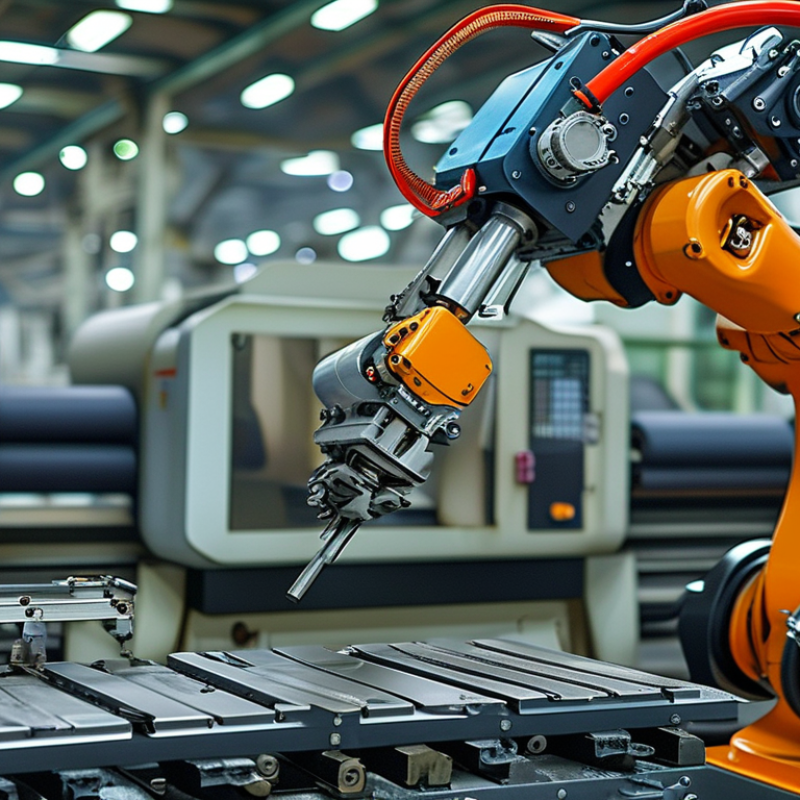
Stamping robots play a crucial role in automation. They enhance precision in manufacturing processes. These robots can perform tasks like metal forming, labeling, and even packaging. Understanding their capabilities is key for any business looking to invest in automation.
Choosing the right stamping robot requires careful consideration. Assess the specific tasks your robot will perform. Some robots excel in simple stamping, while others handle complex forms. It is important to evaluate their load capacities, speed, and accuracy. While many options exist, not every robot will meet your unique needs.
Businesses often struggle to find the perfect fit. An improper choice can lead to inefficiencies. Engaging with experts in the field can provide valuable insights. They can guide you through the selection process. Reflect on your current workflow and identify areas for improvement. This step can make a significant difference in productivity and overall satisfaction.
Identifying your specific stamping needs is crucial when choosing a stamping robot. Start by evaluating the materials you'll be working with. Different materials require specific types of stamping methods. Are you stamping metal, plastic, or paper? Each requires different force and precision, impacting your choice. Assess the thickness and size of the materials too. A mismatch can lead to inefficiency and increased production errors.
Next, consider the volume of production. Are you running small batches or large-scale operations? Higher volume needs may require more advanced features. This could mean higher speeds or automation. Understand the flexibility you need. If your projects vary frequently, a more versatile robot is essential. Think about the ease of programming as well. Can your team quickly adapt to changes? Complex programming might slow down production.
Evaluate your workspace too. Ensure the robot fits in your available area. Space constraints can limit your choices significantly. Also, consider the budget. High-end robots may offer many features, but they are not always necessary. Weigh the benefits against your actual needs. This will help you avoid overspending on features you may rarely use. Reflecting on these aspects will guide you toward a well-informed decision.
This chart provides a performance comparison of different stamping robots based on their maximum stamping speed and precision. Assessing these factors will help you choose the best robot to meet your specific stamping needs.
When selecting a stamping robot, it’s essential to evaluate the key features that directly impact performance. Robots must ensure precision in stamping operations. Look for models that effectively handle the size and weight of your materials. This will help achieve consistent results, reducing scrap rates.
Speed is another critical factor. Stamping robots should operate quickly yet accurately to keep production lines efficient. Consider robots with adjustable speed settings. This flexibility allows customization based on specific tasks or materials. Additionally, ease of programming is vital. A user-friendly interface minimizes downtime and enhances productivity, making it easier for operators to manage workflows.
It’s also important to reflect on maintenance requirements. Some robots may have complex maintenance protocols that could lead to operational delays. Regular servicing is crucial for reliability. Investing time in training staff on upkeep will ensure long-term performance. After all, even the best robots need the right care to function optimally. Each feature contributes to a robot's overall effectiveness, so careful assessment is key.
When selecting a stamping robot, brand and model are crucial. Different brands offer varying technology and capabilities. Compare technical specifications like speed, precision, and payload capacity. For instance, industry reports indicate that robots with high-speed capabilities can improve production efficiency by up to 30%. Precision is equally vital; models with error rates below 0.01% are preferred in automotive sectors.
Many brands offer unique features. Some robots are designed for specific industries, while others are more versatile. Research suggests that industry-specific robots can enhance performance significantly. However, not all models deliver as promised. A 2023 study revealed that 15% of downgraded robots failed to meet user needs. Always assess user reviews and expert opinions before making a decision.
Moreover, consider the technical support offered. Reliable customer service can be a decisive factor. Availability of spare parts is essential too. Sometimes, lower-priced options may lead to increased long-term costs due to lack of support. Reflect on the balance between upfront costs and long-term benefits. Choosing the right stamping robot requires thorough evaluation and careful consideration of both short-term and long-term implications.
When assessing cost-effectiveness for stamping robots, it’s vital to consider several factors. The average price of a stamping robot ranges from $15,000 to $50,000, depending on features and capabilities. Maintenance costs can add up, so budgeting for routine upkeep is essential. Reports indicate that effective routine maintenance can reduce outages by 40%. Cost savings from increased production efficiency can offset initial investments.
Budget considerations shouldn’t only focus on the purchase price. Automation often requires additional training and integration costs, which can account for up to 25% of the robot’s price. A recent industry report highlighted that firms investing in comprehensive training saw productivity increases of over 30%. These figures underscore the importance of an all-encompassing budget approach.
Companies must also factor in potential downtime. Even a small error can lead to significant losses. Research suggests that robots can increase uptime by 20% over manual processes. However, if the robot malfunctions, the costs can be substantial. Evaluating reliability and vendor support in your decision-making process can provide a more secure investment. This careful planning can transform the initial capital layout into a sustainable operational model.
| Model | Initial Cost ($) | Operating Cost/Year ($) | Maintenance Cost/Year ($) | ROI (Years) | Features |
|---|---|---|---|---|---|
| Basic Stamping Robot | 15,000 | 2,000 | 500 | 5 | Basic automation features |
| Advanced Stamping Robot | 25,000 | 3,500 | 700 | 4 | Advanced sensors and programming |
| High-Precision Stamping Robot | 40,000 | 4,500 | 1,200 | 3 | High accuracy and speed |
| Robotic Assembly Stamping Robot | 55,000 | 5,000 | 1,500 | 2 | Integration with assembly lines |







