
-
-
-
-
-
-

With a customized Stiles University course, we can provide expert training for your team, on-location. Whether it's programming, operation or maintenance, we want to help you train your personnel to meet your production goals efficiently and effectively.
-

Experience the trusted workforce development training and machinery knowledge you rely on from Stiles University, now at your convenience. With technology changing every day and new methods being developed constantly, Stiles University Online has the latest information and training content available at your fingertips.
-
-
-

Do you want to produce more efficiently? Processes and flows are key. We optimize these together with you, re-organize them and make sure that you reduce your lead time and save costs. This enables you to implement customized manufacturing and achieve your business goals.
-
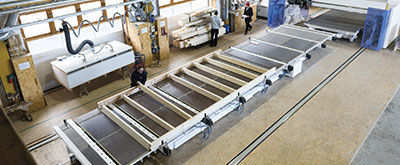
Industrialized construction is evolving. Automation, robotics and advanced technology are raising the level of productivity, efficiency and precision for builders in North America.
-
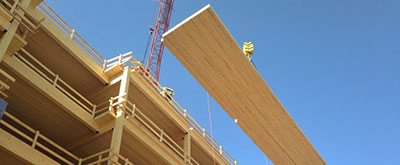
Stiles Machinery is at the forefront of providing technology and machining for producing high quality mass timber. Automated solutions for your mass timber production can increase your manufacturing quality and productivity.
-

Project management services from Stiles make it easy to streamline your entire project— from concept and consultation to integration and implementation.
-

-
-
-
-
-
-
With a customized Stiles University course, we can provide expert training for your team, on-location. Whether it's programming, operation or maintenance, we want to help you train your personnel to meet your production goals efficiently and effectively.
-
Experience the trusted workforce development training and machinery knowledge you rely on from Stiles University, now at your convenience. With technology changing every day and new methods being developed constantly, Stiles University Online has the latest information and training content available at your fingertips.
-
-
-
Do you want to produce more efficiently? Processes and flows are key. We optimize these together with you, re-organize them and make sure that you reduce your lead time and save costs. This enables you to implement customized manufacturing and achieve your business goals.
-
Industrialized construction is evolving. Automation, robotics and advanced technology are raising the level of productivity, efficiency and precision for builders in North America.
-
Stiles Machinery is at the forefront of providing technology and machining for producing high quality mass timber. Automated solutions for your mass timber production can increase your manufacturing quality and productivity.
-
Project management services from Stiles make it easy to streamline your entire project— from concept and consultation to integration and implementation.
-
How to Choose the Best FRP Pipe Machine for Your Needs?
Choosing the right frp pipe machine is crucial for efficient manufacturing. The market for FRP pipes is growing rapidly, projected to reach $12 billion by 2025. This growth necessitates advanced machinery capable of meeting various requirements. Experts highlight that not all machines are equal; some are more suited for specific applications than others.
John Smith, an industry analyst, emphasizes, "Investing in the right frp pipe machine can significantly impact production quality." This insight underscores the need for diligent selection. Many companies face challenges when choosing the right equipment, often leading to over- or under-investment. Identifying the specific needs of your production line is vital.
Another aspect to consider is the machine's compatibility with materials. Different applications may require distinct types of resins or reinforcement techniques. A mismatch can lead to subpar product performance. A careful analysis of operational demands will aid in making a wise choice. Ultimately, a well-informed decision can streamline production and enhance competitiveness in the market.
Understanding the Basics of FRP Pipe Machines
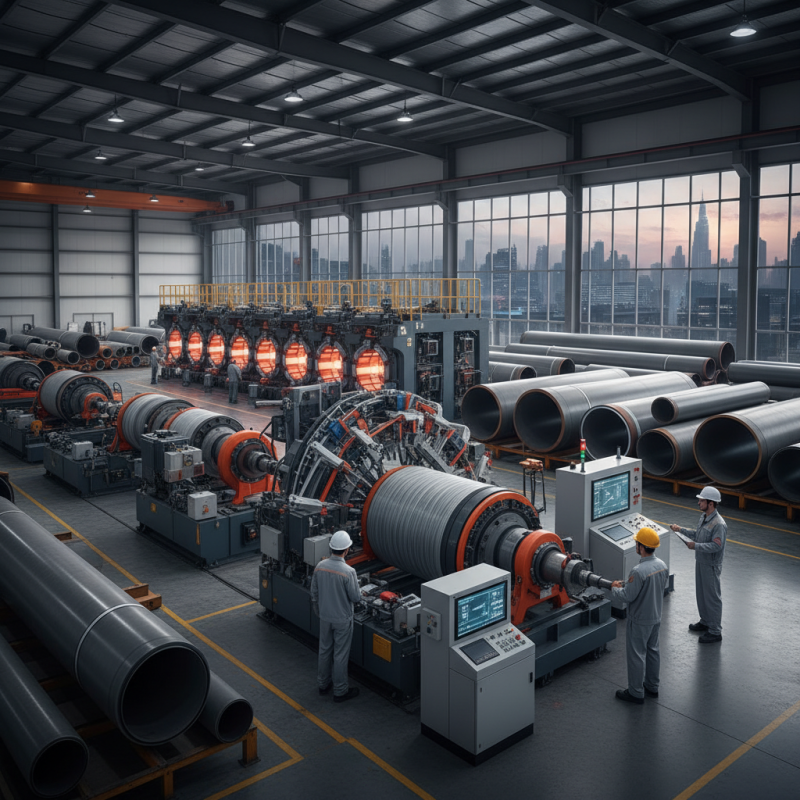
Understanding the basics of FRP (Fiber Reinforced Plastic) pipe machines is crucial for selecting the right equipment. FRP pipes are known for their durability and resistance to corrosion. The machines used to manufacture these pipes play a pivotal role in determining their quality and performance.
According to the Global FRP Pipes Market Report, the demand for FRP pipes is expected to grow by around 5.6% annually, reflecting the increasing need for robust piping solutions in various industries.
When considering an FRP pipe machine, focus on its operational capabilities. Key features include the production rate, which should align with your output needs. Machines that can produce different pipe diameters may offer more flexibility. However, a machine that offers too many options can complicate operations.
Simplifying processes often leads to better efficiency. Some manufacturers report that nearly 30% of production downtime is due to machine complexity. This is a critical aspect to reflect upon when choosing a machine.
Additionally, the materials used in the construction of the machine itself can affect its lifespan and maintenance requirements. Understand the balance between initial cost and long-term durability. A cheaper machine might save money upfront but could incur higher maintenance costs later on.
Research shows that maintenance costs can consume up to 15% of total operational budgets in pipe manufacturing. Such statistics highlight the importance of informed decision-making in selecting FRP pipe machines.