

For support and service of your machinery, Stiles has experts available 24/7 to help reduce downtime and get you back in action.
Technical Support: 616-698-6615
Service & Repairs: 616-698-7500
24/7 Parts: 1-800-727-8780
sale@inlandmachineokc.com
Parts are available from Stiles 24 hours a day, seven days a week, and are shipped from our Grand Rapids, Michigan fulfillment center.
24/7 Parts: 800-727-8780

With a customized Stiles University course, we can provide expert training for your team, on-location. Whether it's programming, operation or maintenance, we want to help you train your personnel to meet your production goals efficiently and effectively.

Experience the trusted workforce development training and machinery knowledge you rely on from Stiles University, now at your convenience. With technology changing every day and new methods being developed constantly, Stiles University Online has the latest information and training content available at your fingertips.
616-698-7500

Do you want to produce more efficiently? Processes and flows are key. We optimize these together with you, re-organize them and make sure that you reduce your lead time and save costs. This enables you to implement customized manufacturing and achieve your business goals.

Industrialized construction is evolving. Automation, robotics and advanced technology are raising the level of productivity, efficiency and precision for builders in North America.

Stiles Machinery is at the forefront of providing technology and machining for producing high quality mass timber. Automated solutions for your mass timber production can increase your manufacturing quality and productivity.

Project management services from Stiles make it easy to streamline your entire project— from concept and consultation to integration and implementation.
For support and service of your machinery, Stiles has experts available 24/7 to help reduce downtime and get you back in action.
Technical Support: 616-698-6615
Service & Repairs: 616-698-7500
24/7 Parts: 1-800-727-8780
sale@inlandmachineokc.com
Parts are available from Stiles 24 hours a day, seven days a week, and are shipped from our Grand Rapids, Michigan fulfillment center.
24/7 Parts: 800-727-8780

With a customized Stiles University course, we can provide expert training for your team, on-location. Whether it's programming, operation or maintenance, we want to help you train your personnel to meet your production goals efficiently and effectively.

Experience the trusted workforce development training and machinery knowledge you rely on from Stiles University, now at your convenience. With technology changing every day and new methods being developed constantly, Stiles University Online has the latest information and training content available at your fingertips.
616-698-7500

Do you want to produce more efficiently? Processes and flows are key. We optimize these together with you, re-organize them and make sure that you reduce your lead time and save costs. This enables you to implement customized manufacturing and achieve your business goals.

Industrialized construction is evolving. Automation, robotics and advanced technology are raising the level of productivity, efficiency and precision for builders in North America.

Stiles Machinery is at the forefront of providing technology and machining for producing high quality mass timber. Automated solutions for your mass timber production can increase your manufacturing quality and productivity.

Project management services from Stiles make it easy to streamline your entire project— from concept and consultation to integration and implementation.
For support and service of your machinery, Stiles has experts available 24/7 to help reduce downtime and get you back in action.
Technical Support: 616-698-6615 Service & Repairs: 616-698-7500 24/7 Parts: 1-800-727-8780
Parts are available from Stiles 24 hours a day, seven days a week, and are shipped from our Grand Rapids, Michigan fulfillment center.
24/7 Parts: 800-727-8780For support and service of your machinery, Stiles has experts available 24/7 to help reduce downtime and get you back in action.
Technical Support: 616-698-6615 Service & Repairs: 616-698-7500 24/7 Parts: 1-800-727-8780
Parts are available from Stiles 24 hours a day, seven days a week, and are shipped from our Grand Rapids, Michigan fulfillment center.
24/7 Parts: 800-727-8780Choosing the right metal connector for industrial automation is crucial. It impacts performance and reliability. Experts highlight that not all metal connectors are created equal. John Smith, a leading authority in industrial automation, states, "Selecting the correct connector can make or break your system's efficiency."
Understanding the specific requirements of your application is essential. Metal connectors must withstand harsh environments, including temperature variations and chemical exposure. Their durability and design directly influence longevity. With various options available, picking the right one can be daunting.
Every choice involves trade-offs. Reliable connectors offer strength but may add weight. Compact designs save space but might compromise on ease of maintenance. Reflecting on these factors can lead to better outcomes in industrial processes. Proper selection of metal connectors for industrial automation ultimately creates a more efficient, safer, and cost-effective system.
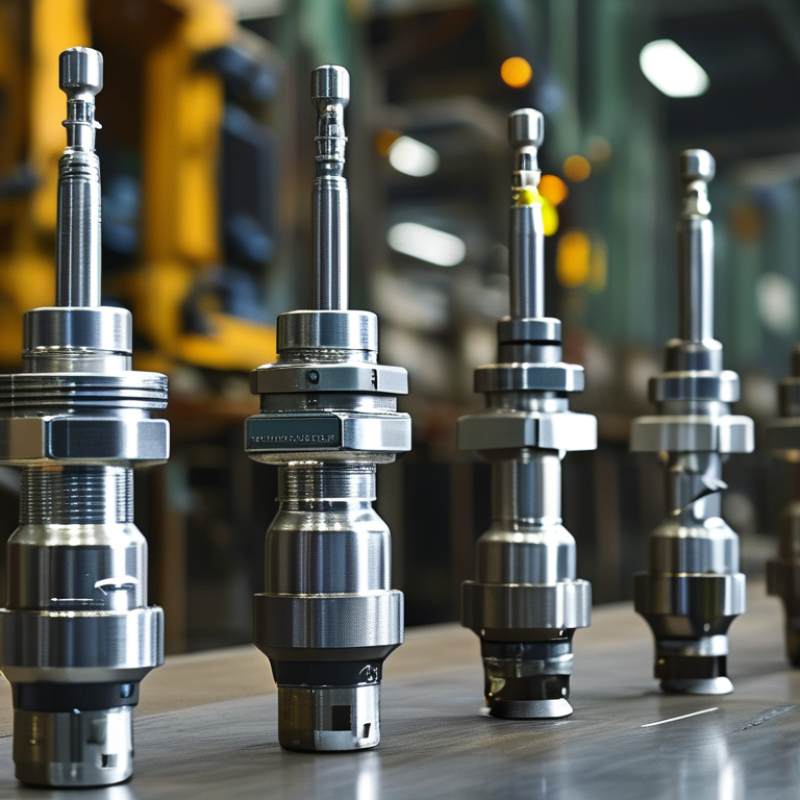
Metal connectors play a crucial role in industrial automation systems. They provide essential links between various components, ensuring reliable communication and energy transfer. In settings like factories or plants, durability is key. Connectors must withstand harsh environments, including dust, moisture, and extreme temperatures.
Choosing the right metal connector requires an understanding of your specific application. Consider factors like material compatibility and electrical ratings. Different metals react differently under stress. For instance, stainless steel offers corrosion resistance but may not support high-conductivity requirements. Ensure your selection aligns with the conditions your equipment will face.
Tips:
Always test a few connectors before committing to bulk orders. This provides insight into how they will perform under real conditions. Check manufacturers' specifications for thermal limits and resistance ratings.
Regular maintenance is vital. Periodically inspect connectors for signs of wear. Even slight damage can lead to system failures. Don't overlook the importance of cleaning as well; accumulated debris can interfere with performance and safety.
Choosing the right metal connector for industrial automation involves several critical factors. Durability is often paramount. Connectors must withstand harsh conditions, including extreme temperatures and vibrations. Materials like stainless steel or aluminum are commonly used for their robustness. These metals resist corrosion and can endure longevity in demanding environments.
Another key consideration is the connector's compatibility with existing systems. This aspect requires careful evaluation of factors like size, shape, and pin configuration. Mismatched connectors can lead to significant operational challenges. Additionally, understanding the electrical specifications is vital. Connectors must handle the required voltage and current without overheating. This can be a tricky balancing act, especially in complex systems.
Employing connectors that meet industry standards is also crucial. Certainty in performance provides peace of mind. However, many choose connectors simply based on past experiences or common preferences. This approach may overlook specific project needs. Key details should not be ignored, as they can affect reliability and safety. Each application has unique requirements that might be underestimated at first glance. A thorough assessment often reveals hidden complexities that demand attention.
In industrial automation, selecting the right metal connector is crucial. Metal connectors ensure reliable communication and power transmission in harsh environments. Various types of metal connectors cater to different applications. Common options include circular connectors, rectangular connectors, and DIN connectors. Each type varies in design, size, and suitability for specific tasks.
Circular connectors are highly popular due to their versatility. They often feature a locking mechanism, which provides stability and reduces the risk of disconnection. According to industry reports by the International Electrotechnical Commission, the circular connector segment accounts for about 40% of the entire connector market in industrial automation.
Tips: When selecting a connector, consider the environmental conditions. If moisture or dust is present, look for connectors with an IP67 rating. Rectangular connectors are ideal for panels and PCB connections, providing a compact solution with numerous pin configurations.
Another point to consider is the ease of maintenance. Metal connectors usually require less frequent replacements, but if damaged, repairs can be complex. Understanding the compatibility with your existing systems is vital. A mismatch can lead to inefficiencies and increased downtime. Always consult technical specifications to avoid such issues.
When choosing metal connectors for industrial automation, understanding the environmental conditions is crucial. Specifically, temperature fluctuations, humidity levels, and exposure to chemicals can greatly impact the performance and lifespan of connectors. High temperatures can lead to thermal expansion, potentially causing failure or disconnection. A reliable assessment of these factors ensures the chosen connectors will perform optimally.
Humidity is another critical consideration. Excess moisture can lead to rust and corrosion. Connectors designed with seals or coatings can mitigate such risks. However, they may not always be foolproof. Consider situations where contaminants are present. In these cases, even well-protected connectors might struggle.
It’s also important to evaluate the mechanical stress in the working environment. Heavy vibrations or impacts can compromise connector integrity. Using connectors built to withstand such stress is essential. However, over-engineering can lead to increased costs and complexity. Finding a balance in connector design and application is often a reflective process. The right choice often hinges on detailed analysis and experience in the field.
When selecting metal connectors for industrial automation, compliance with industry standards and regulations is critical. Organizations like the International Electrotechnical Commission (IEC) have established guidelines to ensure safety and performance. For instance, IEC 60529 defines the Ingress Protection (IP) ratings for connectors, impacting how equipment handles dust and moisture. A report from the National Electrical Manufacturers Association (NEMA) suggests that choosing connectors with appropriate IP ratings can significantly reduce equipment failure in harsh environments.
Moreover, the American National Standards Institute (ANSI) emphasizes the importance of using connectors that meet specific performance criteria. These criteria often include temperature tolerance and conductivity standards. Data indicates that over 30% of industrial equipment failures can be traced back to improper connector selection. Understanding these standards helps mitigate risks associated with equipment downtime and repair costs.
Many professionals overlook the ongoing need for compliance adjustments. Industry regulations can evolve, necessitating regular reviews of selected connectors. Staying current with such changes can present challenges. Documentation can become outdated quickly, leading to potential non-compliance issues. Ultimately, a proactive approach in understanding and applying industry standards will enhance the reliability of industrial automation systems.







