

For support and service of your machinery, Stiles has experts available 24/7 to help reduce downtime and get you back in action.
Technical Support: 616-698-6615
Service & Repairs: 616-698-7500
24/7 Parts: 1-800-727-8780
sale@inlandmachineokc.com
Parts are available from Stiles 24 hours a day, seven days a week, and are shipped from our Grand Rapids, Michigan fulfillment center.
24/7 Parts: 800-727-8780

With a customized Stiles University course, we can provide expert training for your team, on-location. Whether it's programming, operation or maintenance, we want to help you train your personnel to meet your production goals efficiently and effectively.

Experience the trusted workforce development training and machinery knowledge you rely on from Stiles University, now at your convenience. With technology changing every day and new methods being developed constantly, Stiles University Online has the latest information and training content available at your fingertips.
616-698-7500

Do you want to produce more efficiently? Processes and flows are key. We optimize these together with you, re-organize them and make sure that you reduce your lead time and save costs. This enables you to implement customized manufacturing and achieve your business goals.

Industrialized construction is evolving. Automation, robotics and advanced technology are raising the level of productivity, efficiency and precision for builders in North America.

Stiles Machinery is at the forefront of providing technology and machining for producing high quality mass timber. Automated solutions for your mass timber production can increase your manufacturing quality and productivity.

Project management services from Stiles make it easy to streamline your entire project— from concept and consultation to integration and implementation.
For support and service of your machinery, Stiles has experts available 24/7 to help reduce downtime and get you back in action.
Technical Support: 616-698-6615
Service & Repairs: 616-698-7500
24/7 Parts: 1-800-727-8780
sale@inlandmachineokc.com
Parts are available from Stiles 24 hours a day, seven days a week, and are shipped from our Grand Rapids, Michigan fulfillment center.
24/7 Parts: 800-727-8780

With a customized Stiles University course, we can provide expert training for your team, on-location. Whether it's programming, operation or maintenance, we want to help you train your personnel to meet your production goals efficiently and effectively.

Experience the trusted workforce development training and machinery knowledge you rely on from Stiles University, now at your convenience. With technology changing every day and new methods being developed constantly, Stiles University Online has the latest information and training content available at your fingertips.
616-698-7500

Do you want to produce more efficiently? Processes and flows are key. We optimize these together with you, re-organize them and make sure that you reduce your lead time and save costs. This enables you to implement customized manufacturing and achieve your business goals.

Industrialized construction is evolving. Automation, robotics and advanced technology are raising the level of productivity, efficiency and precision for builders in North America.

Stiles Machinery is at the forefront of providing technology and machining for producing high quality mass timber. Automated solutions for your mass timber production can increase your manufacturing quality and productivity.

Project management services from Stiles make it easy to streamline your entire project— from concept and consultation to integration and implementation.
For support and service of your machinery, Stiles has experts available 24/7 to help reduce downtime and get you back in action.
Technical Support: 616-698-6615 Service & Repairs: 616-698-7500 24/7 Parts: 1-800-727-8780
Parts are available from Stiles 24 hours a day, seven days a week, and are shipped from our Grand Rapids, Michigan fulfillment center.
24/7 Parts: 800-727-8780For support and service of your machinery, Stiles has experts available 24/7 to help reduce downtime and get you back in action.
Technical Support: 616-698-6615 Service & Repairs: 616-698-7500 24/7 Parts: 1-800-727-8780
Parts are available from Stiles 24 hours a day, seven days a week, and are shipped from our Grand Rapids, Michigan fulfillment center.
24/7 Parts: 800-727-8780Choosing the right X-ray Inspection System can be challenging. With numerous options available, how do you find the best fit for your specific needs? According to Dr. Emily Roberts, an expert in industrial imaging technology, "Selecting an X-ray Inspection System is crucial for ensuring product quality and safety." Her insights highlight the importance of understanding your requirements.
An effective X-ray Inspection System should meet your operational demands. It's essential to consider factors like image resolution, scanning speed, and ease of use. Additionally, the system's adaptability to different materials can significantly impact its performance. Many businesses overlook these details, causing them to choose subpar equipment.
Moreover, reliability is key in any system. A robust X-ray Inspection System minimizes downtime and enhances productivity. However, it’s crucial to assess vendor support and maintenance plans. Some companies may offer low-cost solutions but lack adequate backing. This oversight can lead to unnecessary complications down the line. Thoughtful consideration and expert advice can guide you toward an optimal decision.
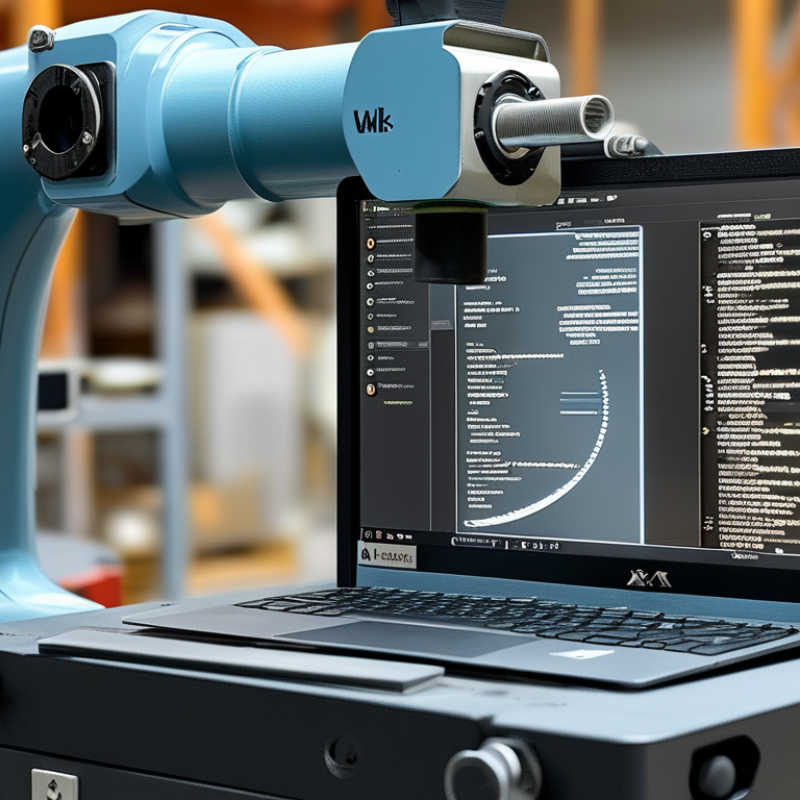
When selecting an X-ray inspection system, understanding the different types is crucial. There are several options available, each tailored for specific applications. The most common types include digital radiography (DR) and computed tomography (CT). Digital radiography offers immediate imaging results, making it ideal for quick inspections. The images are sharp and can be easily analyzed. On the other hand, computed tomography provides 3D imaging. This allows for a more detailed inspection, particularly useful in detecting internal defects.
Another key type is transmission X-ray systems. These are often used in security applications. They scan items as they pass through a conveyor, revealing hidden contents. This system is efficient for high-volume environments. However, the quality of images might not be as detailed as those produced by DR and CT. It's important to consider the specific requirements of your application.
Some systems allow for automatic detection of anomalies. These can increase efficiency, but may not catch all irregularities. Each system comes with its own advantages and drawbacks. It's essential to weigh these factors against your operational needs and the level of accuracy required. Understanding the specific application will guide you toward the best decision.
Choosing the right X-ray inspection system can be challenging. Start by evaluating the type of materials you'll inspect. This impacts the required penetration power and resolution. Systems vary greatly in their capabilities. Understanding your specific needs will guide your selection.
Next, consider the image quality. High-definition images reveal finer details. A system with adjustable contrast enhances the visibility of defects. This feature is crucial for precise analysis. Moreover, speed is another critical factor. Faster scanning times improve efficiency. Yet, ensure that rapid performance does not compromise quality.
Remember to explore add-on features. Automation can streamline processes, but may introduce complexities. Training staff on new systems might take time. Consider user interface design as well. A straightforward interface reduces errors during operation. Assessing these elements will lead you to a suitable choice.
Choosing the right X-ray inspection system starts with a clear understanding of your specific needs. Consider the type of materials you'll inspect. Different industries have unique requirements. For instance, food safety demands high-resolution images to detect contaminants. Manufacturing may focus on structural integrity and flaws. Identify these details early on.
Another vital aspect is the inspection environment. Factors like lighting, space, and accessibility can affect system performance. For example, cramped spaces may limit larger machines. You should also think about your team’s expertise. Can they operate advanced technology effectively? Lack of experience can lead to mistakes in inspection levels or safety protocols.
Don't forget to assess your budget. An expensive system doesn’t always guarantee better performance. Sometimes, cheaper options offer sufficient quality for certain applications. It’s essential to weigh performance against cost. Trial and feedback from your team can highlight gaps in your expectations. Reflecting on these aspects will help you make a more informed decision.
When selecting an X-ray inspection system, budget and cost-effectiveness are crucial. A comprehensive evaluation of costs can help organizations make informed decisions. Consider initial acquisition costs alongside operational expenses. These can include maintenance, software updates, and training for staff. Not all systems will fit all needs, and the cheapest option might not be the most effective in the long run.
Think about long-term value. Some systems are more reliable and require less frequent repairs. Investing in quality can reduce total costs over time. However, this requires balancing immediate financial constraints with potential savings. Assessing how often the system will be used can also guide budgeting decisions.
Reflect on the additional features you might need. Advanced systems may come at a higher price, but they can offer better accuracy. Yet, you must ask yourself if these additional features are necessary for your specific application. Sometimes, simple systems meet the requirement at a lower cost. Understanding your unique needs is vital for cost-effectiveness.
When selecting an X-ray inspection system, comparing various brands and models is crucial. Each brand often has unique features that cater to different industries. For instance, some systems focus on speed, while others prioritize image quality. Knowing the specific needs of your operation can guide you toward the best choice.
Pay attention to resolution and sensitivity when evaluating different models. A clearer image often means better defect detection. However, this can come at a higher cost. Budget constraints might push some facilities to choose lower-spec models that could compromise quality. It's essential to weigh these trade-offs carefully.
User feedback is another vital part of the selection process. Listening to industry colleagues can provide insights that might not be apparent through specifications alone. Some systems are user-friendly, while others might require extensive training. Ultimately, the best choice balances performance, cost, and ease of use.
| Feature | Model A | Model B | Model C |
|---|---|---|---|
| Detection Capability | High resolution | Medium resolution | High resolution |
| Speed of Inspection | Fast (300 items/min) | Medium (200 items/min) | Fast (250 items/min) |
| Software Features | Advanced analytics | Basic analytics | Intermediate analytics |
| Price Range | $50,000 - $70,000 | $30,000 - $50,000 | $40,000 - $60,000 |
| Warranty Period | 3 years | 2 years | 3 years |
| User-Friendliness | Very easy | Moderate | Easy |







