

For support and service of your machinery, Stiles has experts available 24/7 to help reduce downtime and get you back in action.
Technical Support: 616-698-6615
Service & Repairs: 616-698-7500
24/7 Parts: 1-800-727-8780
sale@inlandmachineokc.com
Parts are available from Stiles 24 hours a day, seven days a week, and are shipped from our Grand Rapids, Michigan fulfillment center.
24/7 Parts: 800-727-8780

With a customized Stiles University course, we can provide expert training for your team, on-location. Whether it's programming, operation or maintenance, we want to help you train your personnel to meet your production goals efficiently and effectively.

Experience the trusted workforce development training and machinery knowledge you rely on from Stiles University, now at your convenience. With technology changing every day and new methods being developed constantly, Stiles University Online has the latest information and training content available at your fingertips.
616-698-7500

Do you want to produce more efficiently? Processes and flows are key. We optimize these together with you, re-organize them and make sure that you reduce your lead time and save costs. This enables you to implement customized manufacturing and achieve your business goals.

Industrialized construction is evolving. Automation, robotics and advanced technology are raising the level of productivity, efficiency and precision for builders in North America.

Stiles Machinery is at the forefront of providing technology and machining for producing high quality mass timber. Automated solutions for your mass timber production can increase your manufacturing quality and productivity.

Project management services from Stiles make it easy to streamline your entire project— from concept and consultation to integration and implementation.
For support and service of your machinery, Stiles has experts available 24/7 to help reduce downtime and get you back in action.
Technical Support: 616-698-6615
Service & Repairs: 616-698-7500
24/7 Parts: 1-800-727-8780
sale@inlandmachineokc.com
Parts are available from Stiles 24 hours a day, seven days a week, and are shipped from our Grand Rapids, Michigan fulfillment center.
24/7 Parts: 800-727-8780

With a customized Stiles University course, we can provide expert training for your team, on-location. Whether it's programming, operation or maintenance, we want to help you train your personnel to meet your production goals efficiently and effectively.

Experience the trusted workforce development training and machinery knowledge you rely on from Stiles University, now at your convenience. With technology changing every day and new methods being developed constantly, Stiles University Online has the latest information and training content available at your fingertips.
616-698-7500

Do you want to produce more efficiently? Processes and flows are key. We optimize these together with you, re-organize them and make sure that you reduce your lead time and save costs. This enables you to implement customized manufacturing and achieve your business goals.

Industrialized construction is evolving. Automation, robotics and advanced technology are raising the level of productivity, efficiency and precision for builders in North America.

Stiles Machinery is at the forefront of providing technology and machining for producing high quality mass timber. Automated solutions for your mass timber production can increase your manufacturing quality and productivity.

Project management services from Stiles make it easy to streamline your entire project— from concept and consultation to integration and implementation.
For support and service of your machinery, Stiles has experts available 24/7 to help reduce downtime and get you back in action.
Technical Support: 616-698-6615 Service & Repairs: 616-698-7500 24/7 Parts: 1-800-727-8780
Parts are available from Stiles 24 hours a day, seven days a week, and are shipped from our Grand Rapids, Michigan fulfillment center.
24/7 Parts: 800-727-8780For support and service of your machinery, Stiles has experts available 24/7 to help reduce downtime and get you back in action.
Technical Support: 616-698-6615 Service & Repairs: 616-698-7500 24/7 Parts: 1-800-727-8780
Parts are available from Stiles 24 hours a day, seven days a week, and are shipped from our Grand Rapids, Michigan fulfillment center.
24/7 Parts: 800-727-8780Choosing the right welded wire mesh for your project can be a daunting task. Experts in the industry highlight its importance. John Smith, a renowned specialist in welded wire mesh applications, once stated, "Selecting the correct mesh can make or break a project." This underscores the significance of understanding your specific needs.
welded wire mesh comes in various sizes, gauges, and coatings. These factors greatly impact durability and usability. For instance, a heavier gauge may be ideal for structural support, while a lighter version could suffice for decorative purposes. The choice is crucial, as not every type fits every application.
Incorporating welded wire mesh into your designs can enhance stability and safety. Yet, many overlook essential details during selection. Consider your environment, load requirements, and intended use. Each aspect will shape your final choice. Reflecting on these factors can guide you to make a more informed decision.
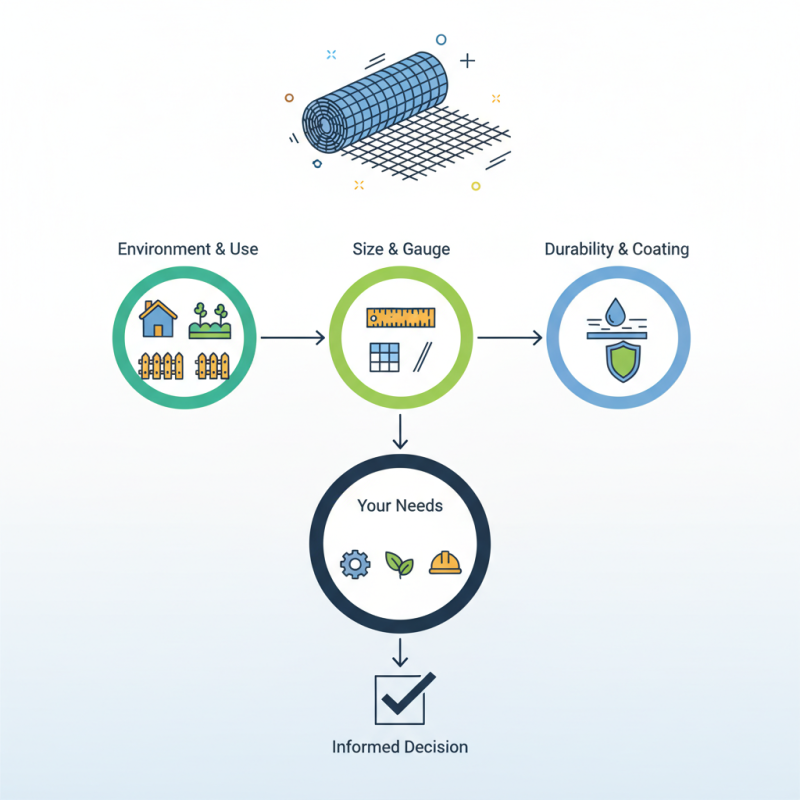
Welded wire mesh comes in various types, each suited for specific applications. Understanding these options is critical for making an informed choice. Common types include standard welded wire mesh, which is ideal for fencing and enclosures, and heavier mesh designed for industrial settings. These options vary greatly in wire gauge and spacing, impacting both strength and flexibility.
Moreover, specific applications demand different mesh characteristics. For landscaping, smaller openings prevent wildlife entry, while larger openings may suffice for agricultural needs. Consideration of the environment is essential. Corrosive conditions may require galvanized or PVC-coated mesh to ensure longevity.
Every choice presents challenges. Overestimating the strength required could lead to unnecessary expenses. Conversely, underestimating might compromise safety and functionality. It’s crucial to evaluate your specific needs thoroughly. Doing so will help in selecting the optimal welded wire mesh for your project, balancing cost with quality and performance.
| Type of Welded Wire Mesh | Wire Gauge | Mesh Size | Material | Common Applications |
|---|---|---|---|---|
| Standard Welded Wire Mesh | 14 | 2" x 4" | Galvanized Steel | Fencing, Garden Support |
| Heavy-Duty Welded Wire Mesh | 10 | 4" x 4" | Stainless Steel | Construction, Animal Enclosures |
| Lightweight Welded Wire Mesh | 16 | 1" x 2" | PVC Coated | Decorative Fencing, Garden Trellis |
| Reinforced Welded Wire Mesh | 12 | 6" x 6" | Galvanized Steel | Concrete Reinforcement, Structural Support |
When selecting welded wire mesh, evaluating material quality and durability is crucial. The best meshes are made from high-quality steel. Look for options that resist rust and corrosion. This is vital for longevity, especially in outdoor applications.
Consider the gauge and weave of the wire. Thicker wires offer more strength and resistance to bending. A tight weave prevents small animals from getting through. However, this can also limit visibility if used for fencing.
Always request samples before making a purchase. Check for any signs of defects or irregularities in the pattern. These factors can indicate poor manufacturing processes. It's essential to reflect on your specific needs. Sometimes, a less durable option may suffice for temporary projects. Quality doesn't always mean high cost. Balancing these aspects will lead to better long-term satisfaction with your choice.
Choosing the right wire gauge for welded wire mesh is crucial for your project’s success. Wire gauge refers to the thickness of the wire used in the mesh. Thicker wires generally provide more strength and durability, while thinner wires are lighter and easier to handle. For heavy-duty applications, like security or fencing, using a lower gauge (thicker wire) is advisable. For lighter applications, such as garden fencing, a higher gauge may suffice.
It’s essential to consider how you will use the mesh. Will it be exposed to the elements? Thicker wire tends to resist rust and bending better. If aesthetics matter, a thinner gauge may appear more refined. However, it might not withstand rough conditions. Reflect on the environment and purpose of your mesh. Many overlook these aspects and face issues later on. Ultimately, evaluating how much stress the wire will endure helps in making the right choice. Balancing strength and flexibility is key.
When selecting the right welded wire mesh, mesh size often dictates performance. The optimal size can depend on various factors, such as the intended application and environmental conditions. For example, a finer mesh size minimizes gaps that could lead to unwanted intrusion or damage, making it suitable for gardening or animal enclosures. On the other hand, heavier gauge wires in larger mesh sizes can offer greater strength for structural applications.
Industry reports highlight that approximately 70% of failures in fencing applications are due to improper mesh size selection. Choosing the wrong mesh can lead to sagging or inadequate safety performance. For instance, a 1-inch mesh might be perfect for enclosing small animals, while a 2-inch mesh may suffice for larger livestock. Evaluating the specific needs and potential stress factors is crucial.
Tips: Test the mesh under real conditions whenever possible. A slight adjustment in mesh size can make a significant difference in durability. Always consult material strength tables to understand variations in performance across different wire gauges. Remember that mesh selection is not just about strength but also about suitability for your specific use case. Each project presents unique challenges, so continuously reflecting on past experiences with mesh can guide better future choices.
When selecting welded wire mesh, environmental factors play a critical role. The mesh must withstand local weather conditions. For instance, in coastal areas, corrosion resistance is crucial due to saltwater exposure. Choosing the right gauge can enhance durability. Thicker wires often provide better strength but may limit flexibility. Think about the long-term effects of your choice.
Maintenance is another key consideration. Some welded wire meshes require more upkeep than others. Regular inspections can prevent rust and damage. When using in landscaping, ensure the mesh is easy to clean. A buildup of dirt can lead to corrosion. Sometimes, people overlook the maintenance needs, resulting in quicker deterioration.
It's also important to reflect on aesthetics. The type of welded wire mesh can impact the visual appeal of a space. Some may prefer a more robust look, while others might want a subtle blend. Balancing practical needs with appearance can be challenging. Not every option fits every situation perfectly; personal preferences will vary. The choices may not always be clear-cut, necessitating thoughtful consideration of both function and form.







