

For support and service of your machinery, Stiles has experts available 24/7 to help reduce downtime and get you back in action.
Technical Support: 616-698-6615
Service & Repairs: 616-698-7500
24/7 Parts: 1-800-727-8780
sale@inlandmachineokc.com
Parts are available from Stiles 24 hours a day, seven days a week, and are shipped from our Grand Rapids, Michigan fulfillment center.
24/7 Parts: 800-727-8780

With a customized Stiles University course, we can provide expert training for your team, on-location. Whether it's programming, operation or maintenance, we want to help you train your personnel to meet your production goals efficiently and effectively.

Experience the trusted workforce development training and machinery knowledge you rely on from Stiles University, now at your convenience. With technology changing every day and new methods being developed constantly, Stiles University Online has the latest information and training content available at your fingertips.
616-698-7500

Do you want to produce more efficiently? Processes and flows are key. We optimize these together with you, re-organize them and make sure that you reduce your lead time and save costs. This enables you to implement customized manufacturing and achieve your business goals.

Industrialized construction is evolving. Automation, robotics and advanced technology are raising the level of productivity, efficiency and precision for builders in North America.

Stiles Machinery is at the forefront of providing technology and machining for producing high quality mass timber. Automated solutions for your mass timber production can increase your manufacturing quality and productivity.

Project management services from Stiles make it easy to streamline your entire project— from concept and consultation to integration and implementation.
For support and service of your machinery, Stiles has experts available 24/7 to help reduce downtime and get you back in action.
Technical Support: 616-698-6615
Service & Repairs: 616-698-7500
24/7 Parts: 1-800-727-8780
sale@inlandmachineokc.com
Parts are available from Stiles 24 hours a day, seven days a week, and are shipped from our Grand Rapids, Michigan fulfillment center.
24/7 Parts: 800-727-8780

With a customized Stiles University course, we can provide expert training for your team, on-location. Whether it's programming, operation or maintenance, we want to help you train your personnel to meet your production goals efficiently and effectively.

Experience the trusted workforce development training and machinery knowledge you rely on from Stiles University, now at your convenience. With technology changing every day and new methods being developed constantly, Stiles University Online has the latest information and training content available at your fingertips.
616-698-7500

Do you want to produce more efficiently? Processes and flows are key. We optimize these together with you, re-organize them and make sure that you reduce your lead time and save costs. This enables you to implement customized manufacturing and achieve your business goals.

Industrialized construction is evolving. Automation, robotics and advanced technology are raising the level of productivity, efficiency and precision for builders in North America.

Stiles Machinery is at the forefront of providing technology and machining for producing high quality mass timber. Automated solutions for your mass timber production can increase your manufacturing quality and productivity.

Project management services from Stiles make it easy to streamline your entire project— from concept and consultation to integration and implementation.
For support and service of your machinery, Stiles has experts available 24/7 to help reduce downtime and get you back in action.
Technical Support: 616-698-6615 Service & Repairs: 616-698-7500 24/7 Parts: 1-800-727-8780
Parts are available from Stiles 24 hours a day, seven days a week, and are shipped from our Grand Rapids, Michigan fulfillment center.
24/7 Parts: 800-727-8780For support and service of your machinery, Stiles has experts available 24/7 to help reduce downtime and get you back in action.
Technical Support: 616-698-6615 Service & Repairs: 616-698-7500 24/7 Parts: 1-800-727-8780
Parts are available from Stiles 24 hours a day, seven days a week, and are shipped from our Grand Rapids, Michigan fulfillment center.
24/7 Parts: 800-727-8780Choosing the right Power Converter can be a daunting task. With the wide range of options available, making an informed decision is crucial. According to John Smith, a leading expert in the power converter industry, "Selecting the right power converter ensures efficiency and safety in various applications." His experience highlights the importance of understanding your specific needs.
Power converters come in different types and capacities. This diversity can complicate the selection process. For instance, portable devices often require compact converters, while larger machinery needs robust options. It is essential to evaluate your device's specifications and power requirements carefully. Ignoring these details can lead to inefficient performance or even damage.
When considering your options, remember that not all converters are created equal. Some may lack crucial safety features. Others might not deliver the expected efficiency. Research and expert advice play a vital role in this decision. Reflecting on previous purchases and their outcomes can also guide you. Ultimately, the right power converter is key to optimizing your device's performance.
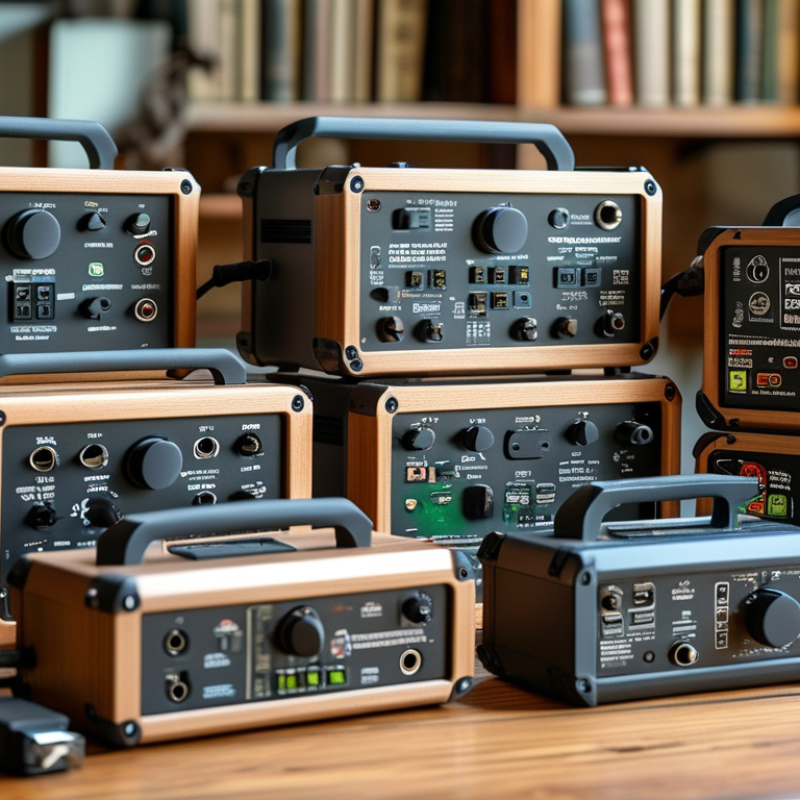
When it comes to power converters, multiple types cater to different needs. Understanding these types is crucial for making an informed choice. One common type is the AC to DC converter, typically used for electronic devices. These converters take alternating current and change it into direct current. This is essential for powering gadgets and appliances that require a stable power supply.
Then there are DC to AC converters, often referred to as inverters. These devices transform direct current back into alternating current. They are frequently found in solar power systems, allowing users to utilize solar energy for home appliances. Additionally, there are step-up and step-down converters. Step-up converters increase voltage levels, while step-down converters reduce them. Choosing between them depends on the specific voltage requirements of your devices.
It's vital to assess the compatibility of a converter with your devices. Mismatched voltages can lead to inefficient performance or damage. Take time to read specifications and manual ratings. Power converters can sometimes be over-specified or under-specified. A converter may offer more capacity than necessary, wasting energy. Alternatively, using a converter that falls short can create serious safety hazards. Reflecting on these aspects helps ensure you select the right power converter for your needs.
When selecting the right power converter, understanding your power requirements is crucial. Consider the devices you plan to use. Each device has specific voltage and wattage needs. For example, laptops typically need between 45 to 90 watts, while small appliances might only require 20 to 50 watts.
Think about where you’ll be using the converter. Are you traveling, or is it for home use? Travelers might need compact, lightweight options. Home users may prioritize more robust converters. Also, examine how often you use each device. If a particular device is used daily, that will impact your choice of a converter.
It's essential to reflect on efficiency and safety as well. An improperly matched converter can lead to device damage. Take the time to research and ensure that the converter’s output matches your devices to avoid any mishaps. Consider potential future needs too. A good converter should accommodate more than your current requirements. This foresight can prevent unnecessary replacements down the line.
When selecting a power converter, understanding voltage and wattage specifications is crucial. Voltage is the electrical pressure that powers devices. Common input voltages include 120V in North America and 230V in Europe. Check the input requirements of your devices before making a choice. A mismatch can lead to device failure or reduced performance.
Wattage measures how much power a device consumes. Always ensure the converter can handle the combined wattage of all devices. For instance, if you have three devices that consume 50W each, choose a converter with at least 150W capacity. Reports indicate that devices often draw more power during startup, so consider a buffer when selecting.
Tips: Always check the wattage limit of your chosen converter. If unsure, consult the manufacturer's specifications. Also, keep in mind that power fluctuations can occur. An underpowered converter may lead to overheating. Regularly evaluate your power needs as your devices or appliances change.
When selecting a power converter, it's essential to consider specific features that fulfill your needs. Look for the input and output voltage range. This ensures compatibility with your devices. Next, check the wattage capacity. A converter that can handle higher wattage provides flexibility for multiple devices.
Another key feature is size and weight. Portable converters are convenient for travel. They should fit easily in a bag without adding much weight. Look for converters with built-in safety features. Fuses and surge protection can prevent damage to your devices. Simplicity in design matters too. A clear interface saves time during setup.
Keep an eye on the manufacturer’s reputation. Reliability often comes from companies with a history in electronics. Gathering user reviews can also provide insight into experiences. However, not every product will perform flawlessly, and encountering issues is common. Understanding the warranty and customer support options can be beneficial if problems arise.
| Feature | Description | Importance | Typical Range |
|---|---|---|---|
| Input Voltage | The voltage required for the converter to operate efficiently. | High | 100V - 240V |
| Output Voltage | The voltage provided by the converter to your devices. | High | 5V - 24V |
| Wattage Rating | The maximum power the converter can supply. | High | 10W - 3000W |
| Efficiency | How well the converter converts input power to output power. | Medium | 80% - 95% |
| Safety Features | Includes fuses, over-voltage protection, and thermal protection. | High | Varies |
| Size and Weight | Physical dimensions and portability of the converter. | Medium | Compact to large |
| Price | Cost relative to features and performance. | High | $10 - $500+ |
When selecting a power converter, safety is paramount. A reliable converter should have built-in protections against short circuits and overheating. Even a minor voltage spike can damage sensitive electronics. Look for products that conform to recognized safety standards. They often feature fuses or automatic shutdowns. These features enhance both performance and safety.
Reliability is another critical factor. It's important to consider the manufacturer's reputation and product reviews. A power converter might promise high efficiency, but if it fails during use, those claims mean little. Real-world experiences shared by users can provide insights into durability. Sometimes, products that seem ideal on paper struggle under actual conditions. Choosing a converter involves not only looking at specifications but also reflecting on long-term performance and user feedback.







