

For support and service of your machinery, Stiles has experts available 24/7 to help reduce downtime and get you back in action.
Technical Support: 616-698-6615
Service & Repairs: 616-698-7500
24/7 Parts: 1-800-727-8780
sale@inlandmachineokc.com
Parts are available from Stiles 24 hours a day, seven days a week, and are shipped from our Grand Rapids, Michigan fulfillment center.
24/7 Parts: 800-727-8780

With a customized Stiles University course, we can provide expert training for your team, on-location. Whether it's programming, operation or maintenance, we want to help you train your personnel to meet your production goals efficiently and effectively.

Experience the trusted workforce development training and machinery knowledge you rely on from Stiles University, now at your convenience. With technology changing every day and new methods being developed constantly, Stiles University Online has the latest information and training content available at your fingertips.
616-698-7500

Do you want to produce more efficiently? Processes and flows are key. We optimize these together with you, re-organize them and make sure that you reduce your lead time and save costs. This enables you to implement customized manufacturing and achieve your business goals.

Industrialized construction is evolving. Automation, robotics and advanced technology are raising the level of productivity, efficiency and precision for builders in North America.

Stiles Machinery is at the forefront of providing technology and machining for producing high quality mass timber. Automated solutions for your mass timber production can increase your manufacturing quality and productivity.

Project management services from Stiles make it easy to streamline your entire project— from concept and consultation to integration and implementation.
For support and service of your machinery, Stiles has experts available 24/7 to help reduce downtime and get you back in action.
Technical Support: 616-698-6615
Service & Repairs: 616-698-7500
24/7 Parts: 1-800-727-8780
sale@inlandmachineokc.com
Parts are available from Stiles 24 hours a day, seven days a week, and are shipped from our Grand Rapids, Michigan fulfillment center.
24/7 Parts: 800-727-8780

With a customized Stiles University course, we can provide expert training for your team, on-location. Whether it's programming, operation or maintenance, we want to help you train your personnel to meet your production goals efficiently and effectively.

Experience the trusted workforce development training and machinery knowledge you rely on from Stiles University, now at your convenience. With technology changing every day and new methods being developed constantly, Stiles University Online has the latest information and training content available at your fingertips.
616-698-7500

Do you want to produce more efficiently? Processes and flows are key. We optimize these together with you, re-organize them and make sure that you reduce your lead time and save costs. This enables you to implement customized manufacturing and achieve your business goals.

Industrialized construction is evolving. Automation, robotics and advanced technology are raising the level of productivity, efficiency and precision for builders in North America.

Stiles Machinery is at the forefront of providing technology and machining for producing high quality mass timber. Automated solutions for your mass timber production can increase your manufacturing quality and productivity.

Project management services from Stiles make it easy to streamline your entire project— from concept and consultation to integration and implementation.
For support and service of your machinery, Stiles has experts available 24/7 to help reduce downtime and get you back in action.
Technical Support: 616-698-6615 Service & Repairs: 616-698-7500 24/7 Parts: 1-800-727-8780
Parts are available from Stiles 24 hours a day, seven days a week, and are shipped from our Grand Rapids, Michigan fulfillment center.
24/7 Parts: 800-727-8780For support and service of your machinery, Stiles has experts available 24/7 to help reduce downtime and get you back in action.
Technical Support: 616-698-6615 Service & Repairs: 616-698-7500 24/7 Parts: 1-800-727-8780
Parts are available from Stiles 24 hours a day, seven days a week, and are shipped from our Grand Rapids, Michigan fulfillment center.
24/7 Parts: 800-727-8780In the world of Pla 3d Printing, choosing the right filament is crucial. Industry expert Dr. Jenny Smith emphasizes, "Quality filament is key to achieving the best prints." Her insight highlights the importance of understanding filament properties.
PLA 3D printing filaments come in various options, each with their unique characteristics. Factors like color, diameter, and brand can significantly impact print quality. Most users often overlook these details. Without proper consideration, prints may warp or fail entirely.
Selecting the best PLA filament requires careful thought. It is not just about appearance. You must assess compatibility with your 3D printer and project needs. While many options exist, finding the right balance is essential for successful 3D printing outcomes.
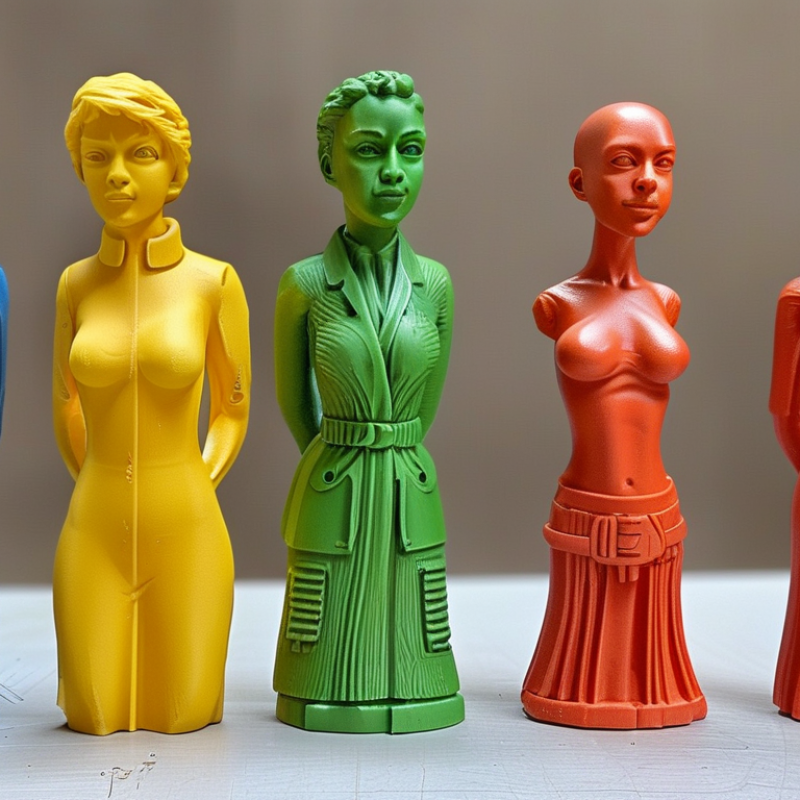
When selecting the right PLA filament, understanding its various types and properties is essential. PLA, or Polylactic Acid, is a biodegradable thermoplastic derived from renewable resources like cornstarch. This eco-friendly material is popular among beginners and experienced users alike due to its ease of printing and low warping tendencies. It's crucial to note that not all PLA filaments behave the same way. Some are designed for improved strength, while others may emphasize flexibility or enhanced colors.
There are several types of PLA on the market. Standard PLA offers ease of use for most prints. High-temperature PLA can withstand greater heat, making it suitable for functional parts. Specialty PLAs, like those infused with wood or metal, can provide unique finishes but may require adjusted settings. The choice depends on your project needs. Keep in mind, some filaments can be tricky. Layer adhesion may vary, and some colors might need more care to achieve a smooth final product. Understanding these properties can save time and frustration in your printing journey.
When selecting PLA 3D printing filament, evaluating diameter and tolerance is crucial. Standard diameters typically range from 1.75 mm to 2.85 mm. Maintaining precise diameter is essential for consistent extrusion. According to a report from the Additive Manufacturing Industry, a variance of just 0.05 mm can lead to issues such as under-extrusion or clogs. This precision ensures smoother prints and fewer workflow disruptions.
Tolerance, or the allowable deviation from the nominal diameter, also plays a significant role. Most quality filaments come with a tolerance range of ±0.02 mm. This specification impacts the filament's flow rate and bonding during printing. Poor tolerance can result in uneven layers or weak adhesion between material layers. A study indicated that 30% of failed prints stem from incorrect filament diameter and tolerance. This highlights the importance of sourcing reliable materials.
In your printing endeavors, consider testing multiple filament options. Monitor how variations in diameter affect your printer’s performance. Some users find that not all brands deliver consistently on their diameter claims. Collecting data on your own experiences can help refine your choices. Collaboration with other 3D printing enthusiasts can also provide insights into these nuances.
When selecting PLA 3D printing filaments, color compatibility and aesthetics hold significant importance. Various studies indicate that visual appeal can affect user decision-making. In one survey, 48% of respondents stated that color influenced their perception of product quality. Choosing the right colors can elevate your 3D printed creations, enhancing their functionality and appeal. Bright and vibrant colors tend to attract attention more effectively than dull shades.
Color compatibility can also impact the final product's usability. For instance, if you’re creating prototypes for a client, matching their branding colors can foster better communication. It’s essential to consider how different colors interact with one another. Some pigments may cause unexpected variations, affecting the final look. Conducting small test prints can reveal how colors blend and respond to light.
A practical tip: When uncertain about color choices, refer to a color wheel. This tool helps visualize complementary colors that enhance your design. Experimenting with different shades within the same color family can lead to surprising results. Remember, aesthetics aren’t just about beauty; they influence perceptions of professionalism and functionality. Always be ready to reassess color choices based on the feedback you receive.
When selecting PLA 3D printing filament, assessing its performance is crucial. Strength, flexibility, and impact resistance significantly affect the final product's quality. According to a study by the Additive Manufacturing Journal, strong PLA can achieve tensile strengths of around 50 MPa. This makes it a reliable choice for many projects requiring durability.
Flexibility can greatly influence how a print behaves under stress. Many fine-grade PLA filaments can bend but not break, allowing for intricate designs and larger prints. The International Journal of Additive Manufacturing notes that the best-performing PLA filaments exhibit a modulus of elasticity ranging from 2,700 to 3,200 MPa. This indicates a balance between rigidity and flexibility, making them suitable for functional prototypes.
Impact resistance is another key factor. While standard PLA has decent resistance, blends with other materials can enhance this feature. Research highlights that adding modifiers can increase impact strength by up to 30%. This makes tailored filament choices essential for specific applications. A thorough evaluation of these properties can lead to better print outcomes and improved project satisfaction.
When selecting PLA filaments, cost factors and brand reputation play a critical role. A recent industry analysis indicates that prices for PLA can vary significantly, ranging from $15 to $40 per kilogram. This difference hinges on raw material quality, production techniques, and whether the filament is specialty or standard-grade. High-quality PLA often offers more consistent extrusion, making it a preferred choice for serious makers.
Research from various manufacturing reports suggests that brand reputation impacts perceived reliability and performance. Many users gravitate towards brands with established histories of quality. However, newer companies can offer competitive products, sometimes at lower prices. It's essential to look for user testimonials and reviews to gauge performance and consistency.
When you evaluate these aspects, consider balancing cost with quality. One helpful strategy is to start with a budget-friendly option while assessing its performance. If the results are satisfactory, you can invest in premium options later. Remember, filament performance can often vary from spool to spool, even within the same brand. Testing different brands may reveal surprising findings that challenge assumptions about reputation versus performance.







