
-
-
-
-
-
-

With a customized Stiles University course, we can provide expert training for your team, on-location. Whether it's programming, operation or maintenance, we want to help you train your personnel to meet your production goals efficiently and effectively.
-

Experience the trusted workforce development training and machinery knowledge you rely on from Stiles University, now at your convenience. With technology changing every day and new methods being developed constantly, Stiles University Online has the latest information and training content available at your fingertips.
-
-
-

Do you want to produce more efficiently? Processes and flows are key. We optimize these together with you, re-organize them and make sure that you reduce your lead time and save costs. This enables you to implement customized manufacturing and achieve your business goals.
-

Industrialized construction is evolving. Automation, robotics and advanced technology are raising the level of productivity, efficiency and precision for builders in North America.
-

Stiles Machinery is at the forefront of providing technology and machining for producing high quality mass timber. Automated solutions for your mass timber production can increase your manufacturing quality and productivity.
-

Project management services from Stiles make it easy to streamline your entire project— from concept and consultation to integration and implementation.
-



-
-
-
-
-
-
With a customized Stiles University course, we can provide expert training for your team, on-location. Whether it's programming, operation or maintenance, we want to help you train your personnel to meet your production goals efficiently and effectively.
-
Experience the trusted workforce development training and machinery knowledge you rely on from Stiles University, now at your convenience. With technology changing every day and new methods being developed constantly, Stiles University Online has the latest information and training content available at your fingertips.
-
-
-
Do you want to produce more efficiently? Processes and flows are key. We optimize these together with you, re-organize them and make sure that you reduce your lead time and save costs. This enables you to implement customized manufacturing and achieve your business goals.
-
Industrialized construction is evolving. Automation, robotics and advanced technology are raising the level of productivity, efficiency and precision for builders in North America.
-
Stiles Machinery is at the forefront of providing technology and machining for producing high quality mass timber. Automated solutions for your mass timber production can increase your manufacturing quality and productivity.
-
Project management services from Stiles make it easy to streamline your entire project— from concept and consultation to integration and implementation.
-
How to Choose the Best Low Flatbed Transport Semi-Trailer?
Choosing the right Low Flatbed Transport Semi-Trailer can be a daunting task. Experts emphasize the importance of understanding your specific needs. Alex Thompson, a seasoned logistics consultant, once stated, “The right trailer makes all the difference in transporting heavy loads efficiently.”
Low Flatbed Transport Semi-Trailers are versatile. They support various cargo types, from machinery to lumber. However, their selection should not be taken lightly. Consider factors such as weight capacity, dimensions, and durability. The market offers a wide range of options, each with unique specifications.
Moreover, potential buyers should reflect on their operational needs. Buying the most expensive model does not guarantee efficiency. Sometimes, a simpler design may suit better. Taking the time to assess different brands and models is crucial. After all, ensuring that your trailer meets safety and performance standards can impact your logistics strategy significantly.
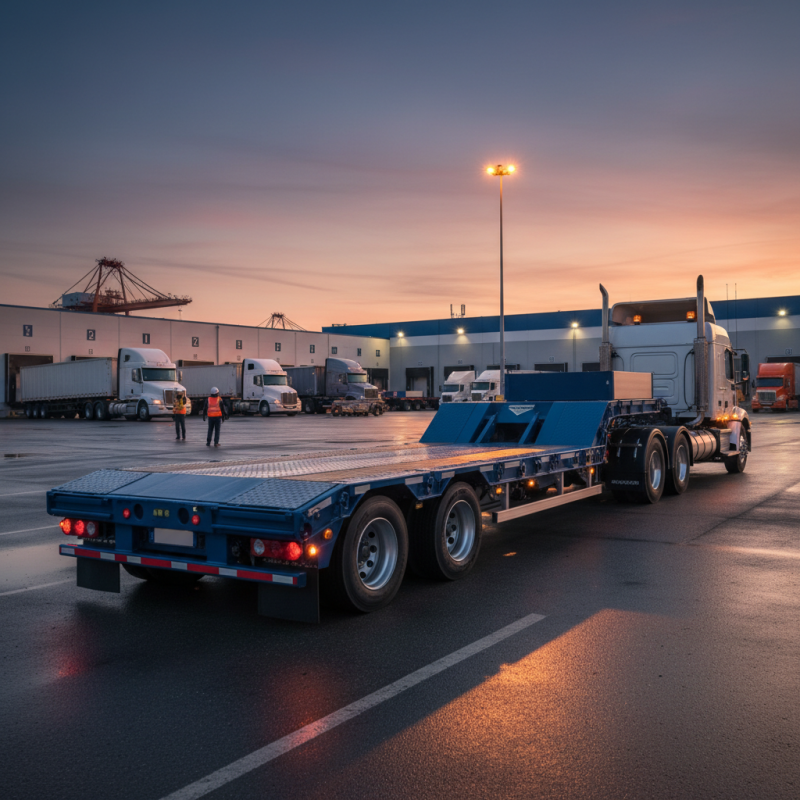
Criteria for Selecting Low Flatbed Transport Semi-Trailers
Selecting the right low flatbed transport semi-trailer involves careful consideration of several important criteria. Weight distribution is a key factor. Proper weight distribution ensures stability during transportation. Overloading one side can lead to accidents. Check the trailer's load capacity and ensure it meets your specific needs.
Material and construction quality are also crucial. Look for trailers made from durable materials that can withstand harsh conditions. Steel and aluminum are popular choices. The quality of welds and joints plays a significant role in longevity. A poorly constructed trailer may lead to costly repairs.
Lastly, consider the trailer design and compatibility with your vehicles. Make sure the trailer height suits your loading and unloading needs. Some designs may offer better aerodynamics or additional features. Pay attention to the trailer's braking and suspension systems too. They impact overall safety and performance. Ignoring these details can result in operational inefficiencies.