
For support and service of your machinery, Stiles has experts available 24/7 to help reduce downtime and get you back in action.
Technical Support: 616-698-6615
Service & Repairs: 616-698-7500
24/7 Parts: 1-800-727-8780
sale@inlandmachineokc.com
Parts are available from Stiles 24 hours a day, seven days a week, and are shipped from our Grand Rapids, Michigan fulfillment center.
24/7 Parts: 800-727-8780

With a customized Stiles University course, we can provide expert training for your team, on-location. Whether it's programming, operation or maintenance, we want to help you train your personnel to meet your production goals efficiently and effectively.

Experience the trusted workforce development training and machinery knowledge you rely on from Stiles University, now at your convenience. With technology changing every day and new methods being developed constantly, Stiles University Online has the latest information and training content available at your fingertips.
616-698-7500

Do you want to produce more efficiently? Processes and flows are key. We optimize these together with you, re-organize them and make sure that you reduce your lead time and save costs. This enables you to implement customized manufacturing and achieve your business goals.

Industrialized construction is evolving. Automation, robotics and advanced technology are raising the level of productivity, efficiency and precision for builders in North America.

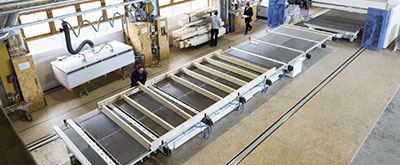
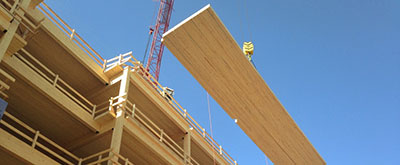
Stiles Machinery is at the forefront of providing technology and machining for producing high quality mass timber. Automated solutions for your mass timber production can increase your manufacturing quality and productivity.

Project management services from Stiles make it easy to streamline your entire project— from concept and consultation to integration and implementation.
For support and service of your machinery, Stiles has experts available 24/7 to help reduce downtime and get you back in action.
Technical Support: 616-698-6615
Service & Repairs: 616-698-7500
24/7 Parts: 1-800-727-8780
sale@inlandmachineokc.com
Parts are available from Stiles 24 hours a day, seven days a week, and are shipped from our Grand Rapids, Michigan fulfillment center.
24/7 Parts: 800-727-8780

With a customized Stiles University course, we can provide expert training for your team, on-location. Whether it's programming, operation or maintenance, we want to help you train your personnel to meet your production goals efficiently and effectively.

Experience the trusted workforce development training and machinery knowledge you rely on from Stiles University, now at your convenience. With technology changing every day and new methods being developed constantly, Stiles University Online has the latest information and training content available at your fingertips.
616-698-7500

Do you want to produce more efficiently? Processes and flows are key. We optimize these together with you, re-organize them and make sure that you reduce your lead time and save costs. This enables you to implement customized manufacturing and achieve your business goals.

Industrialized construction is evolving. Automation, robotics and advanced technology are raising the level of productivity, efficiency and precision for builders in North America.

Stiles Machinery is at the forefront of providing technology and machining for producing high quality mass timber. Automated solutions for your mass timber production can increase your manufacturing quality and productivity.

Project management services from Stiles make it easy to streamline your entire project— from concept and consultation to integration and implementation.
For support and service of your machinery, Stiles has experts available 24/7 to help reduce downtime and get you back in action.
Technical Support: 616-698-6615 Service & Repairs: 616-698-7500 24/7 Parts: 1-800-727-8780
Parts are available from Stiles 24 hours a day, seven days a week, and are shipped from our Grand Rapids, Michigan fulfillment center.
24/7 Parts: 800-727-8780For support and service of your machinery, Stiles has experts available 24/7 to help reduce downtime and get you back in action.
Technical Support: 616-698-6615 Service & Repairs: 616-698-7500 24/7 Parts: 1-800-727-8780
Parts are available from Stiles 24 hours a day, seven days a week, and are shipped from our Grand Rapids, Michigan fulfillment center.
24/7 Parts: 800-727-8780Choosing the best taped litz wire suppliers in China starts with a clear view of the application. High-frequency transformers, inductors, and charging equipment can demand different strand counts, insulation systems, and winding tolerances. The International Energy Agency reported nearly 14 million electric car sales worldwide in 2023, about 18% of total car sales (Global EV Outlook 2024). This growth supports demand for power electronics, though it does not measure litz wire demand directly. That distinction matters.
The wider wire and cable market offers useful context, not a supplier scorecard. Grand View Research valued that market at approximately USD 220.9 billion in 2023 and projected a 4.5% compound annual growth rate from 2024 to 2030. For buyers, the practical question is whether a manufacturer can turn specifications into repeatable production. Ask for strand construction, tape material, coverage or overlap details, dimensional tolerances, and inspection records. Then compare sample performance under your own operating frequency, temperature, and winding conditions. A neat sample is not proof of stable production. It is only a start.
This guide examines how to assess Chinese suppliers of taped litz wire, from engineering support and customization to quality controls and delivery reliability. It avoids treating price or catalog breadth as proof of quality. Some supplier claims may be difficult to verify from a website alone; that is an uncomfortable but useful reminder. Request traceable test data, clarify acceptance criteria, and confirm that samples match production specifications before making a decision.
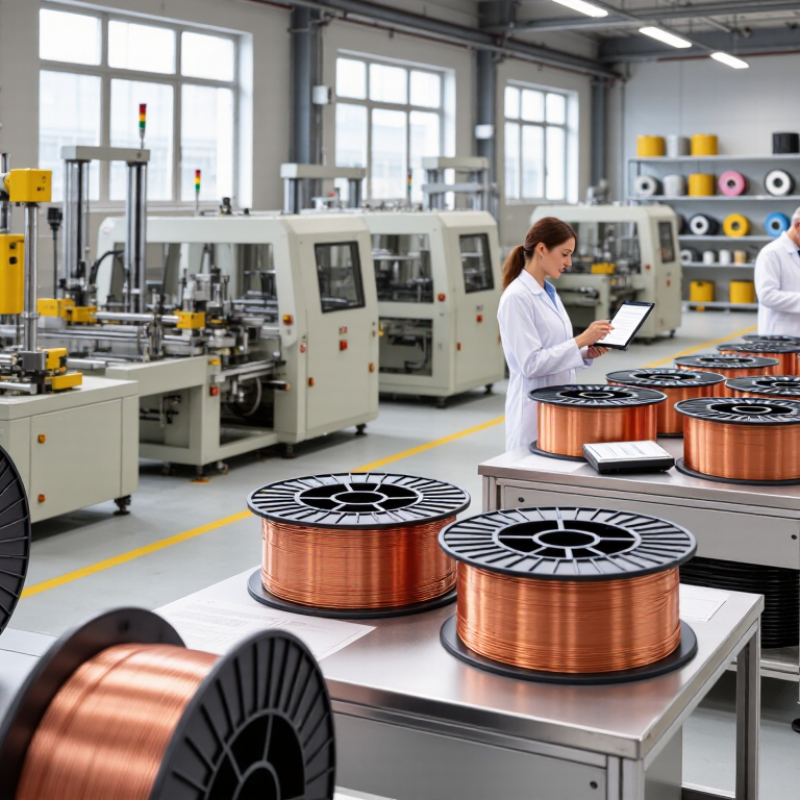
Taped Litz wire should be specified by more than its outside diameter. Record the strand count and each strand’s diameter, because these determine how the conductor packs into a coil. A higher count is not always better. Very fine strands can improve flexibility, but they also add manufacturing complexity and may complicate termination. Ask suppliers for a construction drawing and measured conductor dimensions, not just a nominal size.
Insulation matters just as much. Specify the strand coating, its thermal class, and the required voltage or dielectric test. Then define the tape material, number of layers, overlap, and winding direction. These details affect bendability and coverage around corners. One gap in many purchase specifications is the lack of a clear acceptance limit for tape overlap; it is worth defining before samples are approved.
Market context reinforces why careful sourcing matters. Grand View Research estimated the global magnet wire market at about US$32.1 billion in 2023, across applications with different electrical and thermal demands. That figure is not specific to Litz wire, so it should not be treated as a demand forecast for taped constructions. When evaluating Chinese suppliers, compare samples against the same drawing and test conditions. Ask for traceable inspection records. Then check whether the finished bundle still fits the intended winding window.
For taped litz wire, start by comparing strand diameter with copper skin depth. NBS Handbook 100, Copper Wire Tables, gives the 100% IACS copper conductivity reference as about 58 MS/m at 20°C. Using that value in the standard skin-depth equation gives approximately 0.21 mm at 100 kHz and 0.066 mm at 1 MHz. These figures are calculated benchmarks, not guaranteed operating limits. Temperature and conductor geometry matter.
At 1 MHz, a 0.10 mm strand exceeds the calculated skin depth, so ask suppliers for AC-loss test results at your intended frequency.
That matters.
Request strand diameter, strand count, lay length, insulation details, and tape overlap dimensions. IEC 60317 specifications can help when checking winding-wire insulation characteristics, but they do not replace application-specific testing. A supplier’s drawing should show the finished taped profile, not only the bare bundle.
Skin depth is only part of the design. Proximity effects between strands, winding layout, and operating temperature can change performance. I would not reject a construction based on one number alone. Ask for measured resistance or loss data under stated test conditions, then compare samples using the same fixture. The awkward detail is that a neat-looking tape wrap may still create uneven build or poor winding fit. Check both.
When comparing taped Litz wire suppliers in China, treat ISO 9001 as evidence of a managed quality system, not a product guarantee. It should support controlled procedures, corrective actions, document updates, and traceable production records. Ask for a current certificate and check that its scope covers the relevant manufacturing activities. Not proof by itself.
IEC 60317 is a series, so the applicable part depends on the insulated wire construction and specification. Taped Litz wire combines multiple strands and a wrapped layer; the finished assembly may also need customer-agreed requirements. Ask the supplier to identify relevant clauses and explain any exclusions. Clear answers matter.
Look closely. Request production records for strand count, finished dimensions, tape overlap, and electrical tests. Check how measuring equipment is calibrated and how each lot can be traced to materials and inspection results. Compare recent batch reports with a sample, not only a qualification report. A clean certificate can feel reassuring, but I would still ask how operators detect uneven wrapping or damaged insulation during a real production run. Small gaps in the paperwork deserve a direct question, not an automatic rejection.
Use these ISO 9001:2015 quality-management-system clauses as an audit checklist when evaluating suppliers. Confirm the applicable IEC 60317 part and product-specific requirements for the wire being purchased; requirements vary by wire type.
How to read this chart: Bar heights show clause numbers, not supplier scores or rankings. Assess supplier evidence for each relevant clause, then verify the applicable IEC 60317 specification and agreed customer requirements.
References: ISO 9001:2015, clauses 4–10; IEC 60317 series, applicable part to be selected for the product.
The best taped Litz wire supplier is not always the one offering the widest catalog. Compare strand diameters, strand counts, and available bundle sizes against your coil design. Ask whether the stated range is routinely produced or only possible on request. Small differences matter: a bundle that fits the drawing may still be difficult to wind consistently.
Tape coverage deserves a clear specification. Request the tape material, width, overlap percentage, and finished outside diameter. Check how the seam and coverage are controlled along the wire, not just on a short sample. Test evidence should include dated results tied to a batch, with relevant checks such as dimensions, continuity, and insulation withstand. A polished certificate alone is not enough. I would also compare sample measurements with the production report; that step is easy to overlook.
Tips: Send the same drawing and test criteria to each supplier. Ask for a marked sample cross-section and an explanation of acceptable tolerances. If coverage is described only as “full,” ask what that means in measurable terms. A supplier’s answers may reveal more than its catalog.
Ranking taped Litz wire suppliers should start with evidence, not polished brochures. Request samples made to the same strand count, strand diameter, tape overlap, and finished dimensions as your intended order. Small differences matter. Measure the finished diameter and inspect tape coverage under consistent lighting. Then check electrical resistance, insulation integrity, and winding behavior using your own process conditions. Record the test setup; results without temperature, frequency, and fixture details are difficult to compare.
Do not accept a sample that performs well only on a bench. Run a short trial on the actual bobbin or winding head, noting fraying, stiffness, and tape movement at bends. Ask for a written specification and lot traceability. One imperfect sample does not prove poor production, but unexplained variation deserves attention. That distinction is easy to miss.
Capacity needs equally concrete checks. Confirm available taping lines, shift patterns, monthly output for your specific construction, lead-time history, and how rejected material is handled. Stated capacity may combine several product types. Ask for recent, redacted export references, repeat-order examples, packaging photos, and shipping records with customer details removed. Verify that references involve comparable wire, not simply any export. Keep rankings provisional until sample results, production evidence, and export experience agree. A slow reply is a signal, not a verdict.
| Ranking Dimension | What to Verify | Evidence to Request | Suggested Score | Ranking Rule |
|---|---|---|---|---|
| Sample performance | Check the delivered sample against the buyer’s drawing and agreed specification, including conductor size, strand count, enamel insulation, tape material, tape coverage, finished dimensions, and electrical requirements. | Dimension and resistance test results; sample identification and construction details; inspection records; and test results for any agreed dielectric, solderability, or thermal requirements. | 40 points | Score against the same written specification for every supplier. Do not rank a sample as compliant based on appearance alone. |
| Electrical and dimensional consistency | Compare measured values across multiple pieces from the sample lot. Acceptance limits should come from the purchase specification or approved drawing; there is no single universal limit for all taped Litz wire constructions. | Raw measurement data, test methods, instrument calibration status, sample quantity, and the stated acceptance criteria. | 15 of 40 sample points | Give higher scores to complete, repeatable results that meet the agreed limits. Record missing test data as unverified rather than assuming a pass. |
| Tape construction and workmanship | Inspect tape material, wrap direction, overlap or coverage, surface condition, and consistency along the sample. Confirm that the construction matches the drawing. | Construction specification, marked sample, inspection photographs, and dimensional checks at multiple locations. | 10 of 40 sample points | Score documented conformity to the specified construction; do not infer tape material or coverage from a product description alone. |
| Application-specific tests | Test the properties relevant to the intended winding process and end use, such as bend or winding behavior, solderability, or dielectric performance when these are specified. | Test procedure, conditions, acceptance criteria, results, and traceable sample identification. | 15 of 40 sample points | Apply identical test conditions to all candidates. A test that was not requested or performed should be marked “not verified.” |
| Production capacity | Confirm capacity for the required construction, not just total wire output. Review available equipment, shift arrangements, current loading, lead time, and the ability to maintain consistent taping and inspection. | Product-specific capacity statement; recent, redacted production records; equipment list; capacity calculation and assumptions; and a production schedule for the requested order size. | 30 points | Rank using demonstrated, available capacity for the target specification and delivery window. A headline capacity figure without supporting records is unverified. |
| Quality controls and traceability | Check how incoming materials, in-process dimensions, finished-product tests, nonconformities, and lot identification are controlled. | Quality procedures, a redacted inspection report, sample lot traceability records, and corrective-action examples where available. | 10 points | Score the evidence and consistency of the controls. Treat certificates as supporting documents, not proof that a specific sample or production lot meets requirements. |
| Export references | Verify relevant experience supplying comparable wire constructions and fulfilling export orders to the buyer’s target market. | Redacted bills of lading, commercial documents, customer references with permission, or other independently checkable evidence showing product type, shipment timing, and destination. | 20 points | Give credit only for references that can be checked and are relevant to the product and market. Protect customer confidentiality; do not treat an unsupported claim as verified. |
| Final comparison | Compare all candidates using the same specification, sample tests, capacity definition, evidence requirements, and scoring weights. | Completed scorecard, dated evidence log, unresolved questions, and results of any follow-up sample or factory checks. | 100 points total | Rank only after verification. If evidence is unavailable, label the result “insufficient evidence” rather than presenting an unverified supplier ranking. |
Note: This is a supplier-evaluation framework, not a list of verified supplier results. Product limits and test methods should be agreed in the buyer’s specification; supplier-specific performance, capacity, and export history require independent verification.