
-
-
-
-
-
-

With a customized Stiles University course, we can provide expert training for your team, on-location. Whether it's programming, operation or maintenance, we want to help you train your personnel to meet your production goals efficiently and effectively.
-

Experience the trusted workforce development training and machinery knowledge you rely on from Stiles University, now at your convenience. With technology changing every day and new methods being developed constantly, Stiles University Online has the latest information and training content available at your fingertips.
-
-
-

Do you want to produce more efficiently? Processes and flows are key. We optimize these together with you, re-organize them and make sure that you reduce your lead time and save costs. This enables you to implement customized manufacturing and achieve your business goals.
-

Industrialized construction is evolving. Automation, robotics and advanced technology are raising the level of productivity, efficiency and precision for builders in North America.
-

Stiles Machinery is at the forefront of providing technology and machining for producing high quality mass timber. Automated solutions for your mass timber production can increase your manufacturing quality and productivity.
-

Project management services from Stiles make it easy to streamline your entire project— from concept and consultation to integration and implementation.
-



-
-
-
-
-
-
With a customized Stiles University course, we can provide expert training for your team, on-location. Whether it's programming, operation or maintenance, we want to help you train your personnel to meet your production goals efficiently and effectively.
-
Experience the trusted workforce development training and machinery knowledge you rely on from Stiles University, now at your convenience. With technology changing every day and new methods being developed constantly, Stiles University Online has the latest information and training content available at your fingertips.
-
-
-
Do you want to produce more efficiently? Processes and flows are key. We optimize these together with you, re-organize them and make sure that you reduce your lead time and save costs. This enables you to implement customized manufacturing and achieve your business goals.
-
Industrialized construction is evolving. Automation, robotics and advanced technology are raising the level of productivity, efficiency and precision for builders in North America.
-
Stiles Machinery is at the forefront of providing technology and machining for producing high quality mass timber. Automated solutions for your mass timber production can increase your manufacturing quality and productivity.
-
Project management services from Stiles make it easy to streamline your entire project— from concept and consultation to integration and implementation.
-
Best Floating Dock Sections for Your Waterfront Projects?
When embarking on waterfront projects, selecting the right Floating Dock Sections is crucial. John Smith, a leading expert in marine constructions, emphasizes, “Quality sections make all the difference.” This principle highlights the importance of choosing durable and reliable materials.
Floating Dock Sections vary in design and material. Each choice affects stability, maintenance, and aesthetic appeal. For instance, plastic sections are lightweight, while aluminum offers sturdiness. It's important to assess your specific needs carefully. Overlooking these details can lead to costly mistakes.
Many projects aim for visual appeal and functionality. However, some may focus solely on aesthetics, forgetting the structural integrity. A solid foundation is paramount. Remember, the right Floating Dock Sections ensure safety and longevity in any waterfront setup. Reflecting on these choices can lead to better decision-making.
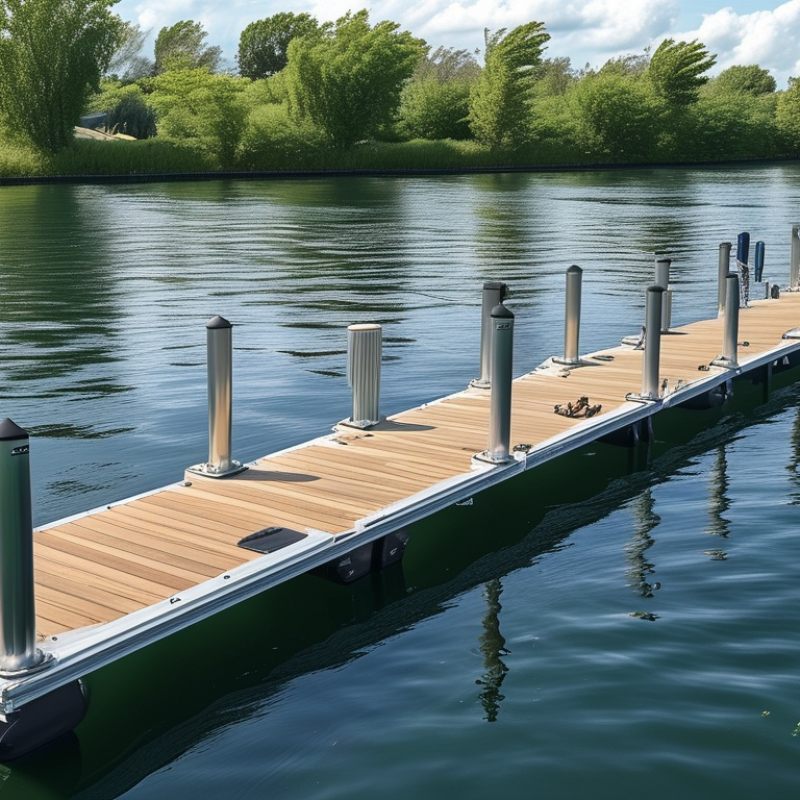
Types of Floating Dock Sections Ideal for Waterfront Projects
Choosing the right floating dock sections is crucial for waterfront projects. Different types offer unique advantages. Common options include modular, ramp, and barge-style docks. Each has its benefits depending on your project needs.
Modular floating docks are popular for their versatility. They allow for easy expansion and reconfiguration. This adaptability is essential for changing water levels. According to industry reports, they can withstand a range of environmental conditions. The standard life expectancy is around 25 years, making them a reliable choice.
Ramp docks provide additional access for smaller watercraft. They are ideal for shallow areas where traditional docks may not suffice. However, they require careful installation. Inadequate stability can lead to safety risks. Barge-style docks, while sturdy, can be costly and require regular maintenance. This can be a drawback for budget-constrained projects. Remember that each option demands thorough planning and consideration. Prior consultations with experts can help ensure better outcomes.
Best Floating Dock Sections for Your Waterfront Projects
| Dock Type | Material | Weight Capacity (lbs) | Dimensions (ft) | Ideal Use |
|---|---|---|---|---|
| Modular Floating Dock | High-density Polyethylene | 1,500 | 5 x 10 | Recreation, Boating |
| Aluminum Floating Dock | Aluminum | 2,000 | 4 x 12 | Commercial, Heavy Use |
| Composite Floating Dock | Composite Material | 1,200 | 6 x 10 | Residential, Light Use |
| Pontoon Dock | PVC & Foam | 1,800 | 8 x 8 | Fishing, Water Sports |
| Wooden Floating Dock | Pressure-treated Lumber | 1,500 | 6 x 12 | Aesthetic, Residential |