
-
-
-
-
-
-

With a customized Stiles University course, we can provide expert training for your team, on-location. Whether it's programming, operation or maintenance, we want to help you train your personnel to meet your production goals efficiently and effectively.
-

Experience the trusted workforce development training and machinery knowledge you rely on from Stiles University, now at your convenience. With technology changing every day and new methods being developed constantly, Stiles University Online has the latest information and training content available at your fingertips.
-
-
-

Do you want to produce more efficiently? Processes and flows are key. We optimize these together with you, re-organize them and make sure that you reduce your lead time and save costs. This enables you to implement customized manufacturing and achieve your business goals.
-

Industrialized construction is evolving. Automation, robotics and advanced technology are raising the level of productivity, efficiency and precision for builders in North America.
-

Stiles Machinery is at the forefront of providing technology and machining for producing high quality mass timber. Automated solutions for your mass timber production can increase your manufacturing quality and productivity.
-

Project management services from Stiles make it easy to streamline your entire project— from concept and consultation to integration and implementation.
-



-
-
-
-
-
-
With a customized Stiles University course, we can provide expert training for your team, on-location. Whether it's programming, operation or maintenance, we want to help you train your personnel to meet your production goals efficiently and effectively.
-
Experience the trusted workforce development training and machinery knowledge you rely on from Stiles University, now at your convenience. With technology changing every day and new methods being developed constantly, Stiles University Online has the latest information and training content available at your fingertips.
-
-
-
Do you want to produce more efficiently? Processes and flows are key. We optimize these together with you, re-organize them and make sure that you reduce your lead time and save costs. This enables you to implement customized manufacturing and achieve your business goals.
-
Industrialized construction is evolving. Automation, robotics and advanced technology are raising the level of productivity, efficiency and precision for builders in North America.
-
Stiles Machinery is at the forefront of providing technology and machining for producing high quality mass timber. Automated solutions for your mass timber production can increase your manufacturing quality and productivity.
-
Project management services from Stiles make it easy to streamline your entire project— from concept and consultation to integration and implementation.
-
What is the Best Dynamic Gas Distribution Instrument for Buyers?
In the field of gas distribution, choosing the right Dynamic Gas Distribution Instrument is crucial. The market has shown that effective distribution methods can reduce operational costs by up to 25%. Furthermore, accurate gas measurement is essential for safety and efficiency. A recent industry report reveals that over 40% of companies face losses due to inefficient gas distribution systems.
These instruments play a vital role in various sectors, including energy, manufacturing, and research. While numerous options exist, the complexity of technology can be overwhelming. Buyers must consider factors like measurement accuracy, durability, and ease of integration with existing systems. Each choice carries implications for operational effectiveness.
Reflecting on the available options, one realizes that not every tool meets the specific needs of all users. A balance between cost and performance must guide purchasing decisions. With evolving technology, staying informed about the latest innovations is essential for making educated choices. Thus, the demand for reliable, expert recommendations grows. Ensuring reliability in your Dynamic Gas Distribution Instrument can have far-reaching impacts on your operations.
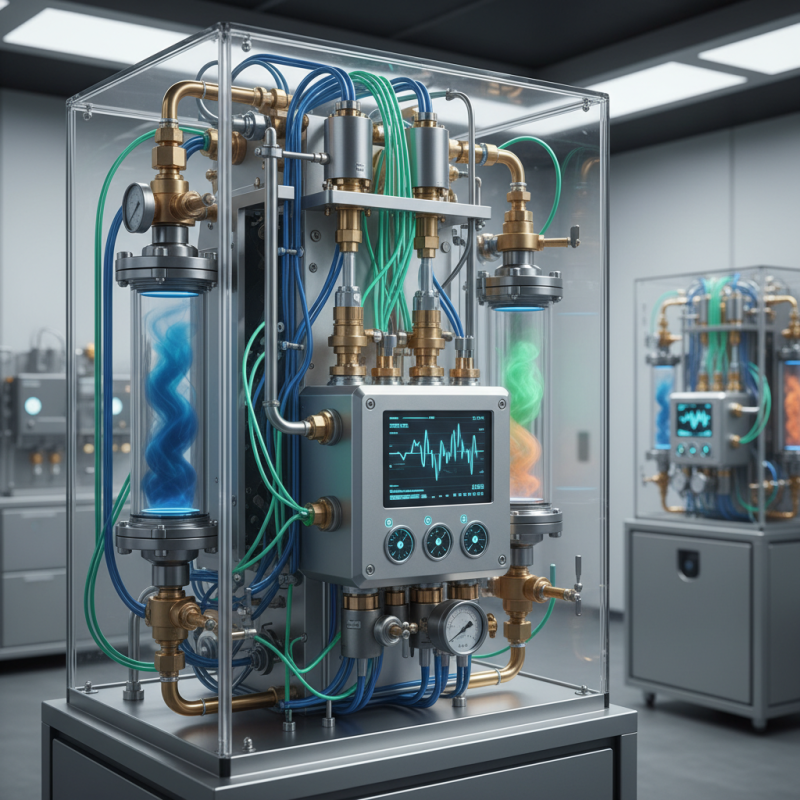
Understanding Dynamic Gas Distribution Instruments: An Overview
Dynamic gas distribution instruments play a crucial role in various industries. These tools help in measuring and controlling gases in real-time. Understanding how they function is key for anyone considering a purchase. Their accuracy can significantly affect safety and efficiency.
When evaluating dynamic gas distribution instruments, key features to consider include response time, sensitivity, and calibration ease. These factors determine the effectiveness of the instrument in practical applications. For example, an instrument with a slow response time may lead to dangerous situations in high-stakes environments. Users must also consider the instrument's compatibility with different gases and operating conditions.
In the market, there is a growing need for instruments that can handle diverse parameters. Buyers face the challenge of balancing cost and performance. While cheaper models may seem attractive, they often lack reliability. Proper testing and validation are essential steps. Emphasizing these aspects can lead to better decision-making.