

For support and service of your machinery, Stiles has experts available 24/7 to help reduce downtime and get you back in action.
Technical Support: 616-698-6615
Service & Repairs: 616-698-7500
24/7 Parts: 1-800-727-8780
sale@inlandmachineokc.com
Parts are available from Stiles 24 hours a day, seven days a week, and are shipped from our Grand Rapids, Michigan fulfillment center.
24/7 Parts: 800-727-8780

With a customized Stiles University course, we can provide expert training for your team, on-location. Whether it's programming, operation or maintenance, we want to help you train your personnel to meet your production goals efficiently and effectively.

Experience the trusted workforce development training and machinery knowledge you rely on from Stiles University, now at your convenience. With technology changing every day and new methods being developed constantly, Stiles University Online has the latest information and training content available at your fingertips.
616-698-7500

Do you want to produce more efficiently? Processes and flows are key. We optimize these together with you, re-organize them and make sure that you reduce your lead time and save costs. This enables you to implement customized manufacturing and achieve your business goals.

Industrialized construction is evolving. Automation, robotics and advanced technology are raising the level of productivity, efficiency and precision for builders in North America.

Stiles Machinery is at the forefront of providing technology and machining for producing high quality mass timber. Automated solutions for your mass timber production can increase your manufacturing quality and productivity.

Project management services from Stiles make it easy to streamline your entire project— from concept and consultation to integration and implementation.
For support and service of your machinery, Stiles has experts available 24/7 to help reduce downtime and get you back in action.
Technical Support: 616-698-6615
Service & Repairs: 616-698-7500
24/7 Parts: 1-800-727-8780
sale@inlandmachineokc.com
Parts are available from Stiles 24 hours a day, seven days a week, and are shipped from our Grand Rapids, Michigan fulfillment center.
24/7 Parts: 800-727-8780

With a customized Stiles University course, we can provide expert training for your team, on-location. Whether it's programming, operation or maintenance, we want to help you train your personnel to meet your production goals efficiently and effectively.

Experience the trusted workforce development training and machinery knowledge you rely on from Stiles University, now at your convenience. With technology changing every day and new methods being developed constantly, Stiles University Online has the latest information and training content available at your fingertips.
616-698-7500

Do you want to produce more efficiently? Processes and flows are key. We optimize these together with you, re-organize them and make sure that you reduce your lead time and save costs. This enables you to implement customized manufacturing and achieve your business goals.

Industrialized construction is evolving. Automation, robotics and advanced technology are raising the level of productivity, efficiency and precision for builders in North America.

Stiles Machinery is at the forefront of providing technology and machining for producing high quality mass timber. Automated solutions for your mass timber production can increase your manufacturing quality and productivity.

Project management services from Stiles make it easy to streamline your entire project— from concept and consultation to integration and implementation.
For support and service of your machinery, Stiles has experts available 24/7 to help reduce downtime and get you back in action.
Technical Support: 616-698-6615 Service & Repairs: 616-698-7500 24/7 Parts: 1-800-727-8780
Parts are available from Stiles 24 hours a day, seven days a week, and are shipped from our Grand Rapids, Michigan fulfillment center.
24/7 Parts: 800-727-8780For support and service of your machinery, Stiles has experts available 24/7 to help reduce downtime and get you back in action.
Technical Support: 616-698-6615 Service & Repairs: 616-698-7500 24/7 Parts: 1-800-727-8780
Parts are available from Stiles 24 hours a day, seven days a week, and are shipped from our Grand Rapids, Michigan fulfillment center.
24/7 Parts: 800-727-8780In today's industrial landscape, efficiency is key. A Turbo Blower can redefine how companies manage air supply needs. Many businesses still rely on outdated equipment, losing potential gains in performance and energy savings.
A Turbo Blower offers a compact and efficient solution. It consumes less energy than traditional blowers, leading to significant cost reductions. This technology provides enhanced air pressure and flow rates, making it ideal for various applications. However, some may overlook the initial investment cost, raising questions about long-term value.
Choosing a Turbo Blower can enhance operational reliability. Companies that switch often report improved productivity. Yet, it's essential to consider maintenance and expert installation. Without proper care, the benefits can quickly diminish. Balancing initial costs and ongoing maintenance is crucial for a successful transition.
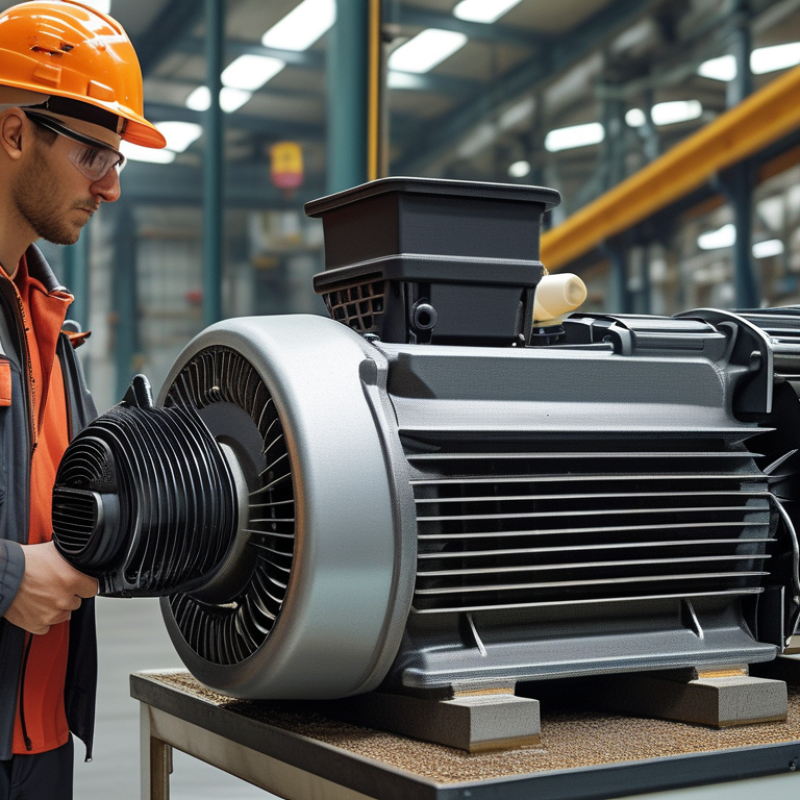
Turbo blowers offer significant advantages over traditional blowers in various industrial applications. They are designed to deliver higher efficiency, reduced noise, and lower operational costs. According to a recent industry report, turbo blowers can achieve efficiencies up to 80% compared to 65% for traditional blowers. This increase results in considerable energy savings for businesses.
One key benefit of turbo blowers is their compact design. They occupy less space and often require fewer maintenance interventions. This results in decreased downtime, allowing operations to run smoothly. It's also worth noting that turbo blowers typically produce 10 to 15 dB less noise, creating a better working environment. Many companies have reported improved employee satisfaction due to the quieter operation of these systems.
Tips: Regular maintenance ensures optimal performance. Schedule routine checks to prevent potential issues. Consider utilizing sensors for real-time monitoring, which can help identify problems before they escalate. Transitioning to turbo blowers might require initial investment. Reflect on long-term savings and efficiency gains. Investing in this technology could lead to a stronger bottom line for your operation.
Turbo blowers are gaining attention for their enhanced energy efficiency. Unlike traditional blower systems, turbo blowers use a high-speed impeller to move air. This design reduces energy consumption significantly. Businesses can lower their operating costs while minimizing their carbon footprint.
In various applications, turbo blowers maintain high efficiency even at varying loads. This adaptability is crucial for businesses that experience fluctuating demands. Achieving consistent performance leads to better process reliability.
Tips for choosing a turbo blower include assessing specific needs. Consider airflow requirements and operating conditions. Regular maintenance is vital to ensure optimal performance. Neglecting this may lead to decreased efficiency and increased costs. Remember, investing in energy-efficient technology is a step towards sustainability and long-term savings.
Turbo blowers are becoming increasingly valuable in various industrial applications. Improved airflow performance is one significant advantage they offer. According to a report by the American Society of Mechanical Engineers, these blowers can provide airflow rates that are 25% higher than conventional systems. This improvement allows industries to operate more efficiently.
In processes requiring high-volume air transfer, turbo blowers excel. Their design enables a continuous flow, reducing pressure fluctuations. A study from the International Journal of Industrial Engineering indicates that utilizing turbo blowers can lead to energy savings of approximately 30%. Many facilities report smoother operations and reduced downtime when switching from traditional blower systems.
However, not all settings benefit equally from turbo technology. Some environments may face challenges like noise levels or installation costs. A careful assessment is vital to decide if the enhancements are suitable. Relying solely on these systems without proper evaluation can lead to operational issues. Therefore, businesses must analyze their specific needs and potential ROI before making a transition.
Turbo blowers are becoming essential in various industries due to their reduced maintenance requirements. Unlike traditional blowers, turbo blowers use a simple design that minimizes wear and tear. Studies show that these blowers can cut maintenance needs by up to 50% compared to conventional systems. This reduction is a game changer for businesses looking to enhance operational efficiency.
The streamlined design of turbo blowers leads to fewer components needing regular inspections or replacements. This not only saves time but also reduces costs. For instance, a report from the International Journal of Mechanical Engineering states that companies reported a decrease in downtime by 30% when switching to turbo blowers. Less downtime means more production and less financial strain on businesses.
However, it's essential to consider that while turbo blowers lower maintenance needs, they are not entirely maintenance-free. It’s crucial to implement routine checks to ensure optimal performance. Ignoring minor issues can have lasting impacts on efficiency. Striking the right balance between minimal maintenance and necessary oversight can make a significant difference in overall reliability.
Turbo blowers are gaining traction in various industries due to their efficiency and versatility. These devices are commonly used in wastewater treatment plants, where they help aerate sludge. According to a report by the American Society of Civil Engineers, effective aeration can reduce energy costs by up to 25%. This significant energy saving can enhance operational efficiency, making turbo blowers an attractive option for facility managers.
In the food and beverage industry, turbo blowers play a critical role in packaging and processing. They maintain a consistent airflow, which is essential for maintaining product quality. A study by the Food Processing Institute indicated that improper airflow can lead to spoilage in up to 15% of products. Efficient blowers help mitigate this risk while improving the shelf life of goods, thus helping businesses sustain profitability.
However, the adoption of turbo blowers is not without challenges. Initial installation costs can be high, and maintenance must be carefully managed to avoid inefficiencies. Some facilities may struggle with noise levels, requiring additional soundproofing measures. A comprehensive understanding of these systems is essential for maximizing their benefits while addressing potential drawbacks.







