
-
-
-
-
-
-

With a customized Stiles University course, we can provide expert training for your team, on-location. Whether it's programming, operation or maintenance, we want to help you train your personnel to meet your production goals efficiently and effectively.
-

Experience the trusted workforce development training and machinery knowledge you rely on from Stiles University, now at your convenience. With technology changing every day and new methods being developed constantly, Stiles University Online has the latest information and training content available at your fingertips.
-
-
-

Do you want to produce more efficiently? Processes and flows are key. We optimize these together with you, re-organize them and make sure that you reduce your lead time and save costs. This enables you to implement customized manufacturing and achieve your business goals.
-

Industrialized construction is evolving. Automation, robotics and advanced technology are raising the level of productivity, efficiency and precision for builders in North America.
-

Stiles Machinery is at the forefront of providing technology and machining for producing high quality mass timber. Automated solutions for your mass timber production can increase your manufacturing quality and productivity.
-

Project management services from Stiles make it easy to streamline your entire project— from concept and consultation to integration and implementation.
-



-
-
-
-
-
-
With a customized Stiles University course, we can provide expert training for your team, on-location. Whether it's programming, operation or maintenance, we want to help you train your personnel to meet your production goals efficiently and effectively.
-
Experience the trusted workforce development training and machinery knowledge you rely on from Stiles University, now at your convenience. With technology changing every day and new methods being developed constantly, Stiles University Online has the latest information and training content available at your fingertips.
-
-
-
Do you want to produce more efficiently? Processes and flows are key. We optimize these together with you, re-organize them and make sure that you reduce your lead time and save costs. This enables you to implement customized manufacturing and achieve your business goals.
-
Industrialized construction is evolving. Automation, robotics and advanced technology are raising the level of productivity, efficiency and precision for builders in North America.
-
Stiles Machinery is at the forefront of providing technology and machining for producing high quality mass timber. Automated solutions for your mass timber production can increase your manufacturing quality and productivity.
-
Project management services from Stiles make it easy to streamline your entire project— from concept and consultation to integration and implementation.
-
Top Automated Warehouse Systems for Global Buyers at 2026 Canton Fair?
In the rapidly evolving landscape of logistics, the demand for efficient Automated Warehouse Systems is soaring. The 2026 Canton Fair serves as a prominent platform for global buyers to explore innovative solutions. Spanning over 155,000 square meters, this trade fair introduces advanced technologies, enhancing the warehousing experience. Attendees can expect exhibitors showcasing cutting-edge robotics, AI-driven inventory management, and streamlined sorting systems.
This event highlights the integration of AI search and navigation tools. Buyers can swiftly locate suppliers with specific certifications, like ISO and CE, ensuring compliance and quality. However, the effectiveness of these Automated Warehouse Systems is not without challenges. The implementation cost can be high, and not all businesses may achieve the anticipated efficiency gains.
Additionally, as automation increases, the workforce must adapt. Employees need new skills to manage and operate these technologies. The evolution of Automated Warehouse Systems brings both opportunities and difficulties. However, the potential to revolutionize supply chain operations remains significant. As we look toward the future, innovation and adaptability will be crucial for success in this dynamic sector.
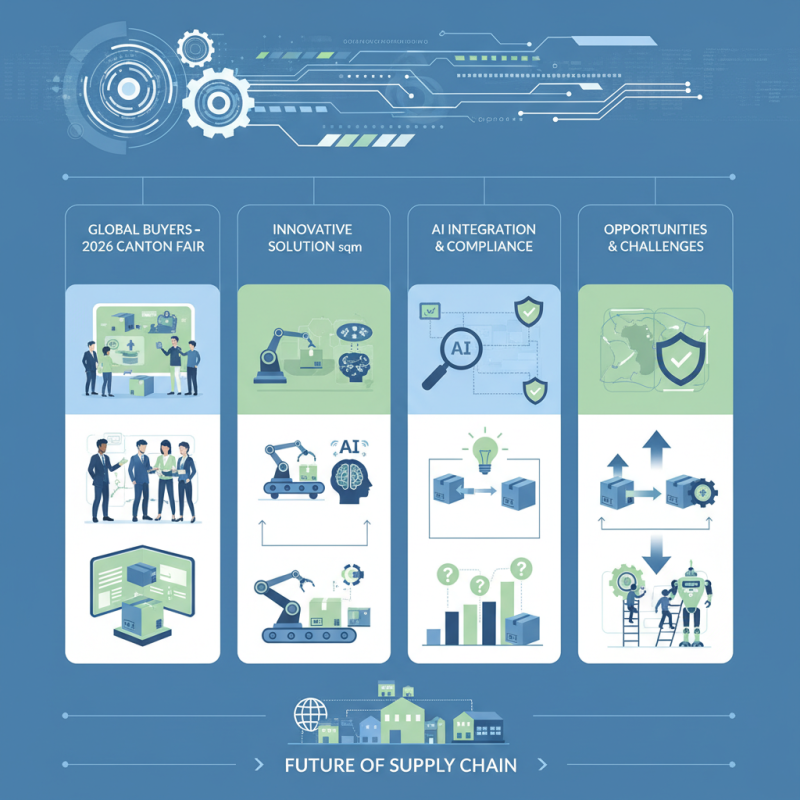
Overview of Automated Warehouse Systems in 2026 Canton Fair
The 2026 Canton Fair presents an exciting overview of automated warehouse systems. Industry reports project that global demand for automation in logistics will grow significantly, reaching a market value of over $30 billion by 2028. As more companies look to enhance efficiency, automated systems become essential.
In this fair, visitors can expect to see diverse solutions. These systems include automated guided vehicles (AGVs) and robotic arms for picking and packing. A study indicates that warehouses using automation can boost productivity by 30% to 40%. However, adoption challenges exist. High initial costs and the need for skilled personnel can deter businesses from investing.
Despite advancements, not every solution is perfect. Some automated systems struggle with complex inventory transitions. This inefficiency can lead to downtime, which ultimately affects overall performance. As the industry evolves, companies must address these gaps. Continuous innovation will be crucial to leverage the full potential of automation in warehouse operations.